How to Heat Your Home Without Electricity This Winter
Winter doesn’t have to mean total reliance on the grid. Whether you’re preparing for an extended power outage, building a self-sufficient homestead, or simply want to cut your energy bills, knowing how to heat your home without electricity is one of the most valuable skills you can have. This guide compares seven reliable methods, from wood stoves and vented propane heaters to rocket mass heaters and passive solar design, with typical outputs, approximate costs, specific products and the safety precautions each one requires.
Why Non-Electric Heat Matters
When temperatures drop and snow piles up, heat isn’t a convenience; it’s a matter of safety. An ice storm can knock out power for days, and households that depend entirely on electric furnaces may be left with no heat at all. Homes with a non-electric heat source and good insulation can ride out the same outage in comfort.
This matters well beyond full-time off-gridders. Extreme weather and aging grids make long outages more common, and fluctuating propane and electricity prices make alternative heat attractive financially. There’s no single “best” solution: the right choice depends on your climate, home, budget and available fuel. Many households combine two or more of the methods below.
7 Ways to Heat Your Home Without Electricity
1. Wood Stoves and Fireplaces
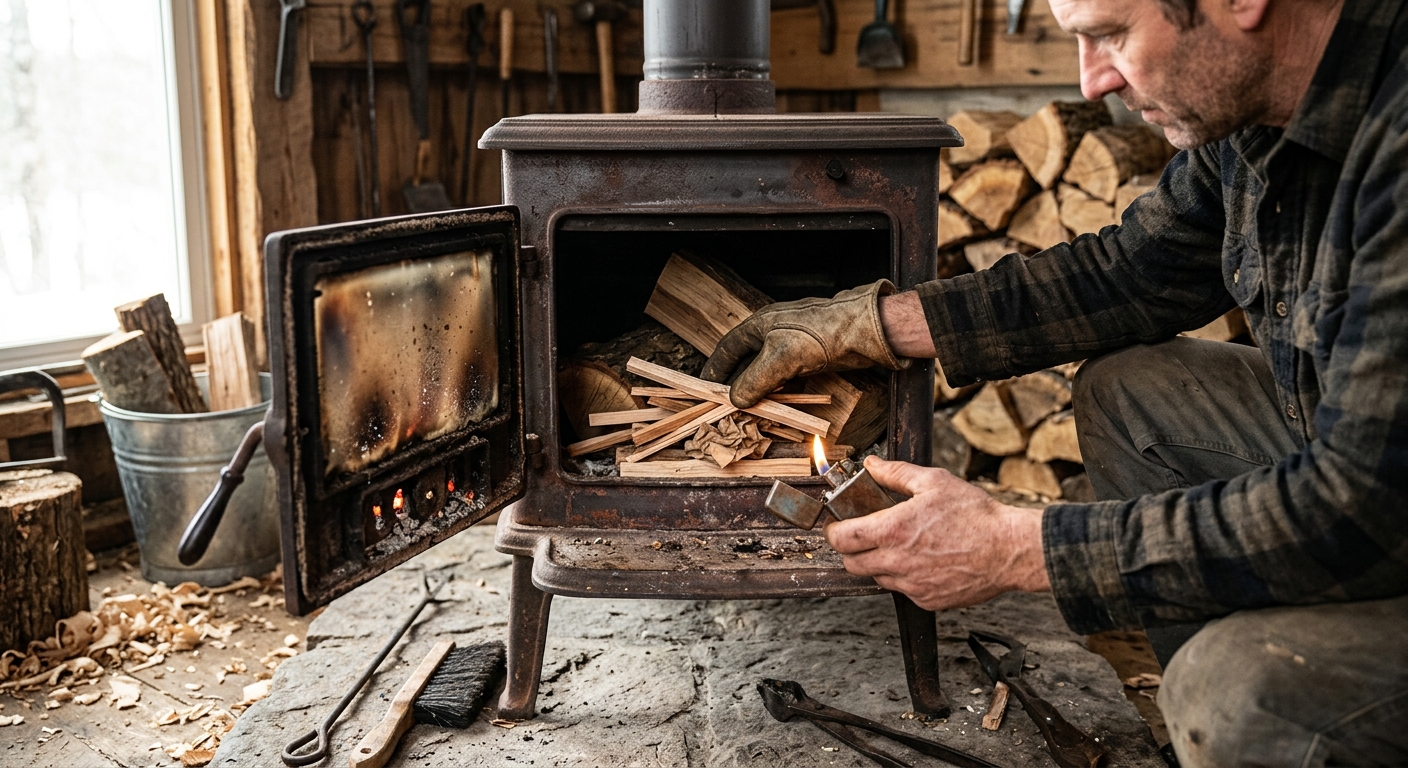
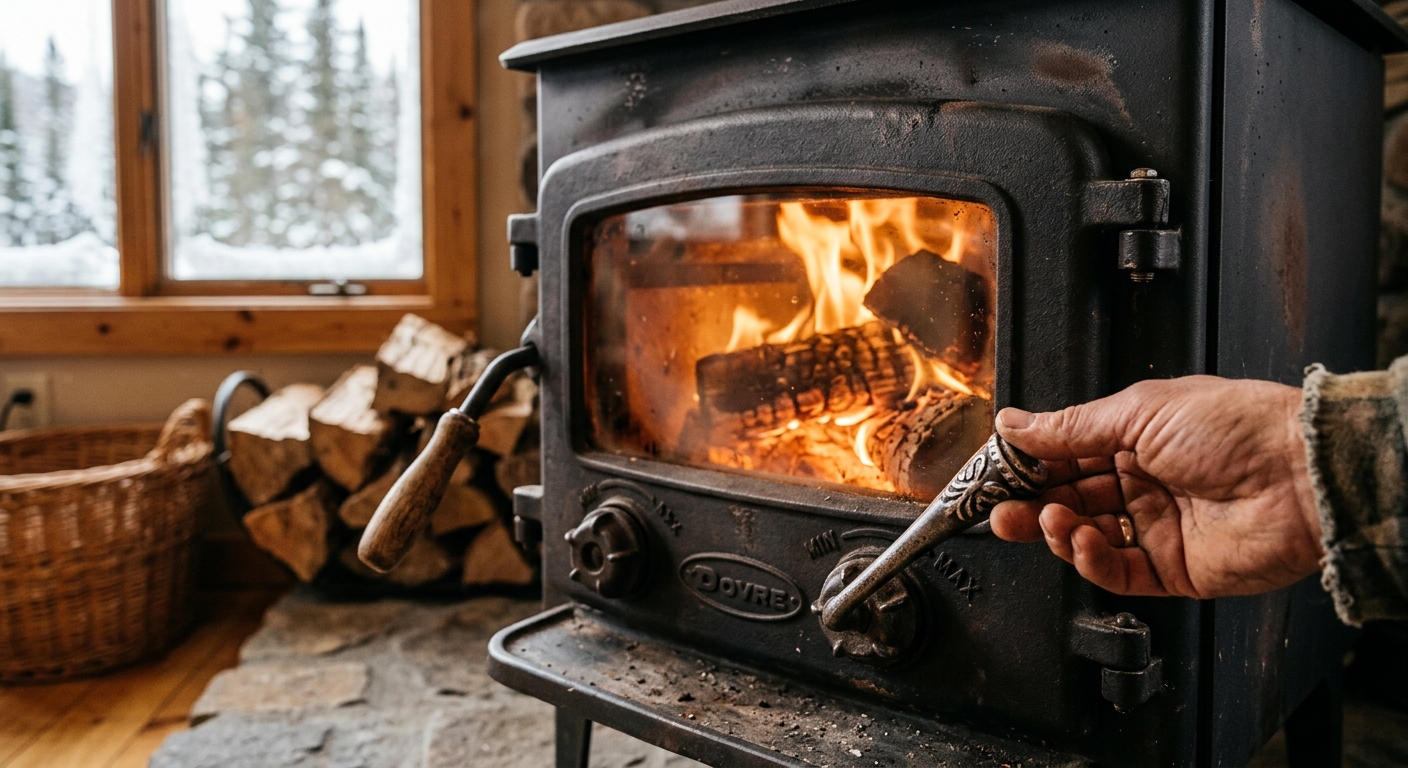
The classic off-grid heat source. Modern wood stoves are far more efficient than open fireplaces. A large cast-iron stove such as the Jotul F 600 Fireplace is rated for up to 80,000 BTU/hr and can heat up to about 2,500 sq ft. Expect roughly $4,200 for a stove of this class plus around $1,500 for a double-wall stainless steel chimney system (for example, DuraVent DVL and DuraTech components).
Fuel is the ongoing cost: a home heating mainly with wood in a cold climate might use 3–4 cords of seasoned hardwood (oak, maple) per year, at around $250–$400 per cord depending on supplier and year. The keys are installation to code with proper clearances, and burning efficiently: stoves with secondary combustion get more heat from each load and produce less creosote. Chimney cleaning, ideally twice a season, is essential; a DIY kit such as a Rutland Products Liberator brush kit costs about $100.
2. Vented Propane or Natural Gas Heaters
Vented gas heaters offer a cleaner burn and thermostat control without needing electricity. They draw combustion air from outside and vent exhaust directly outdoors, so indoor air quality isn’t affected. The Empire Comfort Systems RH-50-B Vented Room Heater, rated at 50,000 BTU, can heat roughly 1,200–1,500 sq ft and runs without electricity (an optional blower does require power). The heater costs around $1,350.
Fuel typically comes from a large propane tank, such as a 500-gallon tank (installation around $800; the tank is often leased free with a supply contract). Propane commonly runs about $2.50–$3.50 per gallon, though prices fluctuate. Installation requires a professional for the gas line and venting through an exterior wall or roof.
3. Kerosene and Diesel Heaters
These deliver quick, intense heat and are ideal for zone heating or emergencies. Many kerosene models are fully non-electric. The DuraHeat DH2304S Kerosene Heater (23,800 BTU) costs around $180 and runs 8–12 hours on its 1.9-gallon tank; kerosene costs roughly $5–$7 per gallon.
Diesel air heaters such as the Webasto Air Top 2000 STC (around $1,200) are common in RVs and small cabins and are known for efficiency and lower fuel cost (diesel roughly $3.50–$5.00 per gallon). They need a small amount of 12V power for the fan and pump, which a small battery such as a 10Ah LiFePO4 Bioenno Power BLF-1210A (around $100) can supply.
Safety: Ventilation is critical for both. Even “vent-free” units consume oxygen and produce moisture and some pollutants, especially kerosene heaters. Crack a window, install a CO detector such as the Kidde Nighthawk KN-COPP-3 (around $45), and never leave these heaters unattended for long periods.
4. Passive Solar Heating
Passive solar design uses the building itself to capture and store the sun’s heat, with no ongoing fuel cost. A typical approach:
- Orientation: The longest side of the home faces south.
- Windows: Large double-pane, low-E windows on the south side (for example U-value 0.28, SHGC 0.40), around $400–$800 per window depending on size.
- Thermal mass: A dark-colored concrete slab floor, around 4 inches thick (roughly $7 per sq ft for materials and pour), absorbs sunlight during the day and releases heat at night.
- Overhangs: Sized to block high summer sun while letting low winter sun in.
- Night retention: Heavy curtains or thermal blinds reduce heat loss after dark.
The investment is part of construction or major renovation, but a well-designed passive solar home can stay comfortable on sunny winter days with little or no active heating. The challenge is balancing heat gain against heat loss, which depends heavily on insulation.
5. Rocket Mass Heaters (RMH)
A rocket mass heater burns wood very hot in a small combustion chamber and sends the exhaust through a long channel (often steel stovepipe) embedded in a large thermal mass of cob, brick, stone or concrete. The mass absorbs the heat and radiates it for 12–24 hours after a short 1–2 hour burn. RMHs are commonly reported to use 70–90% less wood than a conventional stove for similar heat, and the mass (often built as a bench) typically sits around 90–110°F at the surface.
An example small build uses a 6-inch burn tunnel and heat riser under a steel barrel wrapped in cob, with materials (firebricks, stovepipe, steel barrel, sand, clay, straw) costing roughly $800. RMHs require careful construction and a good understanding of airflow, and you should check local building codes and insurance requirements before building one.
6. Unvented Catalytic Propane Heaters
Catalytic heaters burn propane through a flameless process with lower emissions than blue-flame unvented heaters, and they need no electricity. The Mr. Heater F215100 MH4B Little Buddy (3,800 BTU, around $80) runs on 1 lb propane cylinders ($5–$7 each) and suits small, well-ventilated spaces such as a tent or small insulated shed. For larger spaces, the Mr. Heater MH9BX Buddy Heater (9,000 BTU, around $100–$120) can connect to a 20 lb tank.
Safety: These heaters still deplete oxygen and produce water vapor. Follow the manufacturer’s minimum room size, keep a window or vent cracked, and always use a CO detector. They’re best for supplemental or emergency heat, not primary whole-house heating.
7. Masonry Heaters
Masonry heaters are massive, custom-built structures that absorb heat from a short, very hot fire (1–2 hours) and release it gently for 12–24 hours. The hot, fast burn is clean, and efficiency is often 85% or higher, so they use relatively little wood. The downside is cost and complexity: a professionally built masonry heater typically costs $8,000–$20,000 or more. In return, it becomes a permanent “thermal battery” built into your home.
Recommended Products and Approximate Prices
Prices below are approximate estimates and vary by region, retailer and installation complexity.
- Wood stove: Jotul F 600 (approx. $4,500–$5,500)
- Heavy-duty cast iron, up to 80,000 BTU/hr, large firebox, EPA certified at 72% (LHV) efficiency. Suits larger homes up to about 2,500 sq ft. Budget an additional $1,500–$2,500 for a double-wall stainless steel chimney such as DuraVent.
- Vented propane heater: Empire Comfort Systems RH-50-B (approx. $1,400–$1,700)
- 50,000 BTU with thermostat control, no electricity needed for core operation. Professional gas line and venting installation may add $500–$1,000.
- Kerosene heater: DuraHeat DH2304S (approx. $200–$280)
- 23,800 BTU/hr portable heater with a 1.9-gallon tank and up to 12 hours of run time. Requires ventilation and a CO detector.
- Passive solar elements (cost varies widely)
- High-quality low-E double-pane south-facing windows (for example, Andersen 400 Series) run roughly $450–$900 each; a 4-inch concrete slab for thermal mass about $8–$12 per sq ft installed.
- Rocket mass heater components (approx. $900–$2,500)
- A firebox/heat riser core (for example, a batch box core from an established RMH builder) around $300–$500; firebricks $2–$4 each; stovepipe $50–$100 per 4 ft section; a steel barrel $50–$150; cob or masonry materials $200–$500. Doing the labor yourself is where most of the savings come from.
- Catalytic propane heater: Mr. Heater F232000 MH9BX Buddy (approx. $110–$140)
- Up to 9,000 BTU/hr; runs on a 1 lb cylinder or a larger tank with an adapter. Pair it with a CO detector such as the Kidde Nighthawk KN-COPP-3 (approx. $50–$70).
- Masonry heater: custom built (approx. $9,000–$25,000+)
- Price depends on size, materials (firebrick, soapstone, tile, plaster) and the mason. Materials alone can run $3,000–$8,000.
Comparison Table
| Heating Method | Typical BTU/hr Output | Fuel Type and Approx. Cost | Approx. Upfront Cost | Pros | Cons |
|---|---|---|---|---|---|
| 1. Wood stoves and fireplaces | 20,000–80,000+ | Cordwood (~$300–$500/cord) | $4,500–$7,000 (stove + chimney) | High heat, reliable, renewable fuel, ambiance | Fuel storage, wood processing, ash cleanup, chimney cleaning |
| 2. Vented propane/natural gas | 10,000–50,000 | Propane (~$3–$4.50/gal) or natural gas | $1,400–$2,700 (heater + installation) | Clean, thermostat control, safe indoor air, no ash | Needs fuel delivery/tank, supply-dependent, higher fuel cost than wood |
| 3. Kerosene/diesel heaters | 10,000–70,000 | Kerosene (~$6–$8/gal) or diesel (~$4–$6/gal) | $200–$400 (portable unit) | Portable, quick heat, good for zones and emergencies | Strict ventilation needed, fuel storage, higher fuel cost, odors |
| 4. Passive solar | Varies by design | Sunlight (free) | Part of construction (windows ~$450–$900 each, slab ~$8–$12/sq ft) | No fuel cost, silent, no moving parts | Design-dependent, only works with sun, hard to retrofit |
| 5. Rocket mass heaters | Varies (radiant) | Wood (very low use) | $900–$2,500 (DIY materials) | Very efficient, long-lasting radiant heat, DIY-friendly | Complex build, permanent, requires skill; check codes |
| 6. Unvented catalytic propane | 3,800–30,000 | Propane (~$5–$8 per 1 lb cylinder, or bulk) | $110–$150 (portable unit) | Efficient, portable, quick heat, low emissions vs. blue flame | Needs ventilation, oxygen depletion, CO/moisture risk, not for primary heat |
| 7. Masonry heaters | Varies (radiant) | Wood (very low use) | $9,000–$25,000+ (custom) | Very efficient, gentle long-lasting heat, clean burning | Very high upfront cost, professional build, permanent |
Pro Tips
- Insulate and draft-proof first. Sealing your home is the most cost-effective heating strategy. A common problem in cold cabins is an under-insulated attic (for example R-19 where R-60 is recommended for the climate) plus large gaps around windows and doors. Blown-in cellulose to R-60 costs around $1.50 per sq ft, and gaps can be sealed with expanding foam (Great Stuff Pro Gaps & Cracks, about $10/can) and silicone caulk (GE Silicone 2+, about $6/tube). Better insulation directly reduces how much fuel you burn.
- Layer your heat sources. Don’t depend on one system. A practical combination is a primary wood stove, passive solar gain for daytime, and a small catalytic heater for quick morning warmth in a bathroom.
- Size by BTUs, not guesswork. A common rule of thumb is 20–30 BTU per sq ft for well-insulated homes in moderate climates, rising to 40–60 BTU per sq ft in colder climates or less-insulated homes. For example, an 1,800 sq ft home in a cold climate might need roughly 54,000–72,000 BTU/hr on the coldest days, so an 80,000 BTU/hr stove would be slightly oversized, which allows less frequent loading.
- Manage fuel a year ahead. Cut wood in spring, split it in summer and let it season for at least 6–12 months. Green wood burns poorly, creates creosote and gives little heat. With propane, check tank levels monthly and schedule refills well before winter storms.
- Put safety first. Install CO detectors in several zones of your home, ensure proper ventilation for every combustion appliance, keep flammables away from heat sources, and keep a fire extinguisher (for example, a Kidde Pro 210, about $50) within reach. Regular chimney cleaning is not optional.
- Use thermal mass. Concrete, stone or water absorb heat when it’s available and release it slowly. Even a few 55-gallon drums of water, painted black and placed in a sunny spot, can help stabilize indoor temperatures.
- Zone heat. Concentrate your main heat on the rooms you use most, and use small portable heaters for bedrooms before bed or a workshop while you’re in it. This saves a significant amount of fuel.
Common Mistakes to Avoid
- Underestimating insulation needs. A powerful heater won’t make up for a poorly insulated house, or it will only do so at a huge fuel cost. Buying a large wood stove for a drafty home often means burning through far more cords than necessary.
- Burning unseasoned wood. Green wood produces less heat and more creosote, raising the risk of chimney fires.
- Skipping CO detectors. Any combustion heater can produce carbon monoxide. Detectors are cheap insurance.
- Using unvented heaters as primary heat in small, sealed rooms. They deplete oxygen and add moisture; they are meant for supplemental use with ventilation.
- Relying on a single heat source. If your only heater fails or you run out of fuel mid-storm, you need a backup.
- Ignoring codes and clearances. Improperly installed stoves and chimneys are a serious fire hazard and can affect your insurance.
Conclusion
Heating without electricity starts with a tight, well-insulated home, then a dependable primary heat source suited to your fuel and budget: a wood stove, a vented propane heater, or, for the ambitious, a rocket mass or masonry heater. Add a portable backup such as a kerosene or catalytic heater for emergencies, take advantage of passive solar gain where you can, and never compromise on ventilation and CO detection. With a layered, well-maintained system, you can stay warm and safe no matter how long the grid stays down.
Marcus Reid
Founder & Editor, OffGridSage
Marcus founded OffGridSage to bring practical off-grid knowledge together in one place. Guides are built from official and expert sources (NREL, the EPA, the USDA and university extension services), manufacturer documentation and reader feedback, and are updated when information changes.