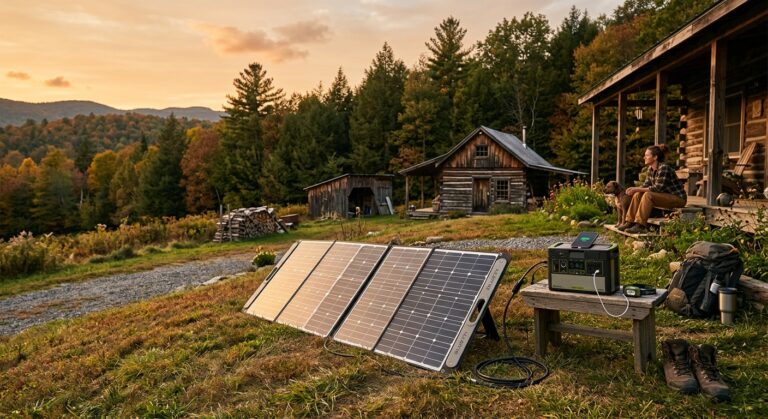
EcoFlow vs Jackery vs Bluetti: Which Solar Generator Wins in 2026?
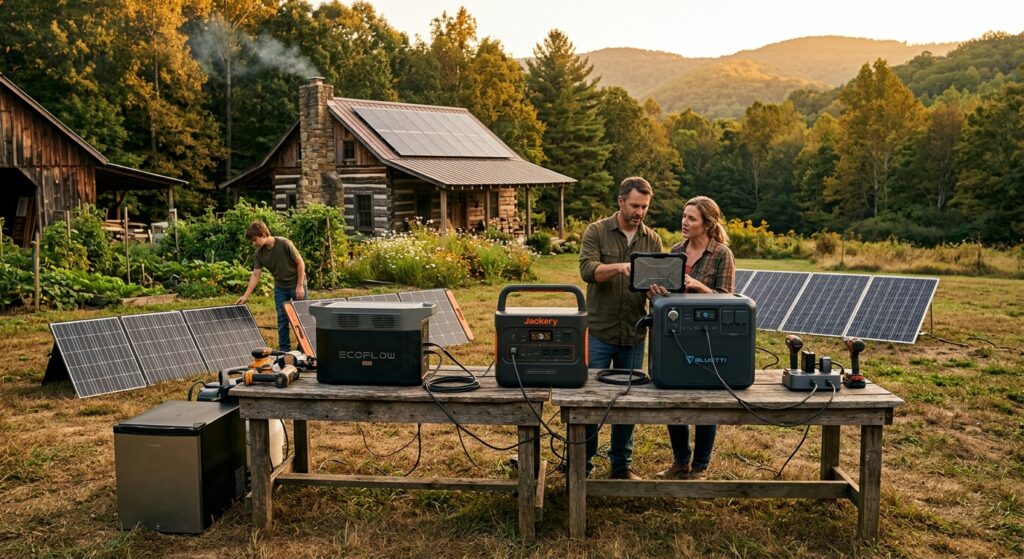
EcoFlow, Jackery, and Bluetti dominate the portable solar generator market. What was once a niche product for adventurers and preppers is now a mainstream solution for emergency preparedness, van life, RV living, and supplemental home power. This comparison explains how solar generators work, what each brand does best, how their 2026 flagship models compare, and how to get the most from whichever one you choose.
Why Reliable Portable Power Matters
Whether you live off-grid or simply want to be prepared, reliable power is a necessity rather than a luxury. The grid is aging and increasingly vulnerable to extreme weather and overloads, and a multi-day outage can mean spoiled food, no way to work remotely, lost access to critical medical devices, and no emergency information. A properly sized solar generator can keep a chest freezer cold, an internet terminal such as Starlink online, and lights on through a long outage.
For full-time off-grid living, van life, or RV travel, a solar generator is not just a backup — it is the heart of the electrical system. It can run a full-size refrigerator, power tools for maintenance, and laptops for remote work, with no fuel costs or grid dependency. That is why the differences between these three brands matter in practice.
How Solar Generators Work
Despite the name, a solar generator does not generate power like a gas engine. It is a portable battery power station with inputs designed to charge directly from solar panels — essentially an oversized power bank for your home or vehicle. Every unit has four core components:
- Battery (energy storage): The heart of the system. The dominant chemistry is now Lithium Iron Phosphate (LiFePO4). Older lead-acid batteries offered maybe 500 cycles before significant degradation; LiFePO4 batteries, like those in the EcoFlow Delta Pro X, Bluetti AC500 Plus, and Jackery Explorer 3000 Pro II, are rated for roughly 3,000 to 6,000+ cycles to 80% capacity — well over a decade with proper care. They are also safer and more stable than older lithium-ion chemistries.
- Inverter (DC to AC): Batteries store direct current (DC), but most household appliances run on alternating current (AC). The inverter converts one to the other. Reputable solar generators use a pure sine wave inverter, which produces clean, stable power like a wall outlet — important for laptops, medical devices, and power tools, which cheaper modified sine wave inverters can damage.
- Charge controller (solar optimization): Solar panel output fluctuates with sunlight and temperature. An MPPT (Maximum Power Point Tracking) controller continuously adjusts to draw maximum power from the panels, often improving charging efficiency by 15–30% compared to older PWM controllers. A high MPPT input rating (for example, the 900W input on the Bluetti AC200MAX) lets you make full use of a larger array, even on partly cloudy days.
- Input/output ports: Standard AC outlets (120V in the US), USB-A and USB-C ports (often Power Delivery up to 100W or more), 12V DC car ports, and sometimes Anderson Powerpole or RV 30A outlets. The number and rating of these outputs determine what you can run.
The process is simple: solar panels convert sunlight into DC electricity, the charge controller optimizes it and stores it in the battery, and when you plug in an appliance, the inverter converts stored DC into AC. When comparing units, check these key specifications:
- Watt-hours (Wh): Total battery capacity. A 2000Wh battery can theoretically deliver 2000 watts for one hour, or 200 watts for ten hours.
- Watts (W): Continuous inverter output. A 2000W output can run devices totaling 2000 watts at once.
- Surge capacity (W): Refrigerators, pumps, and power tools need a brief burst of extra power to start. For example, the EcoFlow Delta Pro offers 3600W continuous with a 7200W surge, enough to start many well pumps.
- Charge cycles: How many full discharge/recharge cycles the battery can handle before capacity significantly degrades. LiFePO4’s high cycle count is a major advantage for longevity.
- Charging time: How fast the unit recharges from AC wall power, solar panels, or a 12V car outlet.
EcoFlow vs Jackery vs Bluetti: Brand Philosophies
Each brand approaches the market differently, and their 2026 lineups reflect those priorities.
EcoFlow: The Innovator and Ecosystem Builder
EcoFlow’s strengths are innovation, high power output, and a growing ecosystem. Its X-Stream fast charging (0–80% in under an hour on models like the Delta Pro) and integration with smart home panels and extra batteries set it apart. Flagship models such as the Delta Pro X and the Power Hub series target users who want maximum power, scalability, and smart control — powering a cabin, an RV with several high-draw appliances, or a home backup system. App integration is typically best-in-class. If you want a modular system that can grow from a portable unit into a semi-permanent home energy solution, EcoFlow is often the frontrunner. High-end units are heavier and pricier, but the power and features justify the cost for serious users.
Jackery: The Portable, User-Friendly Choice
Jackery built its reputation on portability, ease of use, and rugged reliability for outdoor use, and was widely adopted early on by campers, photographers, and casual RVers. The Explorer series, including the Explorer 3000 Pro II, continues that approach. Jackery units are known for intuitive interfaces, solid build quality, and relatively low weight for their capacity. They may not offer the fastest charging or the highest surge rating, but they prioritize a no-fuss experience. Jackery is a strong choice for weekend trips, camping, or powering a remote workstation without running a whole house. Its units are generally less modular than EcoFlow or Bluetti — self-contained and ready to go out of the box — and its solar panels are well regarded for efficiency and easy setup.
Bluetti: The High-Capacity Workhorse
Bluetti is known for robust, high-capacity systems at competitive prices, with strong long-term durability helped by its early adoption of LiFePO4 batteries. Models such as the AC200MAX have a reputation as workhorses, and the AC500 Plus is aimed at users who need serious, sustained power and expandability without paying a premium for every cutting-edge smart feature. Bluetti units often have very high solar input and surge ratings, making them well suited to demanding tools or several appliances at once, and they excel at battery expansion. If you prioritize raw power, deep capacity, and heavy continuous use — a full-time off-grid setup, a large RV, or serious home backup — Bluetti often offers the most Wh and W for your money.
In short: EcoFlow suits tech-focused users who want control and scalability, Jackery suits travelers who value simplicity and portability, and Bluetti suits those who need high-capacity power for demanding, long-term use.
2026 Flagship Models and Estimated Prices
Specs and prices below are estimates for 2026 editions based on current product lines; prices fluctuate with sales, bundles, and region, so confirm details with the manufacturer before buying.
EcoFlow Delta Pro X (2026 Edition)
- Estimated price: approx. $3,999 – $4,499 (base unit)
- Capacity: 4032Wh (expandable to 12,096Wh with two Delta Pro X Smart Extra Batteries)
- Continuous AC output: 4000W (pure sine wave)
- Surge output: 8000W
- Battery type: LiFePO4
- Charge cycles: 6500 cycles to 80%+ capacity
- Solar input: 2000W max (MPPT, 11–150V DC)
- AC charging: X-Stream 3.0, full charge in ~1.5 hours (1800W AC input)
- Key features: Fast AC charging, modular capacity expansion, Smart Home Panel 2 integration for whole-house backup, app control, advanced battery management, multiple outputs including RV 30A. It can power a full-size refrigerator (150W) for over 25 hours, or a 1500W electric kettle for about 2.5 hours.
Jackery Explorer 3000 Pro II (2026 Edition)
- Estimated price: approx. $2,899 – $3,299
- Capacity: 3024Wh
- Continuous AC output: 3200W (pure sine wave)
- Surge output: 6400W
- Battery type: LiFePO4
- Charge cycles: 3500 cycles to 80%+ capacity
- Solar input: 1400W max (MPPT, 12–140V DC)
- AC charging: Full charge in ~2.5 hours (1800W AC input)
- Key features: Very portable for its capacity, user-friendly interface with a large display, built-in handle and wheels, strong build quality for outdoor use, efficient solar charging, quiet operation. Well suited to larger RVs, van life, long camping trips, or emergency backup for essential appliances. It could run a 1000W portable air conditioner for about 3 hours, or a 50W CPAP machine for over 60 hours.
Bluetti AC500 Plus (2026 Edition)
- Estimated price: approx. $4,299 – $4,799 (with one B300S expansion battery, as it is typically sold)
- Capacity: 3072Wh with one B300S, expandable up to 18,432Wh with six B300S batteries
- Continuous AC output: 5000W (pure sine wave)
- Surge output: 10,000W
- Battery type: LiFePO4
- Charge cycles: 3500 cycles to 80%+ capacity
- Solar input: 3000W max (MPPT, 12–150V DC)
- AC charging: Dual-input fast charging (AC + solar simultaneously), full charge in ~1.5 hours (3000W AC + 3000W solar)
- Key features: Highest continuous output and surge of the three, large solar input, extensive modularity with B300S batteries, split design (power unit + battery) for easier transport, app control, RV 30A and 50A outlets. Suited to powering an off-grid home or workshop with high-draw tools — it can handle a brief 5000W well-pump start, or run 2000W of workshop tools continuously for over 1.5 hours.
Comparison Table (2026 Flagship Models)
| Feature | EcoFlow Delta Pro X (2026) | Jackery Explorer 3000 Pro II (2026) | Bluetti AC500 Plus (2026) |
|---|---|---|---|
| Base Capacity (Wh) | 4032Wh | 3024Wh | 3072Wh (with 1x B300S) |
| Expandable Capacity (Wh) | Up to 12,096Wh | Not expandable | Up to 18,432Wh |
| Continuous AC Output (W) | 4000W | 3200W | 5000W |
| Surge Output (W) | 8000W | 6400W | 10,000W |
| Battery Type | LiFePO4 | LiFePO4 | LiFePO4 |
| Charge Cycles (to 80%+) | 6500+ | 3500+ | 3500+ |
| AC Charging Speed (Input W) | 1800W (full charge ~1.5 hrs) | 1800W (full charge ~2.5 hrs) | 3000W (full charge ~1.5 hrs, AC only) |
| Solar Input (Max W) | 2000W | 1400W | 3000W |
| Solar Input Voltage Range | 11–150V DC | 12–140V DC | 12–150V DC |
| Weight (Base Unit) | 99 lbs (45 kg) | 63.9 lbs (29 kg) | 63.9 lbs (29 kg) + 79.4 lbs (36 kg) per B300S |
| Estimated Price (USD, approx.) | $3,999 – $4,499 | $2,899 – $3,299 | $4,299 – $4,799 (with 1x B300S) |
| Key Feature/Niche | Ultra-fast AC charge, Smart Home Panel 2 integration, modular power | Excellent portability for capacity, rugged, user-friendly, great for outdoor trips | Highest continuous output and surge, large solar input, extreme capacity expansion |
Pro Tips: Getting the Most from Your Solar Generator
- Oversize your solar array: Aim for 20–30% more panel wattage than the generator’s maximum solar input. Real-world conditions rarely deliver rated output — a 400W panel rated at Standard Test Conditions might produce only 250–300W on a typical sunny day, and less with clouds or imperfect angles. For example, a Delta Pro X rated for 2000W solar input pairs well with 2400W of panels (six 400W rigid panels), so it stays close to maximum input even in partly cloudy conditions.
- Protect battery health: LiFePO4 batteries are robust, but you can extend their life. For storage longer than a month, keep them at 50–80% charge. Avoid regularly discharging below 20% or leaving them at 100% for long periods. Built-in battery management systems help, but manual oversight is still useful — for example, charge to 80% for daily use and to 100% only when you know you will need full capacity.
- Manage your loads: Running a 1500W kettle, a 1200W toaster, and a 1000W microwave at the same time will drain even a large generator quickly and may trip overload protection. Run high-draw appliances one at a time and choose low-power alternatives where possible — for instance, a gravity water filter such as the Big Berkey (around $330) filters about 2.75 gallons per hour with no electricity at all.
- Use quality cables and connectors: Thin solar cables (such as 14AWG) cause significant power loss over longer runs. 10AWG MC4 extension cables cost around $50–$80 for a 30ft pair. Keep all connections secure and weatherproof — corroded or loose connections reduce efficiency and create fire hazards.
- Charge from multiple sources at once: Most flagship generators support simultaneous AC, solar, and 12V car charging. The Bluetti AC500 Plus, with 3000W solar and 3000W AC input, can theoretically recharge from empty in under an hour with both maxed out, though that requires a large array and a dedicated 30A AC circuit. Even partial combinations significantly cut downtime.
Common Mistakes to Avoid
- Underestimating your power needs: Adding up appliance wattage is not enough — you need watt-hours over your desired run time. A 100W refrigerator cycles on and off, perhaps running 8 hours a day: 100W × 8h = 800Wh per day. Small appliances add up too: a 200W coffee maker brewing for 15 minutes uses 50Wh, and keeping the pot warm at 50W for 2 hours adds another 100Wh — 150Wh for one brew. List every appliance, its wattage, and its daily run time, then add a 20–30% buffer.
- Buying too little solar: A solar generator is only as good as its charging input. Pairing a 2000Wh generator with a single 100W panel (which might deliver 60–70W in practice) means it could take days to recharge, especially in poor weather. Size your array so it can recharge the generator in a reasonable timeframe for your typical sun hours.
Conclusion: Which Brand Should You Choose?
Start with your energy audit: calculate your daily watt-hours, identify your highest-surge appliances, and decide how much portability matters. If you want a scalable system with fast charging and smart-home integration, the EcoFlow Delta Pro X is the natural fit. If you want a simpler, more portable unit for travel, camping, and essential backup, the Jackery Explorer 3000 Pro II is the easiest to live with. If you need maximum output, large solar input, and room to expand capacity, the Bluetti AC500 Plus delivers the most power for demanding setups. Whichever you choose, pair it with an adequately sized solar array and good cabling, and manage your loads and battery health to get the longest possible service life.
Marcus Reid
Founder & Editor, OffGridSage
Marcus founded OffGridSage to bring practical off-grid knowledge together in one place. Guides are built from official and expert sources (NREL, the EPA, the USDA and university extension services), manufacturer documentation and reader feedback, and are updated when information changes.