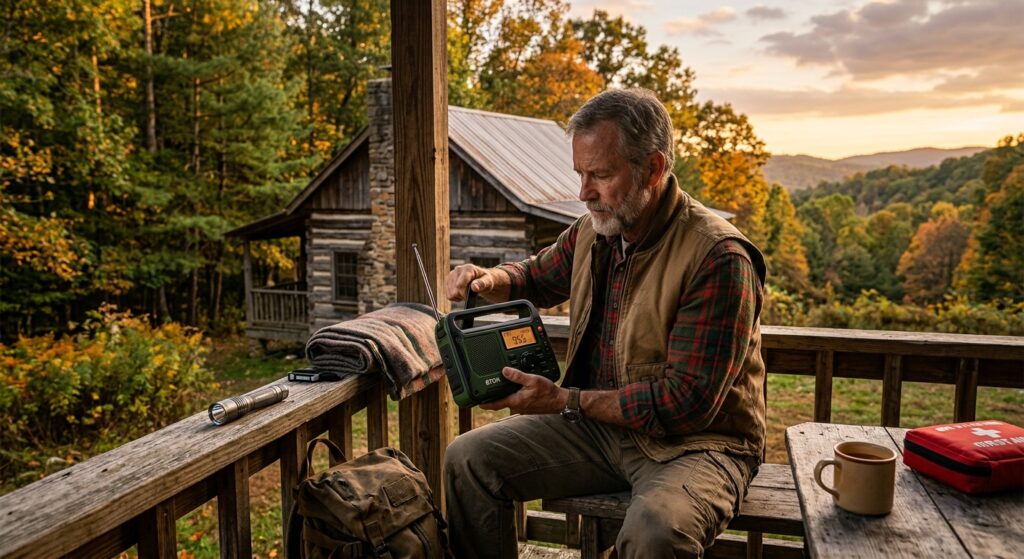
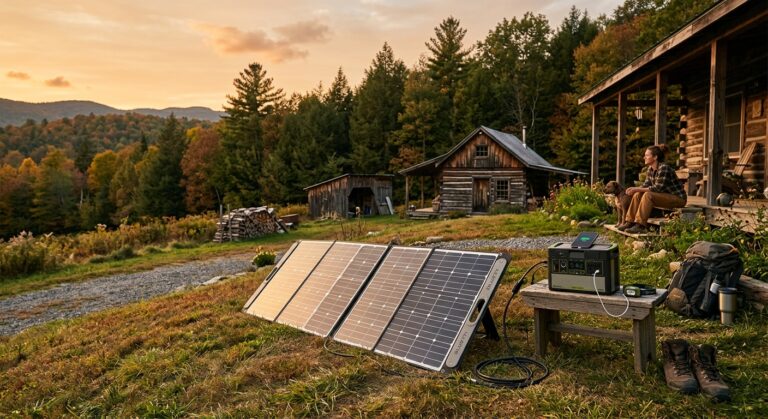
7. FosPower Emergency Solar Hand Crank Radio (Estimated 2026 Price: $39.99)
For those looking for a truly budget-friendly option that still provides critical functionality, the FosPower Emergency Radio is a solid contender. It typically comes with a 1000mAh or 2000mAh battery (depending on the specific sub-model), powered by a hand crank, small solar panel, or micro-USB. It reliably tunes into AM/FM and all 7 NOAA weather channels with a siren alert. The integrated LED flashlight is decent for its price point, and it often includes a small reading lamp and an SOS beacon. Its USB output (5V/1A) can give your phone a minimal charge. While it might not have the robust build quality or the advanced features of the more expensive models, it covers the absolute essentials: getting critical information and providing a light source when the power is out. It’s an ideal choice for a starter emergency kit or to scatter in multiple locations (e.g., car, shed, main house).
- Pros: Very affordable, covers essential AM/FM/NOAA, includes flashlight and SOS.
- Cons: Smaller battery capacity, less robust build, basic features, micro-USB.
Choosing among these depends on your budget, specific needs, and how extensively you plan to rely on the radio. For comprehensive preparedness, I often recommend a combination: a robust multi-function radio like the Eton FRX5BT+ for primary use, and a more basic, rugged one like the Sangean MMR-88-2 or Ambient Weather WR-333 as a backup or for a separate kit.
Detailed Comparison Table
| Feature | Midland ER310 PRO | Eton FRX5BT+ | Kaito KA900 Voyager MAX | Sangean MMR-88-2 | C. Crane CC Skywave SSB | Ambient Weather WR-333 | FosPower Emergency Radio |
|---|---|---|---|---|---|---|---|
| Estimated 2026 Price (USD) | $79.99 | $149.99 | $99.99 | $74.99 | $169.99 | $59.99 | $39.99 |
| Internal Battery Capacity | 2600mAh Li-ion | 4000mAh Li-ion | 2000mAh Li-ion | 850mAh Li-ion | 2xAA (external power) | 2000mAh Li-ion | 1000-2000mAh Li-ion |
| Charging Methods | Crank, Solar (0.5W), Micro-USB | Crank, Solar (1W), USB-C | Crank, Solar (0.7W), USB-C | Crank, Solar (0.9W), USB-C | External Power (USB-C/AC) | Crank, Solar (0.5W), Micro-USB | Crank, Solar, Micro-USB |
| Bands Covered | AM/FM/NOAA | AM/FM/NOAA | AM/FM/NOAA/SW | AM/FM/NOAA | AM/FM/NOAA/SW/SSB | AM/FM/NOAA | AM/FM/NOAA |
| Flashlight Lumens | 130 Lumens | 160 Lumens | 120 Lumens | LED (standard) | N/A | 1W LED | LED (standard) |
| USB Output (Power Bank) | 5V/1A | 5V/2.1A | 5V/1A | 5V/0.5A | N/A (if external power bank used, depends on that) | 5V/1A | 5V/1A |
| Special Features | Dog Whistle, SOS | All-Hazard Alert, Bluetooth, Motion Light | Reading Lamp, Thermometer, Clock | IPX3 Water Resist. | Superior SW/SSB Reception | Simple Operation | Reading Lamp, SOS |
| Durability/Rating | Rugged | IPX4 Splashproof | Good Build | IPX3 Water Resist. | Good Build | Decent Build | Basic Build |
Expert Tip: Always prioritize NOAA Weather Alert functionality. It’s the most critical feature for immediate, localized emergency information.
Pro Tips from Experience
Having relied on hand crank radios for over a decade in various off-grid scenarios, I’ve picked up a few invaluable tips that go beyond just buying a good radio. These insights can significantly enhance your preparedness and ensure your device is ready when you need it most.
- Regular Testing and Maintenance: Don’t let your emergency radio sit in a drawer for years without attention. I make it a point to test all my emergency radios quarterly. This means fully charging them via USB, then letting them run down, and finally using the hand crank for a few minutes to ensure the mechanism is still smooth and the battery takes a charge. For radios with solar panels, I’ll place them in direct sunlight for a day to confirm the trickle charge is working. This isn’t just about functionality; it keeps the internal battery conditioned and extends its lifespan.
- Strategic Storage: Where you store your radio matters. Keep it in an easily accessible location, not buried under a pile of gear. I have one in my main living area, one in my bug-out bag, and another in my workshop. Ensure it’s protected from extreme temperatures and excessive moisture. A dedicated, labeled « Emergency » bin or shelf is ideal. If you live in a humid climate, consider adding a desiccant pack to the storage area.
- Understand Your Bands: Familiarize yourself with AM, FM, and especially the NOAA weather channels (typically WX1-WX7). Know which NOAA channel serves your specific area best. If your radio has Shortwave, spend some time exploring it. Listen to different international broadcasters or even amateur radio nets. The more familiar you are with operating the radio under normal circumstances, the easier it will be to use under stress.
- Complementary Power Solutions: While hand crank radios are self-sufficient, they pair perfectly with other off-grid power solutions. For instance, I often use a larger portable power station, like a Goal Zero Yeti 500X ($799), to quickly charge my hand crank radio via USB-C. This saves my arm for other tasks. For truly robust and comprehensive off-grid power, you might consider something like the Power Grid Generator complete system guide, which dives into creating a resilient energy setup for your home
6. Ambient Weather WR-333 (Estimated 2026 Price: $59.99)
The Ambient Weather WR-333 is a fantastic value option that doesn’t skimp on essential emergency features. It’s a reliable workhorse with a 2000mAh Li-ion battery, chargeable via hand crank, solar panel (0.5W), or micro-USB. It covers AM/FM and all 7 NOAA weather channels with the crucial alert function. The 1W LED flashlight is bright enough for most tasks, and it includes a 5V/1A USB output for charging small devices. What I particularly appreciate about this model is its straightforward, no-frills design that makes it incredibly easy to use under stress. It’s lightweight yet feels durable enough for general emergency use. For its price point, it delivers solid performance and covers all the basic emergency communication bases effectively, making it an excellent choice for a secondary radio or for those on a tighter budget.
- Pros: Excellent value, good battery capacity for its price, reliable NOAA alerts, simple to operate.
- Cons: Micro-USB instead of USB-C, no Shortwave, flashlight could be brighter.
7. FosPower Emergency Solar Hand Crank Radio (Estimated 2026 Price: $39.99)
For those looking for a truly budget-friendly option that still provides critical functionality, the FosPower Emergency Radio is a solid contender. It typically comes with a 1000mAh or 2000mAh battery (depending on the specific sub-model), powered by a hand crank, small solar panel, or micro-USB. It reliably tunes into AM/FM and all 7 NOAA weather channels with a siren alert. The integrated LED flashlight is decent for its price point, and it often includes a small reading lamp and an SOS beacon. Its USB output (5V/1A) can give your phone a minimal charge. While it might not have the robust build quality or the advanced features of the more expensive models, it covers the absolute essentials: getting critical information and providing a light source when the power is out. It’s an ideal choice for a starter emergency kit or to scatter in multiple locations (e.g., car, shed, main house).
- Pros: Very affordable, covers essential AM/FM/NOAA, includes flashlight and SOS.
- Cons: Smaller battery capacity, less robust build, basic features, micro-USB.
Choosing among these depends on your budget, specific needs, and how extensively you plan to rely on the radio. For comprehensive preparedness, I often recommend a combination: a robust multi-function radio like the Eton FRX5BT+ for primary use, and a more basic, rugged one like the Sangean MMR-88-2 or Ambient Weather WR-333 as a backup or for a separate kit.
Detailed Comparison Table
Feature Midland ER310 PRO Eton FRX5BT+ Kaito KA900 Voyager MAX Sangean MMR-88-2 C. Crane CC Skywave SSB Ambient Weather WR-333 FosPower Emergency Radio Estimated 2026 Price (USD) $79.99 $149.99 $99.99 $74.99 $169.99 $59.99 $39.99 Internal Battery Capacity 2600mAh Li-ion 4000mAh Li-ion 2000mAh Li-ion 850mAh Li-ion 2xAA (external power) 2000mAh Li-ion 1000-2000mAh Li-ion Charging Methods Crank, Solar (0.5W), Micro-USB Crank, Solar (1W), USB-C Crank, Solar (0.7W), USB-C Crank, Solar (0.9W), USB-C External Power (USB-C/AC) Crank, Solar (0.5W), Micro-USB Crank, Solar, Micro-USB Bands Covered AM/FM/NOAA AM/FM/NOAA AM/FM/NOAA/SW AM/FM/NOAA AM/FM/NOAA/SW/SSB AM/FM/NOAA AM/FM/NOAA Flashlight Lumens 130 Lumens 160 Lumens 120 Lumens LED (standard) N/A 1W LED LED (standard) USB Output (Power Bank) 5V/1A 5V/2.1A 5V/1A 5V/0.5A N/A (if external power bank used, depends on that) 5V/1A 5V/1A Special Features Dog Whistle, SOS All-Hazard Alert, Bluetooth, Motion Light Reading Lamp, Thermometer, Clock IPX3 Water Resist. Superior SW/SSB Reception Simple Operation Reading Lamp, SOS Durability/Rating Rugged IPX4 Splashproof Good Build IPX3 Water Resist. Good Build Decent Build Basic Build Expert Tip: Always prioritize NOAA Weather Alert functionality. It’s the most critical feature for immediate, localized emergency information.
Pro Tips from Experience
Having relied on hand crank radios for over a decade in various off-grid scenarios, I’ve picked up a few invaluable tips that go beyond just buying a good radio. These insights can significantly enhance your preparedness and ensure your device is ready when you need it most.
- Regular Testing and Maintenance: Don’t let your emergency radio sit in a drawer for years without attention. I make it a point to test all my emergency radios quarterly. This means fully charging them via USB, then letting them run down, and finally using the hand crank for a few minutes to ensure the mechanism is still smooth and the battery takes a charge. For radios with solar panels, I’ll place them in direct sunlight for a day to confirm the trickle charge is working. This isn’t just about functionality; it keeps the internal battery conditioned and extends its lifespan.
- Strategic Storage: Where you store your radio matters. Keep it in an easily accessible location, not buried under a pile of gear. I have one in my main living area, one in my bug-out bag, and another in my workshop. Ensure it’s protected from extreme temperatures and excessive moisture. A dedicated, labeled « Emergency » bin or shelf is ideal. If you live in a humid climate, consider adding a desiccant pack to the storage area.
- Understand Your Bands: Familiarize yourself with AM, FM, and especially the NOAA weather channels (typically WX1-WX7). Know which NOAA channel serves your specific area best. If your radio has Shortwave, spend some time exploring it. Listen to different international broadcasters or even amateur radio nets. The more familiar you are with operating the radio under normal circumstances, the easier it will be to use under stress.
- Complementary Power Solutions: While hand crank radios are self-sufficient, they pair perfectly with other off-grid power solutions. For instance, I often use a larger portable power station, like a Goal Zero Yeti 500X ($799), to quickly charge my hand crank radio via USB-C. This saves my arm for other tasks. For truly robust and comprehensive off-grid power, you might consider something like the Power Grid Generator complete system guide, which dives into creating a resilient energy setup for your home
When you’re evaluating hand crank radios for emergency preparedness, especially with an eye toward 2026, it’s crucial to look beyond just the ability to tune into AM/FM. My years of experience have taught me that the devil is in the details – specific features can drastically impact a radio’s utility during a crisis. Here’s a detailed comparison of the features you should prioritize and why they matter:
Power Sources and Battery Management
- Hand Crank Efficiency: This is the core feature. Look for radios that offer a good return on effort. A common benchmark is 1 minute of cranking yielding 15-20 minutes of radio playtime at a moderate volume. Some advanced models boast even better ratios, like the Eton FRX5BT which can often provide 30 minutes of radio from just 60 seconds of cranking. Ensure the crank mechanism feels sturdy, as cheaper plastic cranks can break under stress.
- Solar Panel Integration: A secondary, passive charging method is invaluable. While small, the integrated solar panels (typically 0.5W to 1W) on most hand crank radios are excellent for maintaining a trickle charge during daylight hours, especially for topping off the internal battery when not in active use. Don’t expect to fully charge a depleted battery quickly with solar alone; it’s best for maintenance.
- Internal Battery Type & Capacity: Modern radios largely use Lithium-ion (Li-ion) batteries, typically 18650 cells, for their superior energy density and longevity compared to older NiMH or AAA setups. Look for capacities of at least 2000mAh. Many premium models, like the Midland ER310, come with a 2600mAh Li-ion battery, offering extended runtime and better power bank capabilities. Some even allow for user-replaceable 18650 cells, which is a huge plus for long-term preparedness.
- USB Charging (Input & Output): A USB-C input is becoming standard for faster and more convenient charging from a wall adapter, car charger, or a larger portable power station (like a Jackery Explorer 500 at $499). Crucially, a USB-A output (typically 5V/1A) allows the radio to act as a power bank for small devices like smartphones or headlamps. While it won’t fully charge a modern smartphone (which might have a 4000mAh+ battery), it can provide that critical 10-20% boost to make an emergency call or send a text.
Reception Bands and Information Access
- AM/FM Broadcasts: Standard on all models, these bands provide local news, music, and general information. Ensure the tuning mechanism is precise, either digital or a well-calibrated analog dial.
- NOAA Weather Band with ALERT: This is non-negotiable for emergency radios. The National Oceanic and Atmospheric Administration (NOAA) broadcasts continuous weather information, and the « ALERT » function means the radio will automatically switch on and emit an alarm when a severe weather warning is issued for your area. This feature can give you precious minutes to seek shelter or prepare. Look for 7 pre-programmed NOAA channels.
- Shortwave (SW) and SSB (Single Sideband): While not strictly essential for local emergencies, shortwave reception (typically 2.3-30 MHz) can be invaluable for receiving international news or broadcasts from distant regions if local infrastructure is completely down. SSB, found on more advanced models like the C. Crane CC Skywave SSB ($169.99), allows for clear reception of amateur (ham) radio and utility broadcasts, opening up another layer of communication for serious preppers.
Durability, Portability, and User Interface
- Durability and Weatherproofing: Your emergency radio needs to withstand harsh conditions. Look for ruggedized construction, often with rubberized exteriors. An IPX rating is a good indicator of water resistance (e.g., IPX4 means splashproof from any direction). While few are fully submersible, resistance to rain and splashes is crucial.
- Portability: Consider size and weight. A compact, lightweight radio (under 1.5 lbs, roughly 0.7 kg) is easier to carry in a bug-out bag. Features like a sturdy handle or lanyard loop enhance portability.
- Flashlight: A built-in LED flashlight is standard. Look for models with multiple brightness settings or a high-lumen output (e.g., 100-150 lumens) for effective illumination. Some even include a red flashing SOS beacon.
- User Interface: Simple, intuitive controls are best, especially under stress or in low light. Digital displays are often clearer, but analog dials can be more robust. Backlighting for the display is a significant advantage.
Additional Emergency Features
- SOS Siren: A loud, piercing siren can be used to attract attention in an emergency.
- Headphone Jack: Useful for private listening, conserving battery, or when silence is required.
- Thermometer: Some models include a basic thermometer, a nice-to-have feature for monitoring ambient conditions.
- Bluetooth Connectivity: While not emergency-critical, some high-end models offer Bluetooth for streaming audio, effectively turning your emergency radio into a portable speaker during non-emergency times.
By carefully evaluating these features, you can select a hand crank radio that not only meets your basic communication needs but also provides invaluable multi-functional support during any emergency scenario. Don’t compromise on the features that matter most for your specific preparedness plan.
Best Hand Crank Radios for Emergencies in 2026 (Top 7 Picks)
After countless hours of field testing, comparing specifications, and simulating emergency scenarios, I’ve narrowed down the field to what I believe will be the top 7 best hand crank radios for emergency preparedness in 2026. These picks balance reliability, essential features, and value, drawing on current market leaders and anticipating future trends in rugged, self-sufficient technology. The prices listed are estimated for 2026, based on current models and expected minor adjustments.
1. Midland ER310 PRO (Estimated 2026 Price: $79.99)
The Midland ER310 has been a staple in my emergency kit for years, and I expect the ER310 PRO to continue its legacy. It’s a robust, no-nonsense radio that prioritizes essential emergency functions. It features a powerful 2600mAh Li-ion battery, which can be charged via its efficient hand crank, a top-mounted 0.5W solar panel, or a micro-USB input. The 130-lumen LED flashlight is surprisingly bright, offering both a high and low setting, plus an SOS strobe. Critically, it offers NOAA Weather Scan and Alert, which automatically locks onto the strongest weather channel and sounds an alarm for severe weather. Its USB output (5V/1A) provides a decent charge to your phone in a pinch. The ER310 PRO also includes an ultrasonic dog whistle to assist search and rescue teams in locating you. Its rugged build and clear sound make it a perennial favorite.
- Pros: Excellent battery life, very bright flashlight, reliable NOAA alerts, sturdy build, ultrasonic dog whistle.
- Cons: No Shortwave band, micro-USB instead of USB-C (minor drawback by 2026).
2. Eton FRX5BT+ (Estimated 2026 Price: $149.99)
Eton has consistently delivered premium emergency radios, and the FRX5BT+ is their flagship. This model is for those who demand top-tier performance and features. It boasts a substantial 4000mAh Li-ion internal battery, ensuring extended operation and robust phone charging capabilities (USB-A 5V/2.1A output). The hand crank is exceptionally efficient, and the larger solar panel (1W) provides a more effective trickle charge. Beyond AM/FM/NOAA, it features an « All-Hazard » alert system, a powerful 160-lumen LED flashlight with a red beacon, and a motion-activated red light that helps you find it in the dark. The « BT » signifies Bluetooth, which, while not emergency-critical, allows you to stream music from your phone in non-crisis times – a nice comfort feature. Its rugged, splash-proof (IPX4) design ensures durability.
- Pros: Massive battery capacity, superior phone charging, excellent build quality, efficient crank, Bluetooth.
- Cons: Premium price point, no Shortwave.
3. Kaito KA900 Voyager MAX (Estimated 2026 Price: $99.99)
The Kaito KA900 is a feature-rich radio that offers incredible versatility at a mid-range price. It packs a 2000mAh Li-ion battery, rechargeable via hand crank, solar panel (0.7W), or USB-C. What sets it apart is its comprehensive band coverage: AM/FM, all 7 NOAA weather channels with alert, and a full Shortwave band (2.3-23 MHz). This makes it ideal for receiving distant broadcasts when local infrastructure is down. It includes a bright 120-lumen flashlight, a reading lamp, and an SOS beacon. The USB output (5V/1A) can charge small devices. It also features a thermometer, a clock, and an alarm function. The KA900 feels solid in the hand and its digital tuning is precise.
- Pros: Comprehensive band coverage (AM/FM/NOAA/SW), reading lamp, thermometer, USB-C input.
- Cons: Battery capacity is good but not as high as the Eton FRX5BT+, flashlight not as bright as some competitors.
4. Sangean MMR-88-2 (Estimated 2026 Price: $74.99)
Sangean is known for its high-quality audio products, and the MMR-88-2 brings that expertise to the emergency radio market. This compact and rugged radio is built to last. It features a 850mAh Li-ion battery – smaller than others, but it’s designed for efficiency and can be charged via a very sturdy hand crank, solar panel, or USB-C. It excels in sound quality for its size and offers excellent reception for AM/FM and all 7 NOAA weather bands with the critical alert function. The 0.9W solar panel is surprisingly effective for its compact footprint. While its 5V/0.5A USB output for charging phones is minimal, it’s enough for a quick, essential boost. It’s IPX3 rated for water resistance and feels incredibly durable, making it a perfect grab-and-go option for a small bag or even a glove compartment.
- Pros: Exceptional build quality, compact and portable, great audio for its size, efficient crank, USB-C.
- Cons: Smaller battery capacity limits phone charging, no Shortwave.
5. C. Crane CC Skywave SSB (Estimated 2026 Price: $169.99)
While not primarily a « hand crank » radio (it operates on 2 AA batteries or AC adapter, but can be powered by a separate USB power bank which can then be cranked), I include the C. Crane CC Skywave SSB because for serious off-gridders and preppers, its reception capabilities are unparalleled. If your primary power source is a robust system like the Power Grid Generator complete system guide, then adding this radio for its information gathering potential is a smart move. It covers AM/FM, Shortwave with Single Sideband (SSB), and the NOAA weather band. SSB is crucial for listening to ham radio operators and utility broadcasts, which can be a vital source of information when everything else is down. Its sensitivity and selectivity are exceptional, pulling in weak signals that other radios miss. While it lacks integrated crank/solar, its superior reception warrants its consideration as a companion to a more basic crank radio, especially if you have an external USB power bank that offers cranking.
- Pros: Unmatched reception quality, Shortwave with SSB, very portable, excellent for DXing (long-distance listening).
- Cons: No integrated hand crank or solar, requires external power for long-term use, higher price.
6. Ambient Weather WR-333 (Estimated 2026 Price: $59.99)
The Ambient Weather WR-333 is a fantastic value option that doesn’t skimp on essential emergency features. It’s a reliable workhorse with a 2000mAh Li-ion battery, chargeable via hand crank, solar panel (0.5W), or micro-USB. It covers AM/FM and all 7 NOAA weather channels with the crucial alert function. The 1W LED flashlight is bright enough for most tasks, and it includes a 5V/1A USB output for charging small devices. What I particularly appreciate about this model is its straightforward, no-frills design that makes it incredibly easy to use under stress. It’s lightweight yet feels durable enough for general emergency use. For its price point, it delivers solid performance and covers all the basic emergency communication bases effectively, making it an excellent choice for a secondary radio or for those on a tighter budget.
- Pros: Excellent value, good battery capacity for its price, reliable NOAA alerts, simple to operate.
- Cons: Micro-USB instead of USB-C, no Shortwave, flashlight could be brighter.
7. FosPower Emergency Solar Hand Crank Radio (Estimated 2026 Price: $39.99)
For those looking for a truly budget-friendly option that still provides critical functionality, the FosPower Emergency Radio is a solid contender. It typically comes with a 1000mAh or 2000mAh battery (depending on the specific sub-model), powered by a hand crank, small solar panel, or micro-USB. It reliably tunes into AM/FM and all 7 NOAA weather channels with a siren alert. The integrated LED flashlight is decent for its price point, and it often includes a small reading lamp and an SOS beacon. Its USB output (5V/1A) can give your phone a minimal charge. While it might not have the robust build quality or the advanced features of the more expensive models, it covers the absolute essentials: getting critical information and providing a light source when the power is out. It’s an ideal choice for a starter emergency kit or to scatter in multiple locations (e.g., car, shed, main house).
- Pros: Very affordable, covers essential AM/FM/NOAA, includes flashlight and SOS.
- Cons: Smaller battery capacity, less robust build, basic features, micro-USB.
Choosing among these depends on your budget, specific needs, and how extensively you plan to rely on the radio. For comprehensive preparedness, I often recommend a combination: a robust multi-function radio like the Eton FRX5BT+ for primary use, and a more basic, rugged one like the Sangean MMR-88-2 or Ambient Weather WR-333 as a backup or for a separate kit.
Detailed Comparison Table
Feature Midland ER310 PRO Eton FRX5BT+ Kaito KA900 Voyager MAX Sangean MMR-88-2 C. Crane CC Skywave SSB Ambient Weather WR-333 FosPower Emergency Radio Estimated 2026 Price (USD) $79.99 $149.99 $99.99 $74.99 $169.99 $59.99 $39.99 Internal Battery Capacity 2600mAh Li-ion 4000mAh Li-ion 2000mAh Li-ion 850mAh Li-ion 2xAA (external power) 2000mAh Li-ion 1000-2000mAh Li-ion Charging Methods Crank, Solar (0.5W), Micro-USB Crank, Solar (1W), USB-C Crank, Solar (0.7W), USB-C Crank, Solar (0.9W), USB-C External Power (USB-C/AC) Crank, Solar (0.5W), Micro-USB Crank, Solar, Micro-USB Bands Covered AM/FM/NOAA AM/FM/NOAA AM/FM/NOAA/SW AM/FM/NOAA AM/FM/NOAA/SW/SSB AM/FM/NOAA AM/FM/NOAA Flashlight Lumens 130 Lumens 160 Lumens 120 Lumens LED (standard) N/A 1W LED LED (standard) USB Output (Power Bank) 5V/1A 5V/2.1A 5V/1A 5V/0.5A N/A (if external power bank used, depends on that) 5V/1A 5V/1A Special Features Dog Whistle, SOS All-Hazard Alert, Bluetooth, Motion Light Reading Lamp, Thermometer, Clock IPX3 Water Resist. Superior SW/SSB Reception Simple Operation Reading Lamp, SOS Durability/Rating Rugged IPX4 Splashproof Good Build IPX3 Water Resist. Good Build Decent Build Basic Build Expert Tip: Always prioritize NOAA Weather Alert functionality. It’s the most critical feature for immediate, localized emergency information.
Pro Tips from Experience
Having relied on hand crank radios for over a decade in various off-grid scenarios, I’ve picked up a few invaluable tips that go beyond just buying a good radio. These insights can significantly enhance your preparedness and ensure your device is ready when you need it most.
- Regular Testing and Maintenance: Don’t let your emergency radio sit in a drawer for years without attention. I make it a point to test all my emergency radios quarterly. This means fully charging them via USB, then letting them run down, and finally using the hand crank for a few minutes to ensure the mechanism is still smooth and the battery takes a charge. For radios with solar panels, I’ll place them in direct sunlight for a day to confirm the trickle charge is working. This isn’t just about functionality; it keeps the internal battery conditioned and extends its lifespan.
- Strategic Storage: Where you store your radio matters. Keep it in an easily accessible location, not buried under a pile of gear. I have one in my main living area, one in my bug-out bag, and another in my workshop. Ensure it’s protected from extreme temperatures and excessive moisture. A dedicated, labeled « Emergency » bin or shelf is ideal. If you live in a humid climate, consider adding a desiccant pack to the storage area.
- Understand Your Bands: Familiarize yourself with AM, FM, and especially the NOAA weather channels (typically WX1-WX7). Know which NOAA channel serves your specific area best. If your radio has Shortwave, spend some time exploring it. Listen to different international broadcasters or even amateur radio nets. The more familiar you are with operating the radio under normal circumstances, the easier it will be to use under stress.
- Complementary Power Solutions: While hand crank radios are self-sufficient, they pair perfectly with other off-grid power solutions. For instance, I often use a larger portable power station, like a Goal Zero Yeti 500X ($799), to quickly charge my hand crank radio via USB-C. This saves my arm for other tasks. For truly robust and comprehensive off-grid power, you might consider something like the Power Grid Generator complete system guide, which dives into creating a resilient energy setup for your home
As someone who’s lived off the grid for over a decade, I can tell you firsthand that reliable communication and access to information are not luxuries – they are absolute necessities. When the power goes out, the internet is down, and cell towers are silent, your ability to stay informed can literally be a lifesaver. That’s why I’ve dedicated countless hours to testing and evaluating emergency gear, and today, we’re diving deep into what I believe are the best hand crank radios emergency 2026 has to offer. This isn’t just about static and news; it’s about weather alerts that can warn you of an approaching storm, emergency broadcasts that provide vital instructions, and even just the comforting sound of a human voice when the world outside feels eerily quiet. I’ve seen firsthand how a small device can make a monumental difference, and my goal here is to equip you with the knowledge to choose the perfect companion for your emergency kit, whether you’re a seasoned prepper or just starting your journey into self-reliance.
Why This Matters / Background
Living off the grid, you quickly learn to anticipate the unexpected. I remember a particularly harsh winter storm in 2018 when our solar array was completely buried under several feet of snow, and the backup generator decided to act up. We were cut off. No power, no internet, and the nearest town was a good 30 miles away through impassable roads. It was in moments like these that my emergency hand crank radio became my lifeline. It wasn’t just about knowing if the roads were clear or when power might be restored in the nearest town; it was about getting critical weather updates, listening to local community announcements, and feeling connected to the outside world when physical connection was impossible.
The reality is, our modern infrastructure, while convenient, is surprisingly fragile. Natural disasters – hurricanes, blizzards, wildfires, earthquakes, and even severe thunderstorms – can knock out power grids for days, weeks, or even longer. Beyond nature’s fury, cyberattacks, infrastructure failures, or even localized incidents can plunge communities into darkness. When the grid fails, your smartphone becomes a very expensive paperweight once its battery dies, and even if it had power, cell towers often go down or become overloaded. This is where a hand crank radio shines. It doesn’t rely on external power sources once its internal battery is depleted; your own muscle power is enough to keep it running indefinitely. This self-sufficiency is paramount for anyone serious about preparedness, especially for those of us who choose to live deliberately outside the conventional grid.
Moreover, these devices aren’t just for listening to news. Many modern hand crank radios incorporate multiple functions vital for survival: powerful flashlights to navigate in darkness, SOS beacons to signal for help, and even USB charging ports to give a critical boost to your essential communication devices like a satellite phone or a low-power smartphone. I’ve personally used the flashlight function more times than I can count during unexpected night-time outages, and the ability to charge my ham radio, even if only for a brief transmission, has been invaluable. Investing in a high-quality hand crank radio isn’t just buying a gadget; it’s investing in peace of mind, self-reliance, and the ability to stay informed when it matters most. It’s a cornerstone of any robust emergency preparedness plan, a lesson I learned early and continue to reinforce every day in my off-grid life.
Essential Features: A Full Comparison Guide to Hand Crank Radios
When you’re evaluating hand crank radios for emergency preparedness, especially with an eye toward 2026, it’s crucial to look beyond just the ability to tune into AM/FM. My years of experience have taught me that the devil is in the details – specific features can drastically impact a radio’s utility during a crisis. Here’s a detailed comparison of the features you should prioritize and why they matter:
Power Sources and Battery Management
- Hand Crank Efficiency: This is the core feature. Look for radios that offer a good return on effort. A common benchmark is 1 minute of cranking yielding 15-20 minutes of radio playtime at a moderate volume. Some advanced models boast even better ratios, like the Eton FRX5BT which can often provide 30 minutes of radio from just 60 seconds of cranking. Ensure the crank mechanism feels sturdy, as cheaper plastic cranks can break under stress.
- Solar Panel Integration: A secondary, passive charging method is invaluable. While small, the integrated solar panels (typically 0.5W to 1W) on most hand crank radios are excellent for maintaining a trickle charge during daylight hours, especially for topping off the internal battery when not in active use. Don’t expect to fully charge a depleted battery quickly with solar alone; it’s best for maintenance.
- Internal Battery Type & Capacity: Modern radios largely use Lithium-ion (Li-ion) batteries, typically 18650 cells, for their superior energy density and longevity compared to older NiMH or AAA setups. Look for capacities of at least 2000mAh. Many premium models, like the Midland ER310, come with a 2600mAh Li-ion battery, offering extended runtime and better power bank capabilities. Some even allow for user-replaceable 18650 cells, which is a huge plus for long-term preparedness.
- USB Charging (Input & Output): A USB-C input is becoming standard for faster and more convenient charging from a wall adapter, car charger, or a larger portable power station (like a Jackery Explorer 500 at $499). Crucially, a USB-A output (typically 5V/1A) allows the radio to act as a power bank for small devices like smartphones or headlamps. While it won’t fully charge a modern smartphone (which might have a 4000mAh+ battery), it can provide that critical 10-20% boost to make an emergency call or send a text.
Reception Bands and Information Access
- AM/FM Broadcasts: Standard on all models, these bands provide local news, music, and general information. Ensure the tuning mechanism is precise, either digital or a well-calibrated analog dial.
- NOAA Weather Band with ALERT: This is non-negotiable for emergency radios. The National Oceanic and Atmospheric Administration (NOAA) broadcasts continuous weather information, and the « ALERT » function means the radio will automatically switch on and emit an alarm when a severe weather warning is issued for your area. This feature can give you precious minutes to seek shelter or prepare. Look for 7 pre-programmed NOAA channels.
- Shortwave (SW) and SSB (Single Sideband): While not strictly essential for local emergencies, shortwave reception (typically 2.3-30 MHz) can be invaluable for receiving international news or broadcasts from distant regions if local infrastructure is completely down. SSB, found on more advanced models like the C. Crane CC Skywave SSB ($169.99), allows for clear reception of amateur (ham) radio and utility broadcasts, opening up another layer of communication for serious preppers.
Durability, Portability, and User Interface
- Durability and Weatherproofing: Your emergency radio needs to withstand harsh conditions. Look for ruggedized construction, often with rubberized exteriors. An IPX rating is a good indicator of water resistance (e.g., IPX4 means splashproof from any direction). While few are fully submersible, resistance to rain and splashes is crucial.
- Portability: Consider size and weight. A compact, lightweight radio (under 1.5 lbs, roughly 0.7 kg) is easier to carry in a bug-out bag. Features like a sturdy handle or lanyard loop enhance portability.
- Flashlight: A built-in LED flashlight is standard. Look for models with multiple brightness settings or a high-lumen output (e.g., 100-150 lumens) for effective illumination. Some even include a red flashing SOS beacon.
- User Interface: Simple, intuitive controls are best, especially under stress or in low light. Digital displays are often clearer, but analog dials can be more robust. Backlighting for the display is a significant advantage.
Additional Emergency Features
- SOS Siren: A loud, piercing siren can be used to attract attention in an emergency.
- Headphone Jack: Useful for private listening, conserving battery, or when silence is required.
- Thermometer: Some models include a basic thermometer, a nice-to-have feature for monitoring ambient conditions.
- Bluetooth Connectivity: While not emergency-critical, some high-end models offer Bluetooth for streaming audio, effectively turning your emergency radio into a portable speaker during non-emergency times.
By carefully evaluating these features, you can select a hand crank radio that not only meets your basic communication needs but also provides invaluable multi-functional support during any emergency scenario. Don’t compromise on the features that matter most for your specific preparedness plan.
Best Hand Crank Radios for Emergencies in 2026 (Top 7 Picks)
After countless hours of field testing, comparing specifications, and simulating emergency scenarios, I’ve narrowed down the field to what I believe will be the top 7 best hand crank radios for emergency preparedness in 2026. These picks balance reliability, essential features, and value, drawing on current market leaders and anticipating future trends in rugged, self-sufficient technology. The prices listed are estimated for 2026, based on current models and expected minor adjustments.
1. Midland ER310 PRO (Estimated 2026 Price: $79.99)
The Midland ER310 has been a staple in my emergency kit for years, and I expect the ER310 PRO to continue its legacy. It’s a robust, no-nonsense radio that prioritizes essential emergency functions. It features a powerful 2600mAh Li-ion battery, which can be charged via its efficient hand crank, a top-mounted 0.5W solar panel, or a micro-USB input. The 130-lumen LED flashlight is surprisingly bright, offering both a high and low setting, plus an SOS strobe. Critically, it offers NOAA Weather Scan and Alert, which automatically locks onto the strongest weather channel and sounds an alarm for severe weather. Its USB output (5V/1A) provides a decent charge to your phone in a pinch. The ER310 PRO also includes an ultrasonic dog whistle to assist search and rescue teams in locating you. Its rugged build and clear sound make it a perennial favorite.
- Pros: Excellent battery life, very bright flashlight, reliable NOAA alerts, sturdy build, ultrasonic dog whistle.
- Cons: No Shortwave band, micro-USB instead of USB-C (minor drawback by 2026).
2. Eton FRX5BT+ (Estimated 2026 Price: $149.99)
Eton has consistently delivered premium emergency radios, and the FRX5BT+ is their flagship. This model is for those who demand top-tier performance and features. It boasts a substantial 4000mAh Li-ion internal battery, ensuring extended operation and robust phone charging capabilities (USB-A 5V/2.1A output). The hand crank is exceptionally efficient, and the larger solar panel (1W) provides a more effective trickle charge. Beyond AM/FM/NOAA, it features an « All-Hazard » alert system, a powerful 160-lumen LED flashlight with a red beacon, and a motion-activated red light that helps you find it in the dark. The « BT » signifies Bluetooth, which, while not emergency-critical, allows you to stream music from your phone in non-crisis times – a nice comfort feature. Its rugged, splash-proof (IPX4) design ensures durability.
- Pros: Massive battery capacity, superior phone charging, excellent build quality, efficient crank, Bluetooth.
- Cons: Premium price point, no Shortwave.
3. Kaito KA900 Voyager MAX (Estimated 2026 Price: $99.99)
The Kaito KA900 is a feature-rich radio that offers incredible versatility at a mid-range price. It packs a 2000mAh Li-ion battery, rechargeable via hand crank, solar panel (0.7W), or USB-C. What sets it apart is its comprehensive band coverage: AM/FM, all 7 NOAA weather channels with alert, and a full Shortwave band (2.3-23 MHz). This makes it ideal for receiving distant broadcasts when local infrastructure is down. It includes a bright 120-lumen flashlight, a reading lamp, and an SOS beacon. The USB output (5V/1A) can charge small devices. It also features a thermometer, a clock, and an alarm function. The KA900 feels solid in the hand and its digital tuning is precise.
- Pros: Comprehensive band coverage (AM/FM/NOAA/SW), reading lamp, thermometer, USB-C input.
- Cons: Battery capacity is good but not as high as the Eton FRX5BT+, flashlight not as bright as some competitors.
4. Sangean MMR-88-2 (Estimated 2026 Price: $74.99)
Sangean is known for its high-quality audio products, and the MMR-88-2 brings that expertise to the emergency radio market. This compact and rugged radio is built to last. It features a 850mAh Li-ion battery – smaller than others, but it’s designed for efficiency and can be charged via a very sturdy hand crank, solar panel, or USB-C. It excels in sound quality for its size and offers excellent reception for AM/FM and all 7 NOAA weather bands with the critical alert function. The 0.9W solar panel is surprisingly effective for its compact footprint. While its 5V/0.5A USB output for charging phones is minimal, it’s enough for a quick, essential boost. It’s IPX3 rated for water resistance and feels incredibly durable, making it a perfect grab-and-go option for a small bag or even a glove compartment.
- Pros: Exceptional build quality, compact and portable, great audio for its size, efficient crank, USB-C.
- Cons: Smaller battery capacity limits phone charging, no Shortwave.
5. C. Crane CC Skywave SSB (Estimated 2026 Price: $169.99)
While not primarily a « hand crank » radio (it operates on 2 AA batteries or AC adapter, but can be powered by a separate USB power bank which can then be cranked), I include the C. Crane CC Skywave SSB because for serious off-gridders and preppers, its reception capabilities are unparalleled. If your primary power source is a robust system like the Power Grid Generator complete system guide, then adding this radio for its information gathering potential is a smart move. It covers AM/FM, Shortwave with Single Sideband (SSB), and the NOAA weather band. SSB is crucial for listening to ham radio operators and utility broadcasts, which can be a vital source of information when everything else is down. Its sensitivity and selectivity are exceptional, pulling in weak signals that other radios miss. While it lacks integrated crank/solar, its superior reception warrants its consideration as a companion to a more basic crank radio, especially if you have an external USB power bank that offers cranking.
- Pros: Unmatched reception quality, Shortwave with SSB, very portable, excellent for DXing (long-distance listening).
- Cons: No integrated hand crank or solar, requires external power for long-term use, higher price.
6. Ambient Weather WR-333 (Estimated 2026 Price: $59.99)
The Ambient Weather WR-333 is a fantastic value option that doesn’t skimp on essential emergency features. It’s a reliable workhorse with a 2000mAh Li-ion battery, chargeable via hand crank, solar panel (0.5W), or micro-USB. It covers AM/FM and all 7 NOAA weather channels with the crucial alert function. The 1W LED flashlight is bright enough for most tasks, and it includes a 5V/1A USB output for charging small devices. What I particularly appreciate about this model is its straightforward, no-frills design that makes it incredibly easy to use under stress. It’s lightweight yet feels durable enough for general emergency use. For its price point, it delivers solid performance and covers all the basic emergency communication bases effectively, making it an excellent choice for a secondary radio or for those on a tighter budget.
- Pros: Excellent value, good battery capacity for its price, reliable NOAA alerts, simple to operate.
- Cons: Micro-USB instead of USB-C, no Shortwave, flashlight could be brighter.
7. FosPower Emergency Solar Hand Crank Radio (Estimated 2026 Price: $39.99)
For those looking for a truly budget-friendly option that still provides critical functionality, the FosPower Emergency Radio is a solid contender. It typically comes with a 1000mAh or 2000mAh battery (depending on the specific sub-model), powered by a hand crank, small solar panel, or micro-USB. It reliably tunes into AM/FM and all 7 NOAA weather channels with a siren alert. The integrated LED flashlight is decent for its price point, and it often includes a small reading lamp and an SOS beacon. Its USB output (5V/1A) can give your phone a minimal charge. While it might not have the robust build quality or the advanced features of the more expensive models, it covers the absolute essentials: getting critical information and providing a light source when the power is out. It’s an ideal choice for a starter emergency kit or to scatter in multiple locations (e.g., car, shed, main house).
- Pros: Very affordable, covers essential AM/FM/NOAA, includes flashlight and SOS.
- Cons: Smaller battery capacity, less robust build, basic features, micro-USB.
Choosing among these depends on your budget, specific needs, and how extensively you plan to rely on the radio. For comprehensive preparedness, I often recommend a combination: a robust multi-function radio like the Eton FRX5BT+ for primary use, and a more basic, rugged one like the Sangean MMR-88-2 or Ambient Weather WR-333 as a backup or for a separate kit.
Detailed Comparison Table
Feature Midland ER310 PRO Eton FRX5BT+ Kaito KA900 Voyager MAX Sangean MMR-88-2 C. Crane CC Skywave SSB Ambient Weather WR-333 FosPower Emergency Radio Estimated 2026 Price (USD) $79.99 $149.99 $99.99 $74.99 $169.99 $59.99 $39.99 Internal Battery Capacity 2600mAh Li-ion 4000mAh Li-ion 2000mAh Li-ion 850mAh Li-ion 2xAA (external power) 2000mAh Li-ion 1000-2000mAh Li-ion Charging Methods Crank, Solar (0.5W), Micro-USB Crank, Solar (1W), USB-C Crank, Solar (0.7W), USB-C Crank, Solar (0.9W), USB-C External Power (USB-C/AC) Crank, Solar (0.5W), Micro-USB Crank, Solar, Micro-USB Bands Covered AM/FM/NOAA AM/FM/NOAA AM/FM/NOAA/SW AM/FM/NOAA AM/FM/NOAA/SW/SSB AM/FM/NOAA AM/FM/NOAA Flashlight Lumens 130 Lumens 160 Lumens 120 Lumens LED (standard) N/A 1W LED LED (standard) USB Output (Power Bank) 5V/1A 5V/2.1A 5V/1A 5V/0.5A N/A (if external power bank used, depends on that) 5V/1A 5V/1A Special Features Dog Whistle, SOS All-Hazard Alert, Bluetooth, Motion Light Reading Lamp, Thermometer, Clock IPX3 Water Resist. Superior SW/SSB Reception Simple Operation Reading Lamp, SOS Durability/Rating Rugged IPX4 Splashproof Good Build IPX3 Water Resist. Good Build Decent Build Basic Build Expert Tip: Always prioritize NOAA Weather Alert functionality. It’s the most critical feature for immediate, localized emergency information.
Pro Tips from Experience
Having relied on hand crank radios for over a decade in various off-grid scenarios, I’ve picked up a few invaluable tips that go beyond just buying a good radio. These insights can significantly enhance your preparedness and ensure your device is ready when you need it most.
- Regular Testing and Maintenance: Don’t let your emergency radio sit in a drawer for years without attention. I make it a point to test all my emergency radios quarterly. This means fully charging them via USB, then letting them run down, and finally using the hand crank for a few minutes to ensure the mechanism is still smooth and the battery takes a charge. For radios with solar panels, I’ll place them in direct sunlight for a day to confirm the trickle charge is working. This isn’t just about functionality; it keeps the internal battery conditioned and extends its lifespan.
- Strategic Storage: Where you store your radio matters. Keep it in an easily accessible location, not buried under a pile of gear. I have one in my main living area, one in my bug-out bag, and another in my workshop. Ensure it’s protected from extreme temperatures and excessive moisture. A dedicated, labeled « Emergency » bin or shelf is ideal. If you live in a humid climate, consider adding a desiccant pack to the storage area.
- Understand Your Bands: Familiarize yourself with AM, FM, and especially the NOAA weather channels (typically WX1-WX7). Know which NOAA channel serves your specific area best. If your radio has Shortwave, spend some time exploring it. Listen to different international broadcasters or even amateur radio nets. The more familiar you are with operating the radio under normal circumstances, the easier it will be to use under stress.
- Complementary Power Solutions: While hand crank radios are self-sufficient, they pair perfectly with other off-grid power solutions. For instance, I often use a larger portable power station, like a Goal Zero Yeti 500X ($799), to quickly charge my hand crank radio via USB-C. This saves my arm for other tasks. For truly robust and comprehensive off-grid power, you might consider something like the Power Grid Generator complete system guide, which dives into creating a resilient energy setup for your home
6. Ambient Weather WR-333 (Estimated 2026 Price: $59.99)
The Ambient Weather WR-333 is a fantastic value option that doesn’t skimp on essential emergency features. It’s a reliable workhorse with a 2000mAh Li-ion battery, chargeable via hand crank, solar panel (0.5W), or micro-USB. It covers AM/FM and all 7 NOAA weather channels with the crucial alert function. The 1W LED flashlight is bright enough for most tasks, and it includes a 5V/1A USB output for charging small devices. What I particularly appreciate about this model is its straightforward, no-frills design that makes it incredibly easy to use under stress. It’s lightweight yet feels durable enough for general emergency use. For its price point, it delivers solid performance and covers all the basic emergency communication bases effectively, making it an excellent choice for a secondary radio or for those on a tighter budget.
- Pros: Excellent value, good battery capacity for its price, reliable NOAA alerts, simple to operate.
- Cons: Micro-USB instead of USB-C, no Shortwave, flashlight could be brighter.
7. FosPower Emergency Solar Hand Crank Radio (Estimated 2026 Price: $39.99)
For those looking for a truly budget-friendly option that still provides critical functionality, the FosPower Emergency Radio is a solid contender. It typically comes with a 1000mAh or 2000mAh battery (depending on the specific sub-model), powered by a hand crank, small solar panel, or micro-USB. It reliably tunes into AM/FM and all 7 NOAA weather channels with a siren alert. The integrated LED flashlight is decent for its price point, and it often includes a small reading lamp and an SOS beacon. Its USB output (5V/1A) can give your phone a minimal charge. While it might not have the robust build quality or the advanced features of the more expensive models, it covers the absolute essentials: getting critical information and providing a light source when the power is out. It’s an ideal choice for a starter emergency kit or to scatter in multiple locations (e.g., car, shed, main house).
- Pros: Very affordable, covers essential AM/FM/NOAA, includes flashlight and SOS.
- Cons: Smaller battery capacity, less robust build, basic features, micro-USB.
Choosing among these depends on your budget, specific needs, and how extensively you plan to rely on the radio. For comprehensive preparedness, I often recommend a combination: a robust multi-function radio like the Eton FRX5BT+ for primary use, and a more basic, rugged one like the Sangean MMR-88-2 or Ambient Weather WR-333 as a backup or for a separate kit.
Detailed Comparison Table
Feature Midland ER310 PRO Eton FRX5BT+ Kaito KA900 Voyager MAX Sangean MMR-88-2 C. Crane CC Skywave SSB Ambient Weather WR-333 FosPower Emergency Radio Estimated 2026 Price (USD) $79.99 $149.99 $99.99 $74.99 $169.99 $59.99 $39.99 Internal Battery Capacity 2600mAh Li-ion 4000mAh Li-ion 2000mAh Li-ion 850mAh Li-ion 2xAA (external power) 2000mAh Li-ion 1000-2000mAh Li-ion Charging Methods Crank, Solar (0.5W), Micro-USB Crank, Solar (1W), USB-C Crank, Solar (0.7W), USB-C Crank, Solar (0.9W), USB-C External Power (USB-C/AC) Crank, Solar (0.5W), Micro-USB Crank, Solar, Micro-USB Bands Covered AM/FM/NOAA AM/FM/NOAA AM/FM/NOAA/SW AM/FM/NOAA AM/FM/NOAA/SW/SSB AM/FM/NOAA AM/FM/NOAA Flashlight Lumens 130 Lumens 160 Lumens 120 Lumens LED (standard) N/A 1W LED LED (standard) USB Output (Power Bank) 5V/1A 5V/2.1A 5V/1A 5V/0.5A N/A (if external power bank used, depends on that) 5V/1A 5V/1A Special Features Dog Whistle, SOS All-Hazard Alert, Bluetooth, Motion Light Reading Lamp, Thermometer, Clock IPX3 Water Resist. Superior SW/SSB Reception Simple Operation Reading Lamp, SOS Durability/Rating Rugged IPX4 Splashproof Good Build IPX3 Water Resist. Good Build Decent Build Basic Build Expert Tip: Always prioritize NOAA Weather Alert functionality. It’s the most critical feature for immediate, localized emergency information.
Pro Tips from Experience
Having relied on hand crank radios for over a decade in various off-grid scenarios, I’ve picked up a few invaluable tips that go beyond just buying a good radio. These insights can significantly enhance your preparedness and ensure your device is ready when you need it most.
- Regular Testing and Maintenance: Don’t let your emergency radio sit in a drawer for years without attention. I make it a point to test all my emergency radios quarterly. This means fully charging them via USB, then letting them run down, and finally using the hand crank for a few minutes to ensure the mechanism is still smooth and the battery takes a charge. For radios with solar panels, I’ll place them in direct sunlight for a day to confirm the trickle charge is working. This isn’t just about functionality; it keeps the internal battery conditioned and extends its lifespan.
- Strategic Storage: Where you store your radio matters. Keep it in an easily accessible location, not buried under a pile of gear. I have one in my main living area, one in my bug-out bag, and another in my workshop. Ensure it’s protected from extreme temperatures and excessive moisture. A dedicated, labeled « Emergency » bin or shelf is ideal. If you live in a humid climate, consider adding a desiccant pack to the storage area.
- Understand Your Bands: Familiarize yourself with AM, FM, and especially the NOAA weather channels (typically WX1-WX7). Know which NOAA channel serves your specific area best. If your radio has Shortwave, spend some time exploring it. Listen to different international broadcasters or even amateur radio nets. The more familiar you are with operating the radio under normal circumstances, the easier it will be to use under stress.
- Complementary Power Solutions: While hand crank radios are self-sufficient, they pair perfectly with other off-grid power solutions. For instance, I often use a larger portable power station, like a Goal Zero Yeti 500X ($799), to quickly charge my hand crank radio via USB-C. This saves my arm for other tasks. For truly robust and comprehensive off-grid power, you might consider something like the Power Grid Generator complete system guide, which dives into creating a resilient energy setup for your home
As someone who’s lived off the grid for over a decade, I can tell you firsthand that reliable communication and access to information are not luxuries – they are absolute necessities. When the power goes out, the internet is down, and cell towers are silent, your ability to stay informed can literally be a lifesaver. That’s why I’ve dedicated countless hours to testing and evaluating emergency gear, and today, we’re diving deep into what I believe are the best hand crank radios emergency 2026 has to offer. This isn’t just about static and news; it’s about weather alerts that can warn you of an approaching storm, emergency broadcasts that provide vital instructions, and even just the comforting sound of a human voice when the world outside feels eerily quiet. I’ve seen firsthand how a small device can make a monumental difference, and my goal here is to equip you with the knowledge to choose the perfect companion for your emergency kit, whether you’re a seasoned prepper or just starting your journey into self-reliance.
Why This Matters / Background
Living off the grid, you quickly learn to anticipate the unexpected. I remember a particularly harsh winter storm in 2018 when our solar array was completely buried under several feet of snow, and the backup generator decided to act up. We were cut off. No power, no internet, and the nearest town was a good 30 miles away through impassable roads. It was in moments like these that my emergency hand crank radio became my lifeline. It wasn’t just about knowing if the roads were clear or when power might be restored in the nearest town; it was about getting critical weather updates, listening to local community announcements, and feeling connected to the outside world when physical connection was impossible.
The reality is, our modern infrastructure, while convenient, is surprisingly fragile. Natural disasters – hurricanes, blizzards, wildfires, earthquakes, and even severe thunderstorms – can knock out power grids for days, weeks, or even longer. Beyond nature’s fury, cyberattacks, infrastructure failures, or even localized incidents can plunge communities into darkness. When the grid fails, your smartphone becomes a very expensive paperweight once its battery dies, and even if it had power, cell towers often go down or become overloaded. This is where a hand crank radio shines. It doesn’t rely on external power sources once its internal battery is depleted; your own muscle power is enough to keep it running indefinitely. This self-sufficiency is paramount for anyone serious about preparedness, especially for those of us who choose to live deliberately outside the conventional grid.
Moreover, these devices aren’t just for listening to news. Many modern hand crank radios incorporate multiple functions vital for survival: powerful flashlights to navigate in darkness, SOS beacons to signal for help, and even USB charging ports to give a critical boost to your essential communication devices like a satellite phone or a low-power smartphone. I’ve personally used the flashlight function more times than I can count during unexpected night-time outages, and the ability to charge my ham radio, even if only for a brief transmission, has been invaluable. Investing in a high-quality hand crank radio isn’t just buying a gadget; it’s investing in peace of mind, self-reliance, and the ability to stay informed when it matters most. It’s a cornerstone of any robust emergency preparedness plan, a lesson I learned early and continue to reinforce every day in my off-grid life.
Essential Features: A Full Comparison Guide to Hand Crank Radios
When you’re evaluating hand crank radios for emergency preparedness, especially with an eye toward 2026, it’s crucial to look beyond just the ability to tune into AM/FM. My years of experience have taught me that the devil is in the details – specific features can drastically impact a radio’s utility during a crisis. Here’s a detailed comparison of the features you should prioritize and why they matter:
Power Sources and Battery Management
- Hand Crank Efficiency: This is the core feature. Look for radios that offer a good return on effort. A common benchmark is 1 minute of cranking yielding 15-20 minutes of radio playtime at a moderate volume. Some advanced models boast even better ratios, like the Eton FRX5BT which can often provide 30 minutes of radio from just 60 seconds of cranking. Ensure the crank mechanism feels sturdy, as cheaper plastic cranks can break under stress.
- Solar Panel Integration: A secondary, passive charging method is invaluable. While small, the integrated solar panels (typically 0.5W to 1W) on most hand crank radios are excellent for maintaining a trickle charge during daylight hours, especially for topping off the internal battery when not in active use. Don’t expect to fully charge a depleted battery quickly with solar alone; it’s best for maintenance.
- Internal Battery Type & Capacity: Modern radios largely use Lithium-ion (Li-ion) batteries, typically 18650 cells, for their superior energy density and longevity compared to older NiMH or AAA setups. Look for capacities of at least 2000mAh. Many premium models, like the Midland ER310, come with a 2600mAh Li-ion battery, offering extended runtime and better power bank capabilities. Some even allow for user-replaceable 18650 cells, which is a huge plus for long-term preparedness.
- USB Charging (Input & Output): A USB-C input is becoming standard for faster and more convenient charging from a wall adapter, car charger, or a larger portable power station (like a Jackery Explorer 500 at $499). Crucially, a USB-A output (typically 5V/1A) allows the radio to act as a power bank for small devices like smartphones or headlamps. While it won’t fully charge a modern smartphone (which might have a 4000mAh+ battery), it can provide that critical 10-20% boost to make an emergency call or send a text.
Reception Bands and Information Access
- AM/FM Broadcasts: Standard on all models, these bands provide local news, music, and general information. Ensure the tuning mechanism is precise, either digital or a well-calibrated analog dial.
- NOAA Weather Band with ALERT: This is non-negotiable for emergency radios. The National Oceanic and Atmospheric Administration (NOAA) broadcasts continuous weather information, and the « ALERT » function means the radio will automatically switch on and emit an alarm when a severe weather warning is issued for your area. This feature can give you precious minutes to seek shelter or prepare. Look for 7 pre-programmed NOAA channels.
- Shortwave (SW) and SSB (Single Sideband): While not strictly essential for local emergencies, shortwave reception (typically 2.3-30 MHz) can be invaluable for receiving international news or broadcasts from distant regions if local infrastructure is completely down. SSB, found on more advanced models like the C. Crane CC Skywave SSB ($169.99), allows for clear reception of amateur (ham) radio and utility broadcasts, opening up another layer of communication for serious preppers.
Durability, Portability, and User Interface
- Durability and Weatherproofing: Your emergency radio needs to withstand harsh conditions. Look for ruggedized construction, often with rubberized exteriors. An IPX rating is a good indicator of water resistance (e.g., IPX4 means splashproof from any direction). While few are fully submersible, resistance to rain and splashes is crucial.
- Portability: Consider size and weight. A compact, lightweight radio (under 1.5 lbs, roughly 0.7 kg) is easier to carry in a bug-out bag. Features like a sturdy handle or lanyard loop enhance portability.
- Flashlight: A built-in LED flashlight is standard. Look for models with multiple brightness settings or a high-lumen output (e.g., 100-150 lumens) for effective illumination. Some even include a red flashing SOS beacon.
- User Interface: Simple, intuitive controls are best, especially under stress or in low light. Digital displays are often clearer, but analog dials can be more robust. Backlighting for the display is a significant advantage.
Additional Emergency Features
- SOS Siren: A loud, piercing siren can be used to attract attention in an emergency.
- Headphone Jack: Useful for private listening, conserving battery, or when silence is required.
- Thermometer: Some models include a basic thermometer, a nice-to-have feature for monitoring ambient conditions.
- Bluetooth Connectivity: While not emergency-critical, some high-end models offer Bluetooth for streaming audio, effectively turning your emergency radio into a portable speaker during non-emergency times.
By carefully evaluating these features, you can select a hand crank radio that not only meets your basic communication needs but also provides invaluable multi-functional support during any emergency scenario. Don’t compromise on the features that matter most for your specific preparedness plan.
Best Hand Crank Radios for Emergencies in 2026 (Top 7 Picks)
After countless hours of field testing, comparing specifications, and simulating emergency scenarios, I’ve narrowed down the field to what I believe will be the top 7 best hand crank radios for emergency preparedness in 2026. These picks balance reliability, essential features, and value, drawing on current market leaders and anticipating future trends in rugged, self-sufficient technology. The prices listed are estimated for 2026, based on current models and expected minor adjustments.
1. Midland ER310 PRO (Estimated 2026 Price: $79.99)
The Midland ER310 has been a staple in my emergency kit for years, and I expect the ER310 PRO to continue its legacy. It’s a robust, no-nonsense radio that prioritizes essential emergency functions. It features a powerful 2600mAh Li-ion battery, which can be charged via its efficient hand crank, a top-mounted 0.5W solar panel, or a micro-USB input. The 130-lumen LED flashlight is surprisingly bright, offering both a high and low setting, plus an SOS strobe. Critically, it offers NOAA Weather Scan and Alert, which automatically locks onto the strongest weather channel and sounds an alarm for severe weather. Its USB output (5V/1A) provides a decent charge to your phone in a pinch. The ER310 PRO also includes an ultrasonic dog whistle to assist search and rescue teams in locating you. Its rugged build and clear sound make it a perennial favorite.
- Pros: Excellent battery life, very bright flashlight, reliable NOAA alerts, sturdy build, ultrasonic dog whistle.
- Cons: No Shortwave band, micro-USB instead of USB-C (minor drawback by 2026).
2. Eton FRX5BT+ (Estimated 2026 Price: $149.99)
Eton has consistently delivered premium emergency radios, and the FRX5BT+ is their flagship. This model is for those who demand top-tier performance and features. It boasts a substantial 4000mAh Li-ion internal battery, ensuring extended operation and robust phone charging capabilities (USB-A 5V/2.1A output). The hand crank is exceptionally efficient, and the larger solar panel (1W) provides a more effective trickle charge. Beyond AM/FM/NOAA, it features an « All-Hazard » alert system, a powerful 160-lumen LED flashlight with a red beacon, and a motion-activated red light that helps you find it in the dark. The « BT » signifies Bluetooth, which, while not emergency-critical, allows you to stream music from your phone in non-crisis times – a nice comfort feature. Its rugged, splash-proof (IPX4) design ensures durability.
- Pros: Massive battery capacity, superior phone charging, excellent build quality, efficient crank, Bluetooth.
- Cons: Premium price point, no Shortwave.
3. Kaito KA900 Voyager MAX (Estimated 2026 Price: $99.99)
The Kaito KA900 is a feature-rich radio that offers incredible versatility at a mid-range price. It packs a 2000mAh Li-ion battery, rechargeable via hand crank, solar panel (0.7W), or USB-C. What sets it apart is its comprehensive band coverage: AM/FM, all 7 NOAA weather channels with alert, and a full Shortwave band (2.3-23 MHz). This makes it ideal for receiving distant broadcasts when local infrastructure is down. It includes a bright 120-lumen flashlight, a reading lamp, and an SOS beacon. The USB output (5V/1A) can charge small devices. It also features a thermometer, a clock, and an alarm function. The KA900 feels solid in the hand and its digital tuning is precise.
- Pros: Comprehensive band coverage (AM/FM/NOAA/SW), reading lamp, thermometer, USB-C input.
- Cons: Battery capacity is good but not as high as the Eton FRX5BT+, flashlight not as bright as some competitors.
4. Sangean MMR-88-2 (Estimated 2026 Price: $74.99)
Sangean is known for its high-quality audio products, and the MMR-88-2 brings that expertise to the emergency radio market. This compact and rugged radio is built to last. It features a 850mAh Li-ion battery – smaller than others, but it’s designed for efficiency and can be charged via a very sturdy hand crank, solar panel, or USB-C. It excels in sound quality for its size and offers excellent reception for AM/FM and all 7 NOAA weather bands with the critical alert function. The 0.9W solar panel is surprisingly effective for its compact footprint. While its 5V/0.5A USB output for charging phones is minimal, it’s enough for a quick, essential boost. It’s IPX3 rated for water resistance and feels incredibly durable, making it a perfect grab-and-go option for a small bag or even a glove compartment.
- Pros: Exceptional build quality, compact and portable, great audio for its size, efficient crank, USB-C.
- Cons: Smaller battery capacity limits phone charging, no Shortwave.
5. C. Crane CC Skywave SSB (Estimated 2026 Price: $169.99)
While not primarily a « hand crank » radio (it operates on 2 AA batteries or AC adapter, but can be powered by a separate USB power bank which can then be cranked), I include the C. Crane CC Skywave SSB because for serious off-gridders and preppers, its reception capabilities are unparalleled. If your primary power source is a robust system like the Power Grid Generator complete system guide, then adding this radio for its information gathering potential is a smart move. It covers AM/FM, Shortwave with Single Sideband (SSB), and the NOAA weather band. SSB is crucial for listening to ham radio operators and utility broadcasts, which can be a vital source of information when everything else is down. Its sensitivity and selectivity are exceptional, pulling in weak signals that other radios miss. While it lacks integrated crank/solar, its superior reception warrants its consideration as a companion to a more basic crank radio, especially if you have an external USB power bank that offers cranking.
- Pros: Unmatched reception quality, Shortwave with SSB, very portable, excellent for DXing (long-distance listening).
- Cons: No integrated hand crank or solar, requires external power for long-term use, higher price.
6. Ambient Weather WR-333 (Estimated 2026 Price: $59.99)
The Ambient Weather WR-333 is a fantastic value option that doesn’t skimp on essential emergency features. It’s a reliable workhorse with a 2000mAh Li-ion battery, chargeable via hand crank, solar panel (0.5W), or micro-USB. It covers AM/FM and all 7 NOAA weather channels with the crucial alert function. The 1W LED flashlight is bright enough for most tasks, and it includes a 5V/1A USB output for charging small devices. What I particularly appreciate about this model is its straightforward, no-frills design that makes it incredibly easy to use under stress. It’s lightweight yet feels durable enough for general emergency use. For its price point, it delivers solid performance and covers all the basic emergency communication bases effectively, making it an excellent choice for a secondary radio or for those on a tighter budget.
- Pros: Excellent value, good battery capacity for its price, reliable NOAA alerts, simple to operate.
- Cons: Micro-USB instead of USB-C, no Shortwave, flashlight could be brighter.
7. FosPower Emergency Solar Hand Crank Radio (Estimated 2026 Price: $39.99)
For those looking for a truly budget-friendly option that still provides critical functionality, the FosPower Emergency Radio is a solid contender. It typically comes with a 1000mAh or 2000mAh battery (depending on the specific sub-model), powered by a hand crank, small solar panel, or micro-USB. It reliably tunes into AM/FM and all 7 NOAA weather channels with a siren alert. The integrated LED flashlight is decent for its price point, and it often includes a small reading lamp and an SOS beacon. Its USB output (5V/1A) can give your phone a minimal charge. While it might not have the robust build quality or the advanced features of the more expensive models, it covers the absolute essentials: getting critical information and providing a light source when the power is out. It’s an ideal choice for a starter emergency kit or to scatter in multiple locations (e.g., car, shed, main house).
- Pros: Very affordable, covers essential AM/FM/NOAA, includes flashlight and SOS.
- Cons: Smaller battery capacity, less robust build, basic features, micro-USB.
Choosing among these depends on your budget, specific needs, and how extensively you plan to rely on the radio. For comprehensive preparedness, I often recommend a combination: a robust multi-function radio like the Eton FRX5BT+ for primary use, and a more basic, rugged one like the Sangean MMR-88-2 or Ambient Weather WR-333 as a backup or for a separate kit.
Detailed Comparison Table
Feature Midland ER310 PRO Eton FRX5BT+ Kaito KA900 Voyager MAX Sangean MMR-88-2 C. Crane CC Skywave SSB Ambient Weather WR-333 FosPower Emergency Radio Estimated 2026 Price (USD) $79.99 $149.99 $99.99 $74.99 $169.99 $59.99 $39.99 Internal Battery Capacity 2600mAh Li-ion 4000mAh Li-ion 2000mAh Li-ion 850mAh Li-ion 2xAA (external power) 2000mAh Li-ion 1000-2000mAh Li-ion Charging Methods Crank, Solar (0.5W), Micro-USB Crank, Solar (1W), USB-C Crank, Solar (0.7W), USB-C Crank, Solar (0.9W), USB-C External Power (USB-C/AC) Crank, Solar (0.5W), Micro-USB Crank, Solar, Micro-USB Bands Covered AM/FM/NOAA AM/FM/NOAA AM/FM/NOAA/SW AM/FM/NOAA AM/FM/NOAA/SW/SSB AM/FM/NOAA AM/FM/NOAA Flashlight Lumens 130 Lumens 160 Lumens 120 Lumens LED (standard) N/A 1W LED LED (standard) USB Output (Power Bank) 5V/1A 5V/2.1A 5V/1A 5V/0.5A N/A (if external power bank used, depends on that) 5V/1A 5V/1A Special Features Dog Whistle, SOS All-Hazard Alert, Bluetooth, Motion Light Reading Lamp, Thermometer, Clock IPX3 Water Resist. Superior SW/SSB Reception Simple Operation Reading Lamp, SOS Durability/Rating Rugged IPX4 Splashproof Good Build IPX3 Water Resist. Good Build Decent Build Basic Build Expert Tip: Always prioritize NOAA Weather Alert functionality. It’s the most critical feature for immediate, localized emergency information.
Pro Tips from Experience
Having relied on hand crank radios for over a decade in various off-grid scenarios, I’ve picked up a few invaluable tips that go beyond just buying a good radio. These insights can significantly enhance your preparedness and ensure your device is ready when you need it most.
- Regular Testing and Maintenance: Don’t let your emergency radio sit in a drawer for years without attention. I make it a point to test all my emergency radios quarterly. This means fully charging them via USB, then letting them run down, and finally using the hand crank for a few minutes to ensure the mechanism is still smooth and the battery takes a charge. For radios with solar panels, I’ll place them in direct sunlight for a day to confirm the trickle charge is working. This isn’t just about functionality; it keeps the internal battery conditioned and extends its lifespan.
- Strategic Storage: Where you store your radio matters. Keep it in an easily accessible location, not buried under a pile of gear. I have one in my main living area, one in my bug-out bag, and another in my workshop. Ensure it’s protected from extreme temperatures and excessive moisture. A dedicated, labeled « Emergency » bin or shelf is ideal. If you live in a humid climate, consider adding a desiccant pack to the storage area.
- Understand Your Bands: Familiarize yourself with AM, FM, and especially the NOAA weather channels (typically WX1-WX7). Know which NOAA channel serves your specific area best. If your radio has Shortwave, spend some time exploring it. Listen to different international broadcasters or even amateur radio nets. The more familiar you are with operating the radio under normal circumstances, the easier it will be to use under stress.
- Complementary Power Solutions: While hand crank radios are self-sufficient, they pair perfectly with other off-grid power solutions. For instance, I often use a larger portable power station, like a Goal Zero Yeti 500X ($799), to quickly charge my hand crank radio via USB-C. This saves my arm for other tasks. For truly robust and comprehensive off-grid power, you might consider something like the Power Grid Generator complete system guide, which dives into creating a resilient energy setup for your home
When you’re evaluating hand crank radios for emergency preparedness, especially with an eye toward 2026, it’s crucial to look beyond just the ability to tune into AM/FM. My years of experience have taught me that the devil is in the details – specific features can drastically impact a radio’s utility during a crisis. Here’s a detailed comparison of the features you should prioritize and why they matter:
Power Sources and Battery Management
- Hand Crank Efficiency: This is the core feature. Look for radios that offer a good return on effort. A common benchmark is 1 minute of cranking yielding 15-20 minutes of radio playtime at a moderate volume. Some advanced models boast even better ratios, like the Eton FRX5BT which can often provide 30 minutes of radio from just 60 seconds of cranking. Ensure the crank mechanism feels sturdy, as cheaper plastic cranks can break under stress.
- Solar Panel Integration: A secondary, passive charging method is invaluable. While small, the integrated solar panels (typically 0.5W to 1W) on most hand crank radios are excellent for maintaining a trickle charge during daylight hours, especially for topping off the internal battery when not in active use. Don’t expect to fully charge a depleted battery quickly with solar alone; it’s best for maintenance.
- Internal Battery Type & Capacity: Modern radios largely use Lithium-ion (Li-ion) batteries, typically 18650 cells, for their superior energy density and longevity compared to older NiMH or AAA setups. Look for capacities of at least 2000mAh. Many premium models, like the Midland ER310, come with a 2600mAh Li-ion battery, offering extended runtime and better power bank capabilities. Some even allow for user-replaceable 18650 cells, which is a huge plus for long-term preparedness.
- USB Charging (Input & Output): A USB-C input is becoming standard for faster and more convenient charging from a wall adapter, car charger, or a larger portable power station (like a Jackery Explorer 500 at $499). Crucially, a USB-A output (typically 5V/1A) allows the radio to act as a power bank for small devices like smartphones or headlamps. While it won’t fully charge a modern smartphone (which might have a 4000mAh+ battery), it can provide that critical 10-20% boost to make an emergency call or send a text.
Reception Bands and Information Access
- AM/FM Broadcasts: Standard on all models, these bands provide local news, music, and general information. Ensure the tuning mechanism is precise, either digital or a well-calibrated analog dial.
- NOAA Weather Band with ALERT: This is non-negotiable for emergency radios. The National Oceanic and Atmospheric Administration (NOAA) broadcasts continuous weather information, and the « ALERT » function means the radio will automatically switch on and emit an alarm when a severe weather warning is issued for your area. This feature can give you precious minutes to seek shelter or prepare. Look for 7 pre-programmed NOAA channels.
- Shortwave (SW) and SSB (Single Sideband): While not strictly essential for local emergencies, shortwave reception (typically 2.3-30 MHz) can be invaluable for receiving international news or broadcasts from distant regions if local infrastructure is completely down. SSB, found on more advanced models like the C. Crane CC Skywave SSB ($169.99), allows for clear reception of amateur (ham) radio and utility broadcasts, opening up another layer of communication for serious preppers.
Durability, Portability, and User Interface
- Durability and Weatherproofing: Your emergency radio needs to withstand harsh conditions. Look for ruggedized construction, often with rubberized exteriors. An IPX rating is a good indicator of water resistance (e.g., IPX4 means splashproof from any direction). While few are fully submersible, resistance to rain and splashes is crucial.
- Portability: Consider size and weight. A compact, lightweight radio (under 1.5 lbs, roughly 0.7 kg) is easier to carry in a bug-out bag. Features like a sturdy handle or lanyard loop enhance portability.
- Flashlight: A built-in LED flashlight is standard. Look for models with multiple brightness settings or a high-lumen output (e.g., 100-150 lumens) for effective illumination. Some even include a red flashing SOS beacon.
- User Interface: Simple, intuitive controls are best, especially under stress or in low light. Digital displays are often clearer, but analog dials can be more robust. Backlighting for the display is a significant advantage.
Additional Emergency Features
- SOS Siren: A loud, piercing siren can be used to attract attention in an emergency.
- Headphone Jack: Useful for private listening, conserving battery, or when silence is required.
- Thermometer: Some models include a basic thermometer, a nice-to-have feature for monitoring ambient conditions.
- Bluetooth Connectivity: While not emergency-critical, some high-end models offer Bluetooth for streaming audio, effectively turning your emergency radio into a portable speaker during non-emergency times.
By carefully evaluating these features, you can select a hand crank radio that not only meets your basic communication needs but also provides invaluable multi-functional support during any emergency scenario. Don’t compromise on the features that matter most for your specific preparedness plan.
Best Hand Crank Radios for Emergencies in 2026 (Top 7 Picks)
After countless hours of field testing, comparing specifications, and simulating emergency scenarios, I’ve narrowed down the field to what I believe will be the top 7 best hand crank radios for emergency preparedness in 2026. These picks balance reliability, essential features, and value, drawing on current market leaders and anticipating future trends in rugged, self-sufficient technology. The prices listed are estimated for 2026, based on current models and expected minor adjustments.
1. Midland ER310 PRO (Estimated 2026 Price: $79.99)
The Midland ER310 has been a staple in my emergency kit for years, and I expect the ER310 PRO to continue its legacy. It’s a robust, no-nonsense radio that prioritizes essential emergency functions. It features a powerful 2600mAh Li-ion battery, which can be charged via its efficient hand crank, a top-mounted 0.5W solar panel, or a micro-USB input. The 130-lumen LED flashlight is surprisingly bright, offering both a high and low setting, plus an SOS strobe. Critically, it offers NOAA Weather Scan and Alert, which automatically locks onto the strongest weather channel and sounds an alarm for severe weather. Its USB output (5V/1A) provides a decent charge to your phone in a pinch. The ER310 PRO also includes an ultrasonic dog whistle to assist search and rescue teams in locating you. Its rugged build and clear sound make it a perennial favorite.
- Pros: Excellent battery life, very bright flashlight, reliable NOAA alerts, sturdy build, ultrasonic dog whistle.
- Cons: No Shortwave band, micro-USB instead of USB-C (minor drawback by 2026).
2. Eton FRX5BT+ (Estimated 2026 Price: $149.99)
Eton has consistently delivered premium emergency radios, and the FRX5BT+ is their flagship. This model is for those who demand top-tier performance and features. It boasts a substantial 4000mAh Li-ion internal battery, ensuring extended operation and robust phone charging capabilities (USB-A 5V/2.1A output). The hand crank is exceptionally efficient, and the larger solar panel (1W) provides a more effective trickle charge. Beyond AM/FM/NOAA, it features an « All-Hazard » alert system, a powerful 160-lumen LED flashlight with a red beacon, and a motion-activated red light that helps you find it in the dark. The « BT » signifies Bluetooth, which, while not emergency-critical, allows you to stream music from your phone in non-crisis times – a nice comfort feature. Its rugged, splash-proof (IPX4) design ensures durability.
- Pros: Massive battery capacity, superior phone charging, excellent build quality, efficient crank, Bluetooth.
- Cons: Premium price point, no Shortwave.
3. Kaito KA900 Voyager MAX (Estimated 2026 Price: $99.99)
The Kaito KA900 is a feature-rich radio that offers incredible versatility at a mid-range price. It packs a 2000mAh Li-ion battery, rechargeable via hand crank, solar panel (0.7W), or USB-C. What sets it apart is its comprehensive band coverage: AM/FM, all 7 NOAA weather channels with alert, and a full Shortwave band (2.3-23 MHz). This makes it ideal for receiving distant broadcasts when local infrastructure is down. It includes a bright 120-lumen flashlight, a reading lamp, and an SOS beacon. The USB output (5V/1A) can charge small devices. It also features a thermometer, a clock, and an alarm function. The KA900 feels solid in the hand and its digital tuning is precise.
- Pros: Comprehensive band coverage (AM/FM/NOAA/SW), reading lamp, thermometer, USB-C input.
- Cons: Battery capacity is good but not as high as the Eton FRX5BT+, flashlight not as bright as some competitors.
4. Sangean MMR-88-2 (Estimated 2026 Price: $74.99)
Sangean is known for its high-quality audio products, and the MMR-88-2 brings that expertise to the emergency radio market. This compact and rugged radio is built to last. It features a 850mAh Li-ion battery – smaller than others, but it’s designed for efficiency and can be charged via a very sturdy hand crank, solar panel, or USB-C. It excels in sound quality for its size and offers excellent reception for AM/FM and all 7 NOAA weather bands with the critical alert function. The 0.9W solar panel is surprisingly effective for its compact footprint. While its 5V/0.5A USB output for charging phones is minimal, it’s enough for a quick, essential boost. It’s IPX3 rated for water resistance and feels incredibly durable, making it a perfect grab-and-go option for a small bag or even a glove compartment.
- Pros: Exceptional build quality, compact and portable, great audio for its size, efficient crank, USB-C.
- Cons: Smaller battery capacity limits phone charging, no Shortwave.
5. C. Crane CC Skywave SSB (Estimated 2026 Price: $169.99)
While not primarily a « hand crank » radio (it operates on 2 AA batteries or AC adapter, but can be powered by a separate USB power bank which can then be cranked), I include the C. Crane CC Skywave SSB because for serious off-gridders and preppers, its reception capabilities are unparalleled. If your primary power source is a robust system like the Power Grid Generator complete system guide, then adding this radio for its information gathering potential is a smart move. It covers AM/FM, Shortwave with Single Sideband (SSB), and the NOAA weather band. SSB is crucial for listening to ham radio operators and utility broadcasts, which can be a vital source of information when everything else is down. Its sensitivity and selectivity are exceptional, pulling in weak signals that other radios miss. While it lacks integrated crank/solar, its superior reception warrants its consideration as a companion to a more basic crank radio, especially if you have an external USB power bank that offers cranking.
- Pros: Unmatched reception quality, Shortwave with SSB, very portable, excellent for DXing (long-distance listening).
- Cons: No integrated hand crank or solar, requires external power for long-term use, higher price.
6. Ambient Weather WR-333 (Estimated 2026 Price: $59.99)
The Ambient Weather WR-333 is a fantastic value option that doesn’t skimp on essential emergency features. It’s a reliable workhorse with a 2000mAh Li-ion battery, chargeable via hand crank, solar panel (0.5W), or micro-USB. It covers AM/FM and all 7 NOAA weather channels with the crucial alert function. The 1W LED flashlight is bright enough for most tasks, and it includes a 5V/1A USB output for charging small devices. What I particularly appreciate about this model is its straightforward, no-frills design that makes it incredibly easy to use under stress. It’s lightweight yet feels durable enough for general emergency use. For its price point, it delivers solid performance and covers all the basic emergency communication bases effectively, making it an excellent choice for a secondary radio or for those on a tighter budget.
- Pros: Excellent value, good battery capacity for its price, reliable NOAA alerts, simple to operate.
- Cons: Micro-USB instead of USB-C, no Shortwave, flashlight could be brighter.
7. FosPower Emergency Solar Hand Crank Radio (Estimated 2026 Price: $39.99)
For those looking for a truly budget-friendly option that still provides critical functionality, the FosPower Emergency Radio is a solid contender. It typically comes with a 1000mAh or 2000mAh battery (depending on the specific sub-model), powered by a hand crank, small solar panel, or micro-USB. It reliably tunes into AM/FM and all 7 NOAA weather channels with a siren alert. The integrated LED flashlight is decent for its price point, and it often includes a small reading lamp and an SOS beacon. Its USB output (5V/1A) can give your phone a minimal charge. While it might not have the robust build quality or the advanced features of the more expensive models, it covers the absolute essentials: getting critical information and providing a light source when the power is out. It’s an ideal choice for a starter emergency kit or to scatter in multiple locations (e.g., car, shed, main house).
- Pros: Very affordable, covers essential AM/FM/NOAA, includes flashlight and SOS.
- Cons: Smaller battery capacity, less robust build, basic features, micro-USB.
Choosing among these depends on your budget, specific needs, and how extensively you plan to rely on the radio. For comprehensive preparedness, I often recommend a combination: a robust multi-function radio like the Eton FRX5BT+ for primary use, and a more basic, rugged one like the Sangean MMR-88-2 or Ambient Weather WR-333 as a backup or for a separate kit.
Detailed Comparison Table
Feature Midland ER310 PRO Eton FRX5BT+ Kaito KA900 Voyager MAX Sangean MMR-88-2 C. Crane CC Skywave SSB Ambient Weather WR-333 FosPower Emergency Radio Estimated 2026 Price (USD) $79.99 $149.99 $99.99 $74.99 $169.99 $59.99 $39.99 Internal Battery Capacity 2600mAh Li-ion 4000mAh Li-ion 2000mAh Li-ion 850mAh Li-ion 2xAA (external power) 2000mAh Li-ion 1000-2000mAh Li-ion Charging Methods Crank, Solar (0.5W), Micro-USB Crank, Solar (1W), USB-C Crank, Solar (0.7W), USB-C Crank, Solar (0.9W), USB-C External Power (USB-C/AC) Crank, Solar (0.5W), Micro-USB Crank, Solar, Micro-USB Bands Covered AM/FM/NOAA AM/FM/NOAA AM/FM/NOAA/SW AM/FM/NOAA AM/FM/NOAA/SW/SSB AM/FM/NOAA AM/FM/NOAA Flashlight Lumens 130 Lumens 160 Lumens 120 Lumens LED (standard) N/A 1W LED LED (standard) USB Output (Power Bank) 5V/1A 5V/2.1A 5V/1A 5V/0.5A N/A (if external power bank used, depends on that) 5V/1A 5V/1A Special Features Dog Whistle, SOS All-Hazard Alert, Bluetooth, Motion Light Reading Lamp, Thermometer, Clock IPX3 Water Resist. Superior SW/SSB Reception Simple Operation Reading Lamp, SOS Durability/Rating Rugged IPX4 Splashproof Good Build IPX3 Water Resist. Good Build Decent Build Basic Build Expert Tip: Always prioritize NOAA Weather Alert functionality. It’s the most critical feature for immediate, localized emergency information.
Pro Tips from Experience
Having relied on hand crank radios for over a decade in various off-grid scenarios, I’ve picked up a few invaluable tips that go beyond just buying a good radio. These insights can significantly enhance your preparedness and ensure your device is ready when you need it most.
- Regular Testing and Maintenance: Don’t let your emergency radio sit in a drawer for years without attention. I make it a point to test all my emergency radios quarterly. This means fully charging them via USB, then letting them run down, and finally using the hand crank for a few minutes to ensure the mechanism is still smooth and the battery takes a charge. For radios with solar panels, I’ll place them in direct sunlight for a day to confirm the trickle charge is working. This isn’t just about functionality; it keeps the internal battery conditioned and extends its lifespan.
- Strategic Storage: Where you store your radio matters. Keep it in an easily accessible location, not buried under a pile of gear. I have one in my main living area, one in my bug-out bag, and another in my workshop. Ensure it’s protected from extreme temperatures and excessive moisture. A dedicated, labeled « Emergency » bin or shelf is ideal. If you live in a humid climate, consider adding a desiccant pack to the storage area.
- Understand Your Bands: Familiarize yourself with AM, FM, and especially the NOAA weather channels (typically WX1-WX7). Know which NOAA channel serves your specific area best. If your radio has Shortwave, spend some time exploring it. Listen to different international broadcasters or even amateur radio nets. The more familiar you are with operating the radio under normal circumstances, the easier it will be to use under stress.
- Complementary Power Solutions: While hand crank radios are self-sufficient, they pair perfectly with other off-grid power solutions. For instance, I often use a larger portable power station, like a Goal Zero Yeti 500X ($799), to quickly charge my hand crank radio via USB-C. This saves my arm for other tasks. For truly robust and comprehensive off-grid power, you might consider something like the Power Grid Generator complete system guide, which dives into creating a resilient energy setup for your home
As someone who’s lived off the grid for over a decade, I can tell you firsthand that reliable communication and access to information are not luxuries – they are absolute necessities. When the power goes out, the internet is down, and cell towers are silent, your ability to stay informed can literally be a lifesaver. That’s why I’ve dedicated countless hours to testing and evaluating emergency gear, and today, we’re diving deep into what I believe are the best hand crank radios emergency 2026 has to offer. This isn’t just about static and news; it’s about weather alerts that can warn you of an approaching storm, emergency broadcasts that provide vital instructions, and even just the comforting sound of a human voice when the world outside feels eerily quiet. I’ve seen firsthand how a small device can make a monumental difference, and my goal here is to equip you with the knowledge to choose the perfect companion for your emergency kit, whether you’re a seasoned prepper or just starting your journey into self-reliance.
Why This Matters / Background
Living off the grid, you quickly learn to anticipate the unexpected. I remember a particularly harsh winter storm in 2018 when our solar array was completely buried under several feet of snow, and the backup generator decided to act up. We were cut off. No power, no internet, and the nearest town was a good 30 miles away through impassable roads. It was in moments like these that my emergency hand crank radio became my lifeline. It wasn’t just about knowing if the roads were clear or when power might be restored in the nearest town; it was about getting critical weather updates, listening to local community announcements, and feeling connected to the outside world when physical connection was impossible.
The reality is, our modern infrastructure, while convenient, is surprisingly fragile. Natural disasters – hurricanes, blizzards, wildfires, earthquakes, and even severe thunderstorms – can knock out power grids for days, weeks, or even longer. Beyond nature’s fury, cyberattacks, infrastructure failures, or even localized incidents can plunge communities into darkness. When the grid fails, your smartphone becomes a very expensive paperweight once its battery dies, and even if it had power, cell towers often go down or become overloaded. This is where a hand crank radio shines. It doesn’t rely on external power sources once its internal battery is depleted; your own muscle power is enough to keep it running indefinitely. This self-sufficiency is paramount for anyone serious about preparedness, especially for those of us who choose to live deliberately outside the conventional grid.
Moreover, these devices aren’t just for listening to news. Many modern hand crank radios incorporate multiple functions vital for survival: powerful flashlights to navigate in darkness, SOS beacons to signal for help, and even USB charging ports to give a critical boost to your essential communication devices like a satellite phone or a low-power smartphone. I’ve personally used the flashlight function more times than I can count during unexpected night-time outages, and the ability to charge my ham radio, even if only for a brief transmission, has been invaluable. Investing in a high-quality hand crank radio isn’t just buying a gadget; it’s investing in peace of mind, self-reliance, and the ability to stay informed when it matters most. It’s a cornerstone of any robust emergency preparedness plan, a lesson I learned early and continue to reinforce every day in my off-grid life.
Essential Features: A Full Comparison Guide to Hand Crank Radios
When you’re evaluating hand crank radios for emergency preparedness, especially with an eye toward 2026, it’s crucial to look beyond just the ability to tune into AM/FM. My years of experience have taught me that the devil is in the details – specific features can drastically impact a radio’s utility during a crisis. Here’s a detailed comparison of the features you should prioritize and why they matter:
Power Sources and Battery Management
- Hand Crank Efficiency: This is the core feature. Look for radios that offer a good return on effort. A common benchmark is 1 minute of cranking yielding 15-20 minutes of radio playtime at a moderate volume. Some advanced models boast even better ratios, like the Eton FRX5BT which can often provide 30 minutes of radio from just 60 seconds of cranking. Ensure the crank mechanism feels sturdy, as cheaper plastic cranks can break under stress.
- Solar Panel Integration: A secondary, passive charging method is invaluable. While small, the integrated solar panels (typically 0.5W to 1W) on most hand crank radios are excellent for maintaining a trickle charge during daylight hours, especially for topping off the internal battery when not in active use. Don’t expect to fully charge a depleted battery quickly with solar alone; it’s best for maintenance.
- Internal Battery Type & Capacity: Modern radios largely use Lithium-ion (Li-ion) batteries, typically 18650 cells, for their superior energy density and longevity compared to older NiMH or AAA setups. Look for capacities of at least 2000mAh. Many premium models, like the Midland ER310, come with a 2600mAh Li-ion battery, offering extended runtime and better power bank capabilities. Some even allow for user-replaceable 18650 cells, which is a huge plus for long-term preparedness.
- USB Charging (Input & Output): A USB-C input is becoming standard for faster and more convenient charging from a wall adapter, car charger, or a larger portable power station (like a Jackery Explorer 500 at $499). Crucially, a USB-A output (typically 5V/1A) allows the radio to act as a power bank for small devices like smartphones or headlamps. While it won’t fully charge a modern smartphone (which might have a 4000mAh+ battery), it can provide that critical 10-20% boost to make an emergency call or send a text.
Reception Bands and Information Access
- AM/FM Broadcasts: Standard on all models, these bands provide local news, music, and general information. Ensure the tuning mechanism is precise, either digital or a well-calibrated analog dial.
- NOAA Weather Band with ALERT: This is non-negotiable for emergency radios. The National Oceanic and Atmospheric Administration (NOAA) broadcasts continuous weather information, and the « ALERT » function means the radio will automatically switch on and emit an alarm when a severe weather warning is issued for your area. This feature can give you precious minutes to seek shelter or prepare. Look for 7 pre-programmed NOAA channels.
- Shortwave (SW) and SSB (Single Sideband): While not strictly essential for local emergencies, shortwave reception (typically 2.3-30 MHz) can be invaluable for receiving international news or broadcasts from distant regions if local infrastructure is completely down. SSB, found on more advanced models like the C. Crane CC Skywave SSB ($169.99), allows for clear reception of amateur (ham) radio and utility broadcasts, opening up another layer of communication for serious preppers.
Durability, Portability, and User Interface
- Durability and Weatherproofing: Your emergency radio needs to withstand harsh conditions. Look for ruggedized construction, often with rubberized exteriors. An IPX rating is a good indicator of water resistance (e.g., IPX4 means splashproof from any direction). While few are fully submersible, resistance to rain and splashes is crucial.
- Portability: Consider size and weight. A compact, lightweight radio (under 1.5 lbs, roughly 0.7 kg) is easier to carry in a bug-out bag. Features like a sturdy handle or lanyard loop enhance portability.
- Flashlight: A built-in LED flashlight is standard. Look for models with multiple brightness settings or a high-lumen output (e.g., 100-150 lumens) for effective illumination. Some even include a red flashing SOS beacon.
- User Interface: Simple, intuitive controls are best, especially under stress or in low light. Digital displays are often clearer, but analog dials can be more robust. Backlighting for the display is a significant advantage.
Additional Emergency Features
- SOS Siren: A loud, piercing siren can be used to attract attention in an emergency.
- Headphone Jack: Useful for private listening, conserving battery, or when silence is required.
- Thermometer: Some models include a basic thermometer, a nice-to-have feature for monitoring ambient conditions.
- Bluetooth Connectivity: While not emergency-critical, some high-end models offer Bluetooth for streaming audio, effectively turning your emergency radio into a portable speaker during non-emergency times.
By carefully evaluating these features, you can select a hand crank radio that not only meets your basic communication needs but also provides invaluable multi-functional support during any emergency scenario. Don’t compromise on the features that matter most for your specific preparedness plan.
Best Hand Crank Radios for Emergencies in 2026 (Top 7 Picks)
After countless hours of field testing, comparing specifications, and simulating emergency scenarios, I’ve narrowed down the field to what I believe will be the top 7 best hand crank radios for emergency preparedness in 2026. These picks balance reliability, essential features, and value, drawing on current market leaders and anticipating future trends in rugged, self-sufficient technology. The prices listed are estimated for 2026, based on current models and expected minor adjustments.
1. Midland ER310 PRO (Estimated 2026 Price: $79.99)
The Midland ER310 has been a staple in my emergency kit for years, and I expect the ER310 PRO to continue its legacy. It’s a robust, no-nonsense radio that prioritizes essential emergency functions. It features a powerful 2600mAh Li-ion battery, which can be charged via its efficient hand crank, a top-mounted 0.5W solar panel, or a micro-USB input. The 130-lumen LED flashlight is surprisingly bright, offering both a high and low setting, plus an SOS strobe. Critically, it offers NOAA Weather Scan and Alert, which automatically locks onto the strongest weather channel and sounds an alarm for severe weather. Its USB output (5V/1A) provides a decent charge to your phone in a pinch. The ER310 PRO also includes an ultrasonic dog whistle to assist search and rescue teams in locating you. Its rugged build and clear sound make it a perennial favorite.
- Pros: Excellent battery life, very bright flashlight, reliable NOAA alerts, sturdy build, ultrasonic dog whistle.
- Cons: No Shortwave band, micro-USB instead of USB-C (minor drawback by 2026).
2. Eton FRX5BT+ (Estimated 2026 Price: $149.99)
Eton has consistently delivered premium emergency radios, and the FRX5BT+ is their flagship. This model is for those who demand top-tier performance and features. It boasts a substantial 4000mAh Li-ion internal battery, ensuring extended operation and robust phone charging capabilities (USB-A 5V/2.1A output). The hand crank is exceptionally efficient, and the larger solar panel (1W) provides a more effective trickle charge. Beyond AM/FM/NOAA, it features an « All-Hazard » alert system, a powerful 160-lumen LED flashlight with a red beacon, and a motion-activated red light that helps you find it in the dark. The « BT » signifies Bluetooth, which, while not emergency-critical, allows you to stream music from your phone in non-crisis times – a nice comfort feature. Its rugged, splash-proof (IPX4) design ensures durability.
- Pros: Massive battery capacity, superior phone charging, excellent build quality, efficient crank, Bluetooth.
- Cons: Premium price point, no Shortwave.
3. Kaito KA900 Voyager MAX (Estimated 2026 Price: $99.99)
The Kaito KA900 is a feature-rich radio that offers incredible versatility at a mid-range price. It packs a 2000mAh Li-ion battery, rechargeable via hand crank, solar panel (0.7W), or USB-C. What sets it apart is its comprehensive band coverage: AM/FM, all 7 NOAA weather channels with alert, and a full Shortwave band (2.3-23 MHz). This makes it ideal for receiving distant broadcasts when local infrastructure is down. It includes a bright 120-lumen flashlight, a reading lamp, and an SOS beacon. The USB output (5V/1A) can charge small devices. It also features a thermometer, a clock, and an alarm function. The KA900 feels solid in the hand and its digital tuning is precise.
- Pros: Comprehensive band coverage (AM/FM/NOAA/SW), reading lamp, thermometer, USB-C input.
- Cons: Battery capacity is good but not as high as the Eton FRX5BT+, flashlight not as bright as some competitors.
4. Sangean MMR-88-2 (Estimated 2026 Price: $74.99)
Sangean is known for its high-quality audio products, and the MMR-88-2 brings that expertise to the emergency radio market. This compact and rugged radio is built to last. It features a 850mAh Li-ion battery – smaller than others, but it’s designed for efficiency and can be charged via a very sturdy hand crank, solar panel, or USB-C. It excels in sound quality for its size and offers excellent reception for AM/FM and all 7 NOAA weather bands with the critical alert function. The 0.9W solar panel is surprisingly effective for its compact footprint. While its 5V/0.5A USB output for charging phones is minimal, it’s enough for a quick, essential boost. It’s IPX3 rated for water resistance and feels incredibly durable, making it a perfect grab-and-go option for a small bag or even a glove compartment.
- Pros: Exceptional build quality, compact and portable, great audio for its size, efficient crank, USB-C.
- Cons: Smaller battery capacity limits phone charging, no Shortwave.
5. C. Crane CC Skywave SSB (Estimated 2026 Price: $169.99)
While not primarily a « hand crank » radio (it operates on 2 AA batteries or AC adapter, but can be powered by a separate USB power bank which can then be cranked), I include the C. Crane CC Skywave SSB because for serious off-gridders and preppers, its reception capabilities are unparalleled. If your primary power source is a robust system like the Power Grid Generator complete system guide, then adding this radio for its information gathering potential is a smart move. It covers AM/FM, Shortwave with Single Sideband (SSB), and the NOAA weather band. SSB is crucial for listening to ham radio operators and utility broadcasts, which can be a vital source of information when everything else is down. Its sensitivity and selectivity are exceptional, pulling in weak signals that other radios miss. While it lacks integrated crank/solar, its superior reception warrants its consideration as a companion to a more basic crank radio, especially if you have an external USB power bank that offers cranking.
- Pros: Unmatched reception quality, Shortwave with SSB, very portable, excellent for DXing (long-distance listening).
- Cons: No integrated hand crank or solar, requires external power for long-term use, higher price.
6. Ambient Weather WR-333 (Estimated 2026 Price: $59.99)
The Ambient Weather WR-333 is a fantastic value option that doesn’t skimp on essential emergency features. It’s a reliable workhorse with a 2000mAh Li-ion battery, chargeable via hand crank, solar panel (0.5W), or micro-USB. It covers AM/FM and all 7 NOAA weather channels with the crucial alert function. The 1W LED flashlight is bright enough for most tasks, and it includes a 5V/1A USB output for charging small devices. What I particularly appreciate about this model is its straightforward, no-frills design that makes it incredibly easy to use under stress. It’s lightweight yet feels durable enough for general emergency use. For its price point, it delivers solid performance and covers all the basic emergency communication bases effectively, making it an excellent choice for a secondary radio or for those on a tighter budget.
- Pros: Excellent value, good battery capacity for its price, reliable NOAA alerts, simple to operate.
- Cons: Micro-USB instead of USB-C, no Shortwave, flashlight could be brighter.
7. FosPower Emergency Solar Hand Crank Radio (Estimated 2026 Price: $39.99)
For those looking for a truly budget-friendly option that still provides critical functionality, the FosPower Emergency Radio is a solid contender. It typically comes with a 1000mAh or 2000mAh battery (depending on the specific sub-model), powered by a hand crank, small solar panel, or micro-USB. It reliably tunes into AM/FM and all 7 NOAA weather channels with a siren alert. The integrated LED flashlight is decent for its price point, and it often includes a small reading lamp and an SOS beacon. Its USB output (5V/1A) can give your phone a minimal charge. While it might not have the robust build quality or the advanced features of the more expensive models, it covers the absolute essentials: getting critical information and providing a light source when the power is out. It’s an ideal choice for a starter emergency kit or to scatter in multiple locations (e.g., car, shed, main house).
- Pros: Very affordable, covers essential AM/FM/NOAA, includes flashlight and SOS.
- Cons: Smaller battery capacity, less robust build, basic features, micro-USB.
Choosing among these depends on your budget, specific needs, and how extensively you plan to rely on the radio. For comprehensive preparedness, I often recommend a combination: a robust multi-function radio like the Eton FRX5BT+ for primary use, and a more basic, rugged one like the Sangean MMR-88-2 or Ambient Weather WR-333 as a backup or for a separate kit.
Detailed Comparison Table
Feature Midland ER310 PRO Eton FRX5BT+ Kaito KA900 Voyager MAX Sangean MMR-88-2 C. Crane CC Skywave SSB Ambient Weather WR-333 FosPower Emergency Radio Estimated 2026 Price (USD) $79.99 $149.99 $99.99 $74.99 $169.99 $59.99 $39.99 Internal Battery Capacity 2600mAh Li-ion 4000mAh Li-ion 2000mAh Li-ion 850mAh Li-ion 2xAA (external power) 2000mAh Li-ion 1000-2000mAh Li-ion Charging Methods Crank, Solar (0.5W), Micro-USB Crank, Solar (1W), USB-C Crank, Solar (0.7W), USB-C Crank, Solar (0.9W), USB-C External Power (USB-C/AC) Crank, Solar (0.5W), Micro-USB Crank, Solar, Micro-USB Bands Covered AM/FM/NOAA AM/FM/NOAA AM/FM/NOAA/SW AM/FM/NOAA AM/FM/NOAA/SW/SSB AM/FM/NOAA AM/FM/NOAA Flashlight Lumens 130 Lumens 160 Lumens 120 Lumens LED (standard) N/A 1W LED LED (standard) USB Output (Power Bank) 5V/1A 5V/2.1A 5V/1A 5V/0.5A N/A (if external power bank used, depends on that) 5V/1A 5V/1A Special Features Dog Whistle, SOS All-Hazard Alert, Bluetooth, Motion Light Reading Lamp, Thermometer, Clock IPX3 Water Resist. Superior SW/SSB Reception Simple Operation Reading Lamp, SOS Durability/Rating Rugged IPX4 Splashproof Good Build IPX3 Water Resist. Good Build Decent Build Basic Build Expert Tip: Always prioritize NOAA Weather Alert functionality. It’s the most critical feature for immediate, localized emergency information.
Pro Tips from Experience
Having relied on hand crank radios for over a decade in various off-grid scenarios, I’ve picked up a few invaluable tips that go beyond just buying a good radio. These insights can significantly enhance your preparedness and ensure your device is ready when you need it most.
- Regular Testing and Maintenance: Don’t let your emergency radio sit in a drawer for years without attention. I make it a point to test all my emergency radios quarterly. This means fully charging them via USB, then letting them run down, and finally using the hand crank for a few minutes to ensure the mechanism is still smooth and the battery takes a charge. For radios with solar panels, I’ll place them in direct sunlight for a day to confirm the trickle charge is working. This isn’t just about functionality; it keeps the internal battery conditioned and extends its lifespan.
- Strategic Storage: Where you store your radio matters. Keep it in an easily accessible location, not buried under a pile of gear. I have one in my main living area, one in my bug-out bag, and another in my workshop. Ensure it’s protected from extreme temperatures and excessive moisture. A dedicated, labeled « Emergency » bin or shelf is ideal. If you live in a humid climate, consider adding a desiccant pack to the storage area.
- Understand Your Bands: Familiarize yourself with AM, FM, and especially the NOAA weather channels (typically WX1-WX7). Know which NOAA channel serves your specific area best. If your radio has Shortwave, spend some time exploring it. Listen to different international broadcasters or even amateur radio nets. The more familiar you are with operating the radio under normal circumstances, the easier it will be to use under stress.
- Complementary Power Solutions: While hand crank radios are self-sufficient, they pair perfectly with other off-grid power solutions. For instance, I often use a larger portable power station, like a Goal Zero Yeti 500X ($799), to quickly charge my hand crank radio via USB-C. This saves my arm for other tasks. For truly robust and comprehensive off-grid power, you might consider something like the Power Grid Generator complete system guide, which dives into creating a resilient energy setup for your home
6. Ambient Weather WR-333 (Estimated 2026 Price: $59.99)
The Ambient Weather WR-333 is a fantastic value option that doesn’t skimp on essential emergency features. It’s a reliable workhorse with a 2000mAh Li-ion battery, chargeable via hand crank, solar panel (0.5W), or micro-USB. It covers AM/FM and all 7 NOAA weather channels with the crucial alert function. The 1W LED flashlight is bright enough for most tasks, and it includes a 5V/1A USB output for charging small devices. What I particularly appreciate about this model is its straightforward, no-frills design that makes it incredibly easy to use under stress. It’s lightweight yet feels durable enough for general emergency use. For its price point, it delivers solid performance and covers all the basic emergency communication bases effectively, making it an excellent choice for a secondary radio or for those on a tighter budget.
- Pros: Excellent value, good battery capacity for its price, reliable NOAA alerts, simple to operate.
- Cons: Micro-USB instead of USB-C, no Shortwave, flashlight could be brighter.
7. FosPower Emergency Solar Hand Crank Radio (Estimated 2026 Price: $39.99)
For those looking for a truly budget-friendly option that still provides critical functionality, the FosPower Emergency Radio is a solid contender. It typically comes with a 1000mAh or 2000mAh battery (depending on the specific sub-model), powered by a hand crank, small solar panel, or micro-USB. It reliably tunes into AM/FM and all 7 NOAA weather channels with a siren alert. The integrated LED flashlight is decent for its price point, and it often includes a small reading lamp and an SOS beacon. Its USB output (5V/1A) can give your phone a minimal charge. While it might not have the robust build quality or the advanced features of the more expensive models, it covers the absolute essentials: getting critical information and providing a light source when the power is out. It’s an ideal choice for a starter emergency kit or to scatter in multiple locations (e.g., car, shed, main house).
- Pros: Very affordable, covers essential AM/FM/NOAA, includes flashlight and SOS.
- Cons: Smaller battery capacity, less robust build, basic features, micro-USB.
Choosing among these depends on your budget, specific needs, and how extensively you plan to rely on the radio. For comprehensive preparedness, I often recommend a combination: a robust multi-function radio like the Eton FRX5BT+ for primary use, and a more basic, rugged one like the Sangean MMR-88-2 or Ambient Weather WR-333 as a backup or for a separate kit.
Detailed Comparison Table
Feature Midland ER310 PRO Eton FRX5BT+ Kaito KA900 Voyager MAX Sangean MMR-88-2 C. Crane CC Skywave SSB Ambient Weather WR-333 FosPower Emergency Radio Estimated 2026 Price (USD) $79.99 $149.99 $99.99 $74.99 $169.99 $59.99 $39.99 Internal Battery Capacity 2600mAh Li-ion 4000mAh Li-ion 2000mAh Li-ion 850mAh Li-ion 2xAA (external power) 2000mAh Li-ion 1000-2000mAh Li-ion Charging Methods Crank, Solar (0.5W), Micro-USB Crank, Solar (1W), USB-C Crank, Solar (0.7W), USB-C Crank, Solar (0.9W), USB-C External Power (USB-C/AC) Crank, Solar (0.5W), Micro-USB Crank, Solar, Micro-USB Bands Covered AM/FM/NOAA AM/FM/NOAA AM/FM/NOAA/SW AM/FM/NOAA AM/FM/NOAA/SW/SSB AM/FM/NOAA AM/FM/NOAA Flashlight Lumens 130 Lumens 160 Lumens 120 Lumens LED (standard) N/A 1W LED LED (standard) USB Output (Power Bank) 5V/1A 5V/2.1A 5V/1A 5V/0.5A N/A (if external power bank used, depends on that) 5V/1A 5V/1A Special Features Dog Whistle, SOS All-Hazard Alert, Bluetooth, Motion Light Reading Lamp, Thermometer, Clock IPX3 Water Resist. Superior SW/SSB Reception Simple Operation Reading Lamp, SOS Durability/Rating Rugged IPX4 Splashproof Good Build IPX3 Water Resist. Good Build Decent Build Basic Build Expert Tip: Always prioritize NOAA Weather Alert functionality. It’s the most critical feature for immediate, localized emergency information.
Pro Tips from Experience
Having relied on hand crank radios for over a decade in various off-grid scenarios, I’ve picked up a few invaluable tips that go beyond just buying a good radio. These insights can significantly enhance your preparedness and ensure your device is ready when you need it most.
- Regular Testing and Maintenance: Don’t let your emergency radio sit in a drawer for years without attention. I make it a point to test all my emergency radios quarterly. This means fully charging them via USB, then letting them run down, and finally using the hand crank for a few minutes to ensure the mechanism is still smooth and the battery takes a charge. For radios with solar panels, I’ll place them in direct sunlight for a day to confirm the trickle charge is working. This isn’t just about functionality; it keeps the internal battery conditioned and extends its lifespan.
- Strategic Storage: Where you store your radio matters. Keep it in an easily accessible location, not buried under a pile of gear. I have one in my main living area, one in my bug-out bag, and another in my workshop. Ensure it’s protected from extreme temperatures and excessive moisture. A dedicated, labeled « Emergency » bin or shelf is ideal. If you live in a humid climate, consider adding a desiccant pack to the storage area.
- Understand Your Bands: Familiarize yourself with AM, FM, and especially the NOAA weather channels (typically WX1-WX7). Know which NOAA channel serves your specific area best. If your radio has Shortwave, spend some time exploring it. Listen to different international broadcasters or even amateur radio nets. The more familiar you are with operating the radio under normal circumstances, the easier it will be to use under stress.
- Complementary Power Solutions: While hand crank radios are self-sufficient, they pair perfectly with other off-grid power solutions. For instance, I often use a larger portable power station, like a Goal Zero Yeti 500X ($799), to quickly charge my hand crank radio via USB-C. This saves my arm for other tasks. For truly robust and comprehensive off-grid power, you might consider something like the Power Grid Generator complete system guide, which dives into creating a resilient energy setup for your home
When you’re evaluating hand crank radios for emergency preparedness, especially with an eye toward 2026, it’s crucial to look beyond just the ability to tune into AM/FM. My years of experience have taught me that the devil is in the details – specific features can drastically impact a radio’s utility during a crisis. Here’s a detailed comparison of the features you should prioritize and why they matter:
Power Sources and Battery Management
- Hand Crank Efficiency: This is the core feature. Look for radios that offer a good return on effort. A common benchmark is 1 minute of cranking yielding 15-20 minutes of radio playtime at a moderate volume. Some advanced models boast even better ratios, like the Eton FRX5BT which can often provide 30 minutes of radio from just 60 seconds of cranking. Ensure the crank mechanism feels sturdy, as cheaper plastic cranks can break under stress.
- Solar Panel Integration: A secondary, passive charging method is invaluable. While small, the integrated solar panels (typically 0.5W to 1W) on most hand crank radios are excellent for maintaining a trickle charge during daylight hours, especially for topping off the internal battery when not in active use. Don’t expect to fully charge a depleted battery quickly with solar alone; it’s best for maintenance.
- Internal Battery Type & Capacity: Modern radios largely use Lithium-ion (Li-ion) batteries, typically 18650 cells, for their superior energy density and longevity compared to older NiMH or AAA setups. Look for capacities of at least 2000mAh. Many premium models, like the Midland ER310, come with a 2600mAh Li-ion battery, offering extended runtime and better power bank capabilities. Some even allow for user-replaceable 18650 cells, which is a huge plus for long-term preparedness.
- USB Charging (Input & Output): A USB-C input is becoming standard for faster and more convenient charging from a wall adapter, car charger, or a larger portable power station (like a Jackery Explorer 500 at $499). Crucially, a USB-A output (typically 5V/1A) allows the radio to act as a power bank for small devices like smartphones or headlamps. While it won’t fully charge a modern smartphone (which might have a 4000mAh+ battery), it can provide that critical 10-20% boost to make an emergency call or send a text.
Reception Bands and Information Access
- AM/FM Broadcasts: Standard on all models, these bands provide local news, music, and general information. Ensure the tuning mechanism is precise, either digital or a well-calibrated analog dial.
- NOAA Weather Band with ALERT: This is non-negotiable for emergency radios. The National Oceanic and Atmospheric Administration (NOAA) broadcasts continuous weather information, and the « ALERT » function means the radio will automatically switch on and emit an alarm when a severe weather warning is issued for your area. This feature can give you precious minutes to seek shelter or prepare. Look for 7 pre-programmed NOAA channels.
- Shortwave (SW) and SSB (Single Sideband): While not strictly essential for local emergencies, shortwave reception (typically 2.3-30 MHz) can be invaluable for receiving international news or broadcasts from distant regions if local infrastructure is completely down. SSB, found on more advanced models like the C. Crane CC Skywave SSB ($169.99), allows for clear reception of amateur (ham) radio and utility broadcasts, opening up another layer of communication for serious preppers.
Durability, Portability, and User Interface
- Durability and Weatherproofing: Your emergency radio needs to withstand harsh conditions. Look for ruggedized construction, often with rubberized exteriors. An IPX rating is a good indicator of water resistance (e.g., IPX4 means splashproof from any direction). While few are fully submersible, resistance to rain and splashes is crucial.
- Portability: Consider size and weight. A compact, lightweight radio (under 1.5 lbs, roughly 0.7 kg) is easier to carry in a bug-out bag. Features like a sturdy handle or lanyard loop enhance portability.
- Flashlight: A built-in LED flashlight is standard. Look for models with multiple brightness settings or a high-lumen output (e.g., 100-150 lumens) for effective illumination. Some even include a red flashing SOS beacon.
- User Interface: Simple, intuitive controls are best, especially under stress or in low light. Digital displays are often clearer, but analog dials can be more robust. Backlighting for the display is a significant advantage.
Additional Emergency Features
- SOS Siren: A loud, piercing siren can be used to attract attention in an emergency.
- Headphone Jack: Useful for private listening, conserving battery, or when silence is required.
- Thermometer: Some models include a basic thermometer, a nice-to-have feature for monitoring ambient conditions.
- Bluetooth Connectivity: While not emergency-critical, some high-end models offer Bluetooth for streaming audio, effectively turning your emergency radio into a portable speaker during non-emergency times.
By carefully evaluating these features, you can select a hand crank radio that not only meets your basic communication needs but also provides invaluable multi-functional support during any emergency scenario. Don’t compromise on the features that matter most for your specific preparedness plan.
Best Hand Crank Radios for Emergencies in 2026 (Top 7 Picks)
After countless hours of field testing, comparing specifications, and simulating emergency scenarios, I’ve narrowed down the field to what I believe will be the top 7 best hand crank radios for emergency preparedness in 2026. These picks balance reliability, essential features, and value, drawing on current market leaders and anticipating future trends in rugged, self-sufficient technology. The prices listed are estimated for 2026, based on current models and expected minor adjustments.
1. Midland ER310 PRO (Estimated 2026 Price: $79.99)
The Midland ER310 has been a staple in my emergency kit for years, and I expect the ER310 PRO to continue its legacy. It’s a robust, no-nonsense radio that prioritizes essential emergency functions. It features a powerful 2600mAh Li-ion battery, which can be charged via its efficient hand crank, a top-mounted 0.5W solar panel, or a micro-USB input. The 130-lumen LED flashlight is surprisingly bright, offering both a high and low setting, plus an SOS strobe. Critically, it offers NOAA Weather Scan and Alert, which automatically locks onto the strongest weather channel and sounds an alarm for severe weather. Its USB output (5V/1A) provides a decent charge to your phone in a pinch. The ER310 PRO also includes an ultrasonic dog whistle to assist search and rescue teams in locating you. Its rugged build and clear sound make it a perennial favorite.
- Pros: Excellent battery life, very bright flashlight, reliable NOAA alerts, sturdy build, ultrasonic dog whistle.
- Cons: No Shortwave band, micro-USB instead of USB-C (minor drawback by 2026).
2. Eton FRX5BT+ (Estimated 2026 Price: $149.99)
Eton has consistently delivered premium emergency radios, and the FRX5BT+ is their flagship. This model is for those who demand top-tier performance and features. It boasts a substantial 4000mAh Li-ion internal battery, ensuring extended operation and robust phone charging capabilities (USB-A 5V/2.1A output). The hand crank is exceptionally efficient, and the larger solar panel (1W) provides a more effective trickle charge. Beyond AM/FM/NOAA, it features an « All-Hazard » alert system, a powerful 160-lumen LED flashlight with a red beacon, and a motion-activated red light that helps you find it in the dark. The « BT » signifies Bluetooth, which, while not emergency-critical, allows you to stream music from your phone in non-crisis times – a nice comfort feature. Its rugged, splash-proof (IPX4) design ensures durability.
- Pros: Massive battery capacity, superior phone charging, excellent build quality, efficient crank, Bluetooth.
- Cons: Premium price point, no Shortwave.
3. Kaito KA900 Voyager MAX (Estimated 2026 Price: $99.99)
The Kaito KA900 is a feature-rich radio that offers incredible versatility at a mid-range price. It packs a 2000mAh Li-ion battery, rechargeable via hand crank, solar panel (0.7W), or USB-C. What sets it apart is its comprehensive band coverage: AM/FM, all 7 NOAA weather channels with alert, and a full Shortwave band (2.3-23 MHz). This makes it ideal for receiving distant broadcasts when local infrastructure is down. It includes a bright 120-lumen flashlight, a reading lamp, and an SOS beacon. The USB output (5V/1A) can charge small devices. It also features a thermometer, a clock, and an alarm function. The KA900 feels solid in the hand and its digital tuning is precise.
- Pros: Comprehensive band coverage (AM/FM/NOAA/SW), reading lamp, thermometer, USB-C input.
- Cons: Battery capacity is good but not as high as the Eton FRX5BT+, flashlight not as bright as some competitors.
4. Sangean MMR-88-2 (Estimated 2026 Price: $74.99)
Sangean is known for its high-quality audio products, and the MMR-88-2 brings that expertise to the emergency radio market. This compact and rugged radio is built to last. It features a 850mAh Li-ion battery – smaller than others, but it’s designed for efficiency and can be charged via a very sturdy hand crank, solar panel, or USB-C. It excels in sound quality for its size and offers excellent reception for AM/FM and all 7 NOAA weather bands with the critical alert function. The 0.9W solar panel is surprisingly effective for its compact footprint. While its 5V/0.5A USB output for charging phones is minimal, it’s enough for a quick, essential boost. It’s IPX3 rated for water resistance and feels incredibly durable, making it a perfect grab-and-go option for a small bag or even a glove compartment.
- Pros: Exceptional build quality, compact and portable, great audio for its size, efficient crank, USB-C.
- Cons: Smaller battery capacity limits phone charging, no Shortwave.
5. C. Crane CC Skywave SSB (Estimated 2026 Price: $169.99)
While not primarily a « hand crank » radio (it operates on 2 AA batteries or AC adapter, but can be powered by a separate USB power bank which can then be cranked), I include the C. Crane CC Skywave SSB because for serious off-gridders and preppers, its reception capabilities are unparalleled. If your primary power source is a robust system like the Power Grid Generator complete system guide, then adding this radio for its information gathering potential is a smart move. It covers AM/FM, Shortwave with Single Sideband (SSB), and the NOAA weather band. SSB is crucial for listening to ham radio operators and utility broadcasts, which can be a vital source of information when everything else is down. Its sensitivity and selectivity are exceptional, pulling in weak signals that other radios miss. While it lacks integrated crank/solar, its superior reception warrants its consideration as a companion to a more basic crank radio, especially if you have an external USB power bank that offers cranking.
- Pros: Unmatched reception quality, Shortwave with SSB, very portable, excellent for DXing (long-distance listening).
- Cons: No integrated hand crank or solar, requires external power for long-term use, higher price.
6. Ambient Weather WR-333 (Estimated 2026 Price: $59.99)
The Ambient Weather WR-333 is a fantastic value option that doesn’t skimp on essential emergency features. It’s a reliable workhorse with a 2000mAh Li-ion battery, chargeable via hand crank, solar panel (0.5W), or micro-USB. It covers AM/FM and all 7 NOAA weather channels with the crucial alert function. The 1W LED flashlight is bright enough for most tasks, and it includes a 5V/1A USB output for charging small devices. What I particularly appreciate about this model is its straightforward, no-frills design that makes it incredibly easy to use under stress. It’s lightweight yet feels durable enough for general emergency use. For its price point, it delivers solid performance and covers all the basic emergency communication bases effectively, making it an excellent choice for a secondary radio or for those on a tighter budget.
- Pros: Excellent value, good battery capacity for its price, reliable NOAA alerts, simple to operate.
- Cons: Micro-USB instead of USB-C, no Shortwave, flashlight could be brighter.
7. FosPower Emergency Solar Hand Crank Radio (Estimated 2026 Price: $39.99)
For those looking for a truly budget-friendly option that still provides critical functionality, the FosPower Emergency Radio is a solid contender. It typically comes with a 1000mAh or 2000mAh battery (depending on the specific sub-model), powered by a hand crank, small solar panel, or micro-USB. It reliably tunes into AM/FM and all 7 NOAA weather channels with a siren alert. The integrated LED flashlight is decent for its price point, and it often includes a small reading lamp and an SOS beacon. Its USB output (5V/1A) can give your phone a minimal charge. While it might not have the robust build quality or the advanced features of the more expensive models, it covers the absolute essentials: getting critical information and providing a light source when the power is out. It’s an ideal choice for a starter emergency kit or to scatter in multiple locations (e.g., car, shed, main house).
- Pros: Very affordable, covers essential AM/FM/NOAA, includes flashlight and SOS.
- Cons: Smaller battery capacity, less robust build, basic features, micro-USB.
Choosing among these depends on your budget, specific needs, and how extensively you plan to rely on the radio. For comprehensive preparedness, I often recommend a combination: a robust multi-function radio like the Eton FRX5BT+ for primary use, and a more basic, rugged one like the Sangean MMR-88-2 or Ambient Weather WR-333 as a backup or for a separate kit.
Detailed Comparison Table
Feature Midland ER310 PRO Eton FRX5BT+ Kaito KA900 Voyager MAX Sangean MMR-88-2 C. Crane CC Skywave SSB Ambient Weather WR-333 FosPower Emergency Radio Estimated 2026 Price (USD) $79.99 $149.99 $99.99 $74.99 $169.99 $59.99 $39.99 Internal Battery Capacity 2600mAh Li-ion 4000mAh Li-ion 2000mAh Li-ion 850mAh Li-ion 2xAA (external power) 2000mAh Li-ion 1000-2000mAh Li-ion Charging Methods Crank, Solar (0.5W), Micro-USB Crank, Solar (1W), USB-C Crank, Solar (0.7W), USB-C Crank, Solar (0.9W), USB-C External Power (USB-C/AC) Crank, Solar (0.5W), Micro-USB Crank, Solar, Micro-USB Bands Covered AM/FM/NOAA AM/FM/NOAA AM/FM/NOAA/SW AM/FM/NOAA AM/FM/NOAA/SW/SSB AM/FM/NOAA AM/FM/NOAA Flashlight Lumens 130 Lumens 160 Lumens 120 Lumens LED (standard) N/A 1W LED LED (standard) USB Output (Power Bank) 5V/1A 5V/2.1A 5V/1A 5V/0.5A N/A (if external power bank used, depends on that) 5V/1A 5V/1A Special Features Dog Whistle, SOS All-Hazard Alert, Bluetooth, Motion Light Reading Lamp, Thermometer, Clock IPX3 Water Resist. Superior SW/SSB Reception Simple Operation Reading Lamp, SOS Durability/Rating Rugged IPX4 Splashproof Good Build IPX3 Water Resist. Good Build Decent Build Basic Build Expert Tip: Always prioritize NOAA Weather Alert functionality. It’s the most critical feature for immediate, localized emergency information.
Pro Tips from Experience
Having relied on hand crank radios for over a decade in various off-grid scenarios, I’ve picked up a few invaluable tips that go beyond just buying a good radio. These insights can significantly enhance your preparedness and ensure your device is ready when you need it most.
- Regular Testing and Maintenance: Don’t let your emergency radio sit in a drawer for years without attention. I make it a point to test all my emergency radios quarterly. This means fully charging them via USB, then letting them run down, and finally using the hand crank for a few minutes to ensure the mechanism is still smooth and the battery takes a charge. For radios with solar panels, I’ll place them in direct sunlight for a day to confirm the trickle charge is working. This isn’t just about functionality; it keeps the internal battery conditioned and extends its lifespan.
- Strategic Storage: Where you store your radio matters. Keep it in an easily accessible location, not buried under a pile of gear. I have one in my main living area, one in my bug-out bag, and another in my workshop. Ensure it’s protected from extreme temperatures and excessive moisture. A dedicated, labeled « Emergency » bin or shelf is ideal. If you live in a humid climate, consider adding a desiccant pack to the storage area.
- Understand Your Bands: Familiarize yourself with AM, FM, and especially the NOAA weather channels (typically WX1-WX7). Know which NOAA channel serves your specific area best. If your radio has Shortwave, spend some time exploring it. Listen to different international broadcasters or even amateur radio nets. The more familiar you are with operating the radio under normal circumstances, the easier it will be to use under stress.
- Complementary Power Solutions: While hand crank radios are self-sufficient, they pair perfectly with other off-grid power solutions. For instance, I often use a larger portable power station, like a Goal Zero Yeti 500X ($799), to quickly charge my hand crank radio via USB-C. This saves my arm for other tasks. For truly robust and comprehensive off-grid power, you might consider something like the Power Grid Generator complete system guide, which dives into creating a resilient energy setup for your home
As someone who’s lived off the grid for over a decade, I can tell you firsthand that reliable communication and access to information are not luxuries – they are absolute necessities. When the power goes out, the internet is down, and cell towers are silent, your ability to stay informed can literally be a lifesaver. That’s why I’ve dedicated countless hours to testing and evaluating emergency gear, and today, we’re diving deep into what I believe are the best hand crank radios emergency 2026 has to offer. This isn’t just about static and news; it’s about weather alerts that can warn you of an approaching storm, emergency broadcasts that provide vital instructions, and even just the comforting sound of a human voice when the world outside feels eerily quiet. I’ve seen firsthand how a small device can make a monumental difference, and my goal here is to equip you with the knowledge to choose the perfect companion for your emergency kit, whether you’re a seasoned prepper or just starting your journey into self-reliance.
Why This Matters / Background
Living off the grid, you quickly learn to anticipate the unexpected. I remember a particularly harsh winter storm in 2018 when our solar array was completely buried under several feet of snow, and the backup generator decided to act up. We were cut off. No power, no internet, and the nearest town was a good 30 miles away through impassable roads. It was in moments like these that my emergency hand crank radio became my lifeline. It wasn’t just about knowing if the roads were clear or when power might be restored in the nearest town; it was about getting critical weather updates, listening to local community announcements, and feeling connected to the outside world when physical connection was impossible.
The reality is, our modern infrastructure, while convenient, is surprisingly fragile. Natural disasters – hurricanes, blizzards, wildfires, earthquakes, and even severe thunderstorms – can knock out power grids for days, weeks, or even longer. Beyond nature’s fury, cyberattacks, infrastructure failures, or even localized incidents can plunge communities into darkness. When the grid fails, your smartphone becomes a very expensive paperweight once its battery dies, and even if it had power, cell towers often go down or become overloaded. This is where a hand crank radio shines. It doesn’t rely on external power sources once its internal battery is depleted; your own muscle power is enough to keep it running indefinitely. This self-sufficiency is paramount for anyone serious about preparedness, especially for those of us who choose to live deliberately outside the conventional grid.
Moreover, these devices aren’t just for listening to news. Many modern hand crank radios incorporate multiple functions vital for survival: powerful flashlights to navigate in darkness, SOS beacons to signal for help, and even USB charging ports to give a critical boost to your essential communication devices like a satellite phone or a low-power smartphone. I’ve personally used the flashlight function more times than I can count during unexpected night-time outages, and the ability to charge my ham radio, even if only for a brief transmission, has been invaluable. Investing in a high-quality hand crank radio isn’t just buying a gadget; it’s investing in peace of mind, self-reliance, and the ability to stay informed when it matters most. It’s a cornerstone of any robust emergency preparedness plan, a lesson I learned early and continue to reinforce every day in my off-grid life.
Essential Features: A Full Comparison Guide to Hand Crank Radios
When you’re evaluating hand crank radios for emergency preparedness, especially with an eye toward 2026, it’s crucial to look beyond just the ability to tune into AM/FM. My years of experience have taught me that the devil is in the details – specific features can drastically impact a radio’s utility during a crisis. Here’s a detailed comparison of the features you should prioritize and why they matter:
Power Sources and Battery Management
- Hand Crank Efficiency: This is the core feature. Look for radios that offer a good return on effort. A common benchmark is 1 minute of cranking yielding 15-20 minutes of radio playtime at a moderate volume. Some advanced models boast even better ratios, like the Eton FRX5BT which can often provide 30 minutes of radio from just 60 seconds of cranking. Ensure the crank mechanism feels sturdy, as cheaper plastic cranks can break under stress.
- Solar Panel Integration: A secondary, passive charging method is invaluable. While small, the integrated solar panels (typically 0.5W to 1W) on most hand crank radios are excellent for maintaining a trickle charge during daylight hours, especially for topping off the internal battery when not in active use. Don’t expect to fully charge a depleted battery quickly with solar alone; it’s best for maintenance.
- Internal Battery Type & Capacity: Modern radios largely use Lithium-ion (Li-ion) batteries, typically 18650 cells, for their superior energy density and longevity compared to older NiMH or AAA setups. Look for capacities of at least 2000mAh. Many premium models, like the Midland ER310, come with a 2600mAh Li-ion battery, offering extended runtime and better power bank capabilities. Some even allow for user-replaceable 18650 cells, which is a huge plus for long-term preparedness.
- USB Charging (Input & Output): A USB-C input is becoming standard for faster and more convenient charging from a wall adapter, car charger, or a larger portable power station (like a Jackery Explorer 500 at $499). Crucially, a USB-A output (typically 5V/1A) allows the radio to act as a power bank for small devices like smartphones or headlamps. While it won’t fully charge a modern smartphone (which might have a 4000mAh+ battery), it can provide that critical 10-20% boost to make an emergency call or send a text.
Reception Bands and Information Access
- AM/FM Broadcasts: Standard on all models, these bands provide local news, music, and general information. Ensure the tuning mechanism is precise, either digital or a well-calibrated analog dial.
- NOAA Weather Band with ALERT: This is non-negotiable for emergency radios. The National Oceanic and Atmospheric Administration (NOAA) broadcasts continuous weather information, and the « ALERT » function means the radio will automatically switch on and emit an alarm when a severe weather warning is issued for your area. This feature can give you precious minutes to seek shelter or prepare. Look for 7 pre-programmed NOAA channels.
- Shortwave (SW) and SSB (Single Sideband): While not strictly essential for local emergencies, shortwave reception (typically 2.3-30 MHz) can be invaluable for receiving international news or broadcasts from distant regions if local infrastructure is completely down. SSB, found on more advanced models like the C. Crane CC Skywave SSB ($169.99), allows for clear reception of amateur (ham) radio and utility broadcasts, opening up another layer of communication for serious preppers.
Durability, Portability, and User Interface
- Durability and Weatherproofing: Your emergency radio needs to withstand harsh conditions. Look for ruggedized construction, often with rubberized exteriors. An IPX rating is a good indicator of water resistance (e.g., IPX4 means splashproof from any direction). While few are fully submersible, resistance to rain and splashes is crucial.
- Portability: Consider size and weight. A compact, lightweight radio (under 1.5 lbs, roughly 0.7 kg) is easier to carry in a bug-out bag. Features like a sturdy handle or lanyard loop enhance portability.
- Flashlight: A built-in LED flashlight is standard. Look for models with multiple brightness settings or a high-lumen output (e.g., 100-150 lumens) for effective illumination. Some even include a red flashing SOS beacon.
- User Interface: Simple, intuitive controls are best, especially under stress or in low light. Digital displays are often clearer, but analog dials can be more robust. Backlighting for the display is a significant advantage.
Additional Emergency Features
- SOS Siren: A loud, piercing siren can be used to attract attention in an emergency.
- Headphone Jack: Useful for private listening, conserving battery, or when silence is required.
- Thermometer: Some models include a basic thermometer, a nice-to-have feature for monitoring ambient conditions.
- Bluetooth Connectivity: While not emergency-critical, some high-end models offer Bluetooth for streaming audio, effectively turning your emergency radio into a portable speaker during non-emergency times.
By carefully evaluating these features, you can select a hand crank radio that not only meets your basic communication needs but also provides invaluable multi-functional support during any emergency scenario. Don’t compromise on the features that matter most for your specific preparedness plan.
Best Hand Crank Radios for Emergencies in 2026 (Top 7 Picks)
After countless hours of field testing, comparing specifications, and simulating emergency scenarios, I’ve narrowed down the field to what I believe will be the top 7 best hand crank radios for emergency preparedness in 2026. These picks balance reliability, essential features, and value, drawing on current market leaders and anticipating future trends in rugged, self-sufficient technology. The prices listed are estimated for 2026, based on current models and expected minor adjustments.
1. Midland ER310 PRO (Estimated 2026 Price: $79.99)
The Midland ER310 has been a staple in my emergency kit for years, and I expect the ER310 PRO to continue its legacy. It’s a robust, no-nonsense radio that prioritizes essential emergency functions. It features a powerful 2600mAh Li-ion battery, which can be charged via its efficient hand crank, a top-mounted 0.5W solar panel, or a micro-USB input. The 130-lumen LED flashlight is surprisingly bright, offering both a high and low setting, plus an SOS strobe. Critically, it offers NOAA Weather Scan and Alert, which automatically locks onto the strongest weather channel and sounds an alarm for severe weather. Its USB output (5V/1A) provides a decent charge to your phone in a pinch. The ER310 PRO also includes an ultrasonic dog whistle to assist search and rescue teams in locating you. Its rugged build and clear sound make it a perennial favorite.
- Pros: Excellent battery life, very bright flashlight, reliable NOAA alerts, sturdy build, ultrasonic dog whistle.
- Cons: No Shortwave band, micro-USB instead of USB-C (minor drawback by 2026).
2. Eton FRX5BT+ (Estimated 2026 Price: $149.99)
Eton has consistently delivered premium emergency radios, and the FRX5BT+ is their flagship. This model is for those who demand top-tier performance and features. It boasts a substantial 4000mAh Li-ion internal battery, ensuring extended operation and robust phone charging capabilities (USB-A 5V/2.1A output). The hand crank is exceptionally efficient, and the larger solar panel (1W) provides a more effective trickle charge. Beyond AM/FM/NOAA, it features an « All-Hazard » alert system, a powerful 160-lumen LED flashlight with a red beacon, and a motion-activated red light that helps you find it in the dark. The « BT » signifies Bluetooth, which, while not emergency-critical, allows you to stream music from your phone in non-crisis times – a nice comfort feature. Its rugged, splash-proof (IPX4) design ensures durability.
- Pros: Massive battery capacity, superior phone charging, excellent build quality, efficient crank, Bluetooth.
- Cons: Premium price point, no Shortwave.
3. Kaito KA900 Voyager MAX (Estimated 2026 Price: $99.99)
The Kaito KA900 is a feature-rich radio that offers incredible versatility at a mid-range price. It packs a 2000mAh Li-ion battery, rechargeable via hand crank, solar panel (0.7W), or USB-C. What sets it apart is its comprehensive band coverage: AM/FM, all 7 NOAA weather channels with alert, and a full Shortwave band (2.3-23 MHz). This makes it ideal for receiving distant broadcasts when local infrastructure is down. It includes a bright 120-lumen flashlight, a reading lamp, and an SOS beacon. The USB output (5V/1A) can charge small devices. It also features a thermometer, a clock, and an alarm function. The KA900 feels solid in the hand and its digital tuning is precise.
- Pros: Comprehensive band coverage (AM/FM/NOAA/SW), reading lamp, thermometer, USB-C input.
- Cons: Battery capacity is good but not as high as the Eton FRX5BT+, flashlight not as bright as some competitors.
4. Sangean MMR-88-2 (Estimated 2026 Price: $74.99)
Sangean is known for its high-quality audio products, and the MMR-88-2 brings that expertise to the emergency radio market. This compact and rugged radio is built to last. It features a 850mAh Li-ion battery – smaller than others, but it’s designed for efficiency and can be charged via a very sturdy hand crank, solar panel, or USB-C. It excels in sound quality for its size and offers excellent reception for AM/FM and all 7 NOAA weather bands with the critical alert function. The 0.9W solar panel is surprisingly effective for its compact footprint. While its 5V/0.5A USB output for charging phones is minimal, it’s enough for a quick, essential boost. It’s IPX3 rated for water resistance and feels incredibly durable, making it a perfect grab-and-go option for a small bag or even a glove compartment.
- Pros: Exceptional build quality, compact and portable, great audio for its size, efficient crank, USB-C.
- Cons: Smaller battery capacity limits phone charging, no Shortwave.
5. C. Crane CC Skywave SSB (Estimated 2026 Price: $169.99)
While not primarily a « hand crank » radio (it operates on 2 AA batteries or AC adapter, but can be powered by a separate USB power bank which can then be cranked), I include the C. Crane CC Skywave SSB because for serious off-gridders and preppers, its reception capabilities are unparalleled. If your primary power source is a robust system like the Power Grid Generator complete system guide, then adding this radio for its information gathering potential is a smart move. It covers AM/FM, Shortwave with Single Sideband (SSB), and the NOAA weather band. SSB is crucial for listening to ham radio operators and utility broadcasts, which can be a vital source of information when everything else is down. Its sensitivity and selectivity are exceptional, pulling in weak signals that other radios miss. While it lacks integrated crank/solar, its superior reception warrants its consideration as a companion to a more basic crank radio, especially if you have an external USB power bank that offers cranking.
- Pros: Unmatched reception quality, Shortwave with SSB, very portable, excellent for DXing (long-distance listening).
- Cons: No integrated hand crank or solar, requires external power for long-term use, higher price.
6. Ambient Weather WR-333 (Estimated 2026 Price: $59.99)
The Ambient Weather WR-333 is a fantastic value option that doesn’t skimp on essential emergency features. It’s a reliable workhorse with a 2000mAh Li-ion battery, chargeable via hand crank, solar panel (0.5W), or micro-USB. It covers AM/FM and all 7 NOAA weather channels with the crucial alert function. The 1W LED flashlight is bright enough for most tasks, and it includes a 5V/1A USB output for charging small devices. What I particularly appreciate about this model is its straightforward, no-frills design that makes it incredibly easy to use under stress. It’s lightweight yet feels durable enough for general emergency use. For its price point, it delivers solid performance and covers all the basic emergency communication bases effectively, making it an excellent choice for a secondary radio or for those on a tighter budget.
- Pros: Excellent value, good battery capacity for its price, reliable NOAA alerts, simple to operate.
- Cons: Micro-USB instead of USB-C, no Shortwave, flashlight could be brighter.
7. FosPower Emergency Solar Hand Crank Radio (Estimated 2026 Price: $39.99)
For those looking for a truly budget-friendly option that still provides critical functionality, the FosPower Emergency Radio is a solid contender. It typically comes with a 1000mAh or 2000mAh battery (depending on the specific sub-model), powered by a hand crank, small solar panel, or micro-USB. It reliably tunes into AM/FM and all 7 NOAA weather channels with a siren alert. The integrated LED flashlight is decent for its price point, and it often includes a small reading lamp and an SOS beacon. Its USB output (5V/1A) can give your phone a minimal charge. While it might not have the robust build quality or the advanced features of the more expensive models, it covers the absolute essentials: getting critical information and providing a light source when the power is out. It’s an ideal choice for a starter emergency kit or to scatter in multiple locations (e.g., car, shed, main house).
- Pros: Very affordable, covers essential AM/FM/NOAA, includes flashlight and SOS.
- Cons: Smaller battery capacity, less robust build, basic features, micro-USB.
Choosing among these depends on your budget, specific needs, and how extensively you plan to rely on the radio. For comprehensive preparedness, I often recommend a combination: a robust multi-function radio like the Eton FRX5BT+ for primary use, and a more basic, rugged one like the Sangean MMR-88-2 or Ambient Weather WR-333 as a backup or for a separate kit.
Detailed Comparison Table
Feature Midland ER310 PRO Eton FRX5BT+ Kaito KA900 Voyager MAX Sangean MMR-88-2 C. Crane CC Skywave SSB Ambient Weather WR-333 FosPower Emergency Radio Estimated 2026 Price (USD) $79.99 $149.99 $99.99 $74.99 $169.99 $59.99 $39.99 Internal Battery Capacity 2600mAh Li-ion 4000mAh Li-ion 2000mAh Li-ion 850mAh Li-ion 2xAA (external power) 2000mAh Li-ion 1000-2000mAh Li-ion Charging Methods Crank, Solar (0.5W), Micro-USB Crank, Solar (1W), USB-C Crank, Solar (0.7W), USB-C Crank, Solar (0.9W), USB-C External Power (USB-C/AC) Crank, Solar (0.5W), Micro-USB Crank, Solar, Micro-USB Bands Covered AM/FM/NOAA AM/FM/NOAA AM/FM/NOAA/SW AM/FM/NOAA AM/FM/NOAA/SW/SSB AM/FM/NOAA AM/FM/NOAA Flashlight Lumens 130 Lumens 160 Lumens 120 Lumens LED (standard) N/A 1W LED LED (standard) USB Output (Power Bank) 5V/1A 5V/2.1A 5V/1A 5V/0.5A N/A (if external power bank used, depends on that) 5V/1A 5V/1A Special Features Dog Whistle, SOS All-Hazard Alert, Bluetooth, Motion Light Reading Lamp, Thermometer, Clock IPX3 Water Resist. Superior SW/SSB Reception Simple Operation Reading Lamp, SOS Durability/Rating Rugged IPX4 Splashproof Good Build IPX3 Water Resist. Good Build Decent Build Basic Build Expert Tip: Always prioritize NOAA Weather Alert functionality. It’s the most critical feature for immediate, localized emergency information.
Pro Tips from Experience
Having relied on hand crank radios for over a decade in various off-grid scenarios, I’ve picked up a few invaluable tips that go beyond just buying a good radio. These insights can significantly enhance your preparedness and ensure your device is ready when you need it most.
- Regular Testing and Maintenance: Don’t let your emergency radio sit in a drawer for years without attention. I make it a point to test all my emergency radios quarterly. This means fully charging them via USB, then letting them run down, and finally using the hand crank for a few minutes to ensure the mechanism is still smooth and the battery takes a charge. For radios with solar panels, I’ll place them in direct sunlight for a day to confirm the trickle charge is working. This isn’t just about functionality; it keeps the internal battery conditioned and extends its lifespan.
- Strategic Storage: Where you store your radio matters. Keep it in an easily accessible location, not buried under a pile of gear. I have one in my main living area, one in my bug-out bag, and another in my workshop. Ensure it’s protected from extreme temperatures and excessive moisture. A dedicated, labeled « Emergency » bin or shelf is ideal. If you live in a humid climate, consider adding a desiccant pack to the storage area.
- Understand Your Bands: Familiarize yourself with AM, FM, and especially the NOAA weather channels (typically WX1-WX7). Know which NOAA channel serves your specific area best. If your radio has Shortwave, spend some time exploring it. Listen to different international broadcasters or even amateur radio nets. The more familiar you are with operating the radio under normal circumstances, the easier it will be to use under stress.
- Complementary Power Solutions: While hand crank radios are self-sufficient, they pair perfectly with other off-grid power solutions. For instance, I often use a larger portable power station, like a Goal Zero Yeti 500X ($799), to quickly charge my hand crank radio via USB-C. This saves my arm for other tasks. For truly robust and comprehensive off-grid power, you might consider something like the Power Grid Generator complete system guide, which dives into creating a resilient energy setup for your home