Best Hand Crank Radios for Emergency Preparedness in 2026
Why Every Off-Grid Homestead Needs a Hand Crank Radio
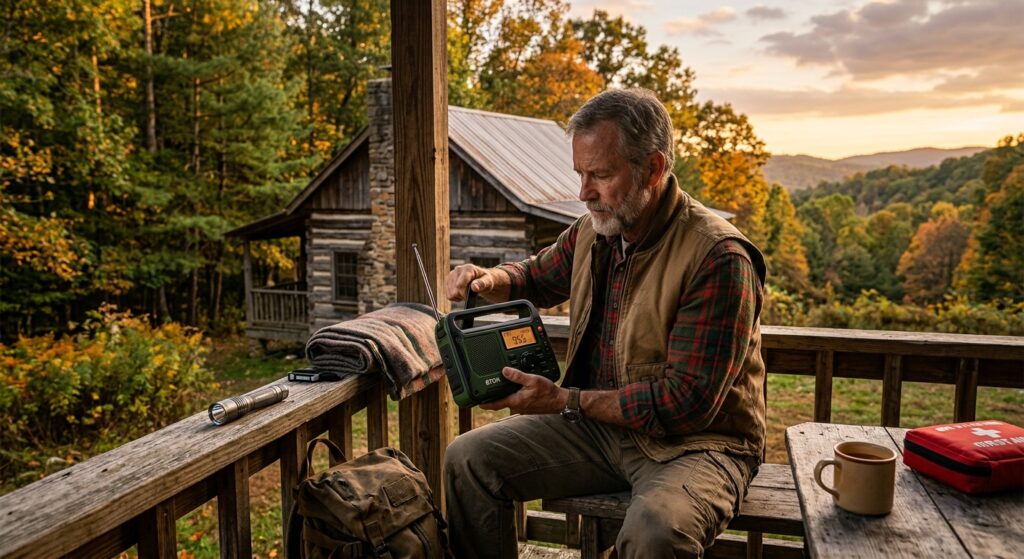
A hand crank radio is one of the most underrated pieces of emergency equipment in any off-grid kit. When the grid goes down — from a winter storm, wildfire, or grid failure — cell data service can disappear within hours. A hand crank radio needs no fresh batteries, no sunshine, and no internet connection. As long as you can turn the crank, it receives NOAA Weather Radio and AM/FM broadcasts, which makes it a dependable source of information during extended outages and evacuations.
What to Look for in a Hand Crank Emergency Radio
Not all hand crank radios are equal. These are the features that matter:
- NOAA Weather Radio reception — non-negotiable. NOAA broadcasts continuous weather updates and emergency alerts on seven dedicated frequencies. An emergency radio without NOAA reception is a half-measure.
- Multiple power sources — the best models accept hand crank, solar, AA batteries, and USB charging. Redundancy matters when you do not know which power source will be available.
- AM/FM plus shortwave — AM carries farther than FM, and local AM stations often broadcast emergency instructions. Shortwave lets you receive international news when domestic communication is disrupted.
- Built-in flashlight and USB charging port — the USB port doubles as a power bank for your phone, which can be critical for sending a distress message or checking a map.
- Build quality — the radio may be dropped, stored for years, and expected to work instantly under stress. Choose a model with a solid reputation and at least a one-year warranty.
Top 7 Hand Crank Radios for Off-Grid Use in 2026
Prices below are approximate and change frequently.
1. Midland ER310 — Best Overall (around $60–$75)
The Midland ER310 is the best fit for most homesteaders. It receives AM, FM, and all seven NOAA weather frequencies, charges by solar panel, hand crank, or USB-C input, and outputs 5V USB power for charging small devices. The 2,000 mAh internal battery holds its charge well over months of storage, and the 130-lumen flashlight is genuinely bright. Midland markets it as built to military survivability standards. Roughly 1 minute of cranking provides about 10 minutes of radio use. Weight: 1.1 lbs.
2. Kaito KA500 — Best Shortwave Option (around $50–$65)
The Kaito KA500 adds shortwave bands (2–30 MHz) to the standard AM/FM/NOAA package, which is valuable if you want international emergency broadcasts. Its solar panel is larger than average, and five power sources (solar, crank, battery, USB input, and AC adapter) make it one of the most redundant options available. It is slightly larger and heavier than the Midland ER310 but offers excellent reception across all bands.
3. RunningSnail MD-090 — Best Budget Pick (around $30–$40)
The RunningSnail MD-090 delivers solid AM/FM/NOAA reception with hand crank and solar charging in a compact form factor. A separate reading lamp (in addition to the flashlight) is practical for shelter use. Its 2,000 mAh battery limits USB output — it charges a modern smartphone to about 50–60%. A good secondary radio for every vehicle and emergency kit.
4. Eton FRX5-BT — Best for Larger Households (around $80–$100)
The Eton FRX5-BT adds Bluetooth audio streaming to the standard emergency feature set. During a long outage, playing stored podcasts or music from a phone through the radio’s speaker is a real morale boost for families. Excellent AM/FM/NOAA reception, a 4,000 mAh battery, and a bright 300-lumen flashlight make it a premium option for base-camp use rather than bug-out kits.
5. Sangean MMR-99 — Most Durable Build (around $90–$110)
The Sangean MMR-99 is the best choice if you expect to use your radio daily rather than keep it in storage. Its rubber-armored housing, IPX3 water resistance, and superior AM sensitivity make it the most rugged option here. Sangean is a Taiwanese manufacturer with a roughly 50-year reputation for radio quality. If you want one radio to last ten years, this is a strong candidate.
6. Ambient Weather WR-335 — Best NOAA Alert Radio (around $45–$55)
If you want a dedicated NOAA weather alert radio rather than a full-featured emergency radio, the WR-335 receives all seven NOAA channels and can be programmed to alert only for specific counties — so you are not woken by warnings for areas hundreds of miles away. Battery backup and AC power with surge protection make it ideal as a permanent home base station rather than a portable kit radio.
7. Raynic 5000mAh Solar Radio — Best Battery Capacity (around $45–$60)
The Raynic stands out for its 5,000 mAh battery — the largest on this list — which can charge a modern smartphone to 100% once or twice in addition to powering the radio. AM/FM/NOAA reception is solid. Build quality is a step below Midland and Sangean, but the extra capacity is valuable during multi-day outages.
Other Models Worth Considering
Ambient Weather WR-333 (around $60)
The WR-333 is a good-value option that covers the essentials. It has a 2,000 mAh Li-ion battery charged by hand crank, solar panel (0.5W), or micro-USB, and covers AM/FM plus all seven NOAA weather channels with alert function. The 1W LED flashlight is bright enough for most tasks, and a 5V/1A USB output charges small devices. Its straightforward, no-frills controls are easy to use under stress, making it a solid secondary radio or a pick for tighter budgets.
- Pros: Excellent value, good battery capacity for the price, reliable NOAA alerts, simple to operate.
- Cons: Micro-USB instead of USB-C, no shortwave, flashlight could be brighter.
FosPower Emergency Solar Hand Crank Radio (around $40)
For a truly budget-friendly option, the FosPower radio still provides critical functionality. It typically has a 1,000 mAh or 2,000 mAh battery (depending on sub-model), charged by hand crank, small solar panel, or micro-USB. It tunes AM/FM and all seven NOAA weather channels with a siren alert, and usually includes an LED flashlight, a small reading lamp, and an SOS beacon. Its 5V/1A USB output gives a phone a modest top-up. It lacks the build quality of pricier models, but covers the essentials — making it ideal for a starter kit or for placing in multiple locations (car, shed, main house).
- Pros: Very affordable, covers essential AM/FM/NOAA, includes flashlight and SOS.
- Cons: Smaller battery, less robust build, basic features, micro-USB.
Comparison Table: Related Models
This table compares a range of popular emergency radios, including some upgraded or alternative versions of the models above. Prices are approximate estimates for 2026 and specs vary by model version, so check the manufacturer’s listing before buying.
| Feature | Midland ER310 PRO | Eton FRX5BT+ | Kaito KA900 Voyager MAX | Sangean MMR-88-2 | C. Crane CC Skywave SSB | Ambient Weather WR-333 | FosPower Emergency Radio |
|---|---|---|---|---|---|---|---|
| Estimated 2026 Price (USD, approx.) | $79.99 | $149.99 | $99.99 | $74.99 | $169.99 | $59.99 | $39.99 |
| Internal Battery Capacity | 2600mAh Li-ion | 4000mAh Li-ion | 2000mAh Li-ion | 850mAh Li-ion | 2xAA (external power) | 2000mAh Li-ion | 1000-2000mAh Li-ion |
| Charging Methods | Crank, Solar (0.5W), Micro-USB | Crank, Solar (1W), USB-C | Crank, Solar (0.7W), USB-C | Crank, Solar (0.9W), USB-C | External Power (USB-C/AC) | Crank, Solar (0.5W), Micro-USB | Crank, Solar, Micro-USB |
| Bands Covered | AM/FM/NOAA | AM/FM/NOAA | AM/FM/NOAA/SW | AM/FM/NOAA | AM/FM/NOAA/SW/SSB | AM/FM/NOAA | AM/FM/NOAA |
| Flashlight | 130 Lumens | 160 Lumens | 120 Lumens | LED (standard) | N/A | 1W LED | LED (standard) |
| USB Output (Power Bank) | 5V/1A | 5V/2.1A | 5V/1A | 5V/0.5A | N/A | 5V/1A | 5V/1A |
| Special Features | Dog Whistle, SOS | All-Hazard Alert, Bluetooth, Motion Light | Reading Lamp, Thermometer, Clock | IPX3 Water Resist. | Superior SW/SSB Reception | Simple Operation | Reading Lamp, SOS |
| Durability/Rating | Rugged | IPX4 Splashproof | Good Build | IPX3 Water Resist. | Good Build | Decent Build | Basic Build |
Tip: Always prioritize NOAA Weather Alert functionality. It is the most important feature for immediate, localized emergency information.
How to Use and Maintain Your Hand Crank Radio
A radio stored for years without attention may fail exactly when you need it. These habits keep it ready:
- Charge fully before storing: Lithium and NiMH batteries degrade fastest when stored empty. Charge to 80–100% before putting the radio away.
- Test regularly: At least every 6 months (quarterly is better), turn it on, scan the NOAA frequencies, and test the crank. A fuller check — charge via USB, let it run down, then crank for a few minutes to confirm the mechanism is smooth and the battery takes a charge — also keeps the internal battery conditioned. For radios with solar panels, leave them in direct sun for a day to confirm trickle charging works.
- Replace backup batteries annually: If your radio uses AA backup batteries, swap in fresh alkalines every 12 months regardless of use.
- Store it smartly: Keep the radio easily accessible, not buried under gear. Many households keep one in the main living area, one in a go-bag, and one in a workshop or vehicle. Avoid extreme heat — lithium batteries degrade rapidly above 100°F, so skip hot vehicles in summer, uninsulated sheds, and attics. A labeled “Emergency” bin or shelf works well; in humid climates, add a desiccant pack.
- Know your bands: Bookmark NOAA channels WX1 through WX7 (162.400–162.550 MHz) and find out which one gives the strongest signal from your nearest NWS transmitter. If your radio has shortwave, practice tuning international broadcasters or amateur radio nets. The more familiar you are with the radio in normal times, the easier it is to use under stress.
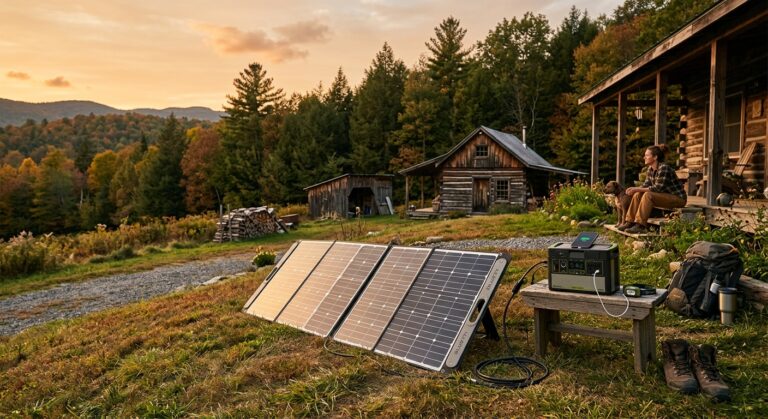
- Use complementary power: Hand crank radios are self-sufficient, but if you have a portable power station, such as a Goal Zero Yeti 500X (around $799), you can recharge the radio quickly over USB and save the crank for when you really need it.
Which Radio Should You Buy?
For most off-grid homesteaders, the Midland ER310 offers the best balance of features, price, and reliability. If you want shortwave capability, choose the Kaito KA500. For the most durable long-term option, the Sangean MMR-99 is the pick. Keep a second budget radio (such as the RunningSnail MD-090, under $40) in your vehicle kit for complete redundancy.
For comprehensive preparedness, a combination works well: a multi-function radio like the Eton FRX5BT+ for primary use, plus a basic, rugged model such as the Sangean MMR-88-2 or Ambient Weather WR-333 as a backup or for a separate kit.
An emergency radio is not a luxury. For off-grid households in particular, it is the link to the outside world when every other communication channel fails. Buy one, test it, and learn how to use it before you need it.
Marcus Reid
Founder & Editor, OffGridSage
Marcus founded OffGridSage to bring practical off-grid knowledge together in one place. Guides are built from official and expert sources (NREL, the EPA, the USDA and university extension services), manufacturer documentation and reader feedback, and are updated when information changes.