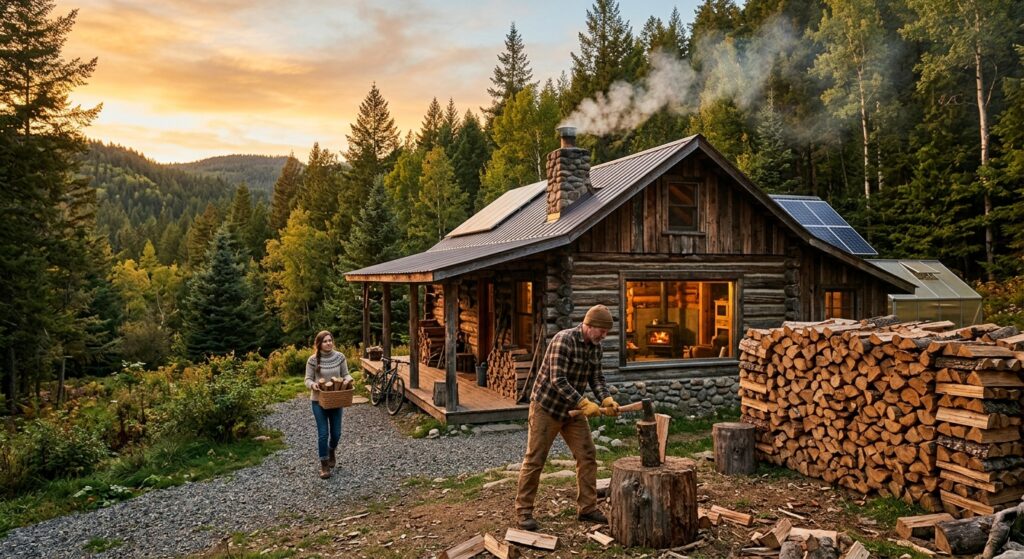
How to Heat a House Without Electricity: The Complete Off-Grid Guide
The power goes out on the coldest night of January. The furnace fan stops spinning, the electric baseboard heaters go cold, and you realize fast that modern homes are one grid failure away from becoming iceboxes. Whether you’re building an off-grid homestead from scratch, prepping for emergencies, or just tired of a $400 electric heating bill every winter, knowing how to heat a house without electricity is one of the most practical skills you can develop.
Most people underestimate how quickly a house loses heat — and how few real options they know about. Without a plan, you’re lighting candles, huddling under blankets, and hoping the power comes back before the pipes freeze. That’s not a strategy. The wrong improvised heat source indoors — unvented propane, an open-flame kerosene heater in a sealed room, a wood fire in a fireplace without proper draft — can kill you faster than the cold will.
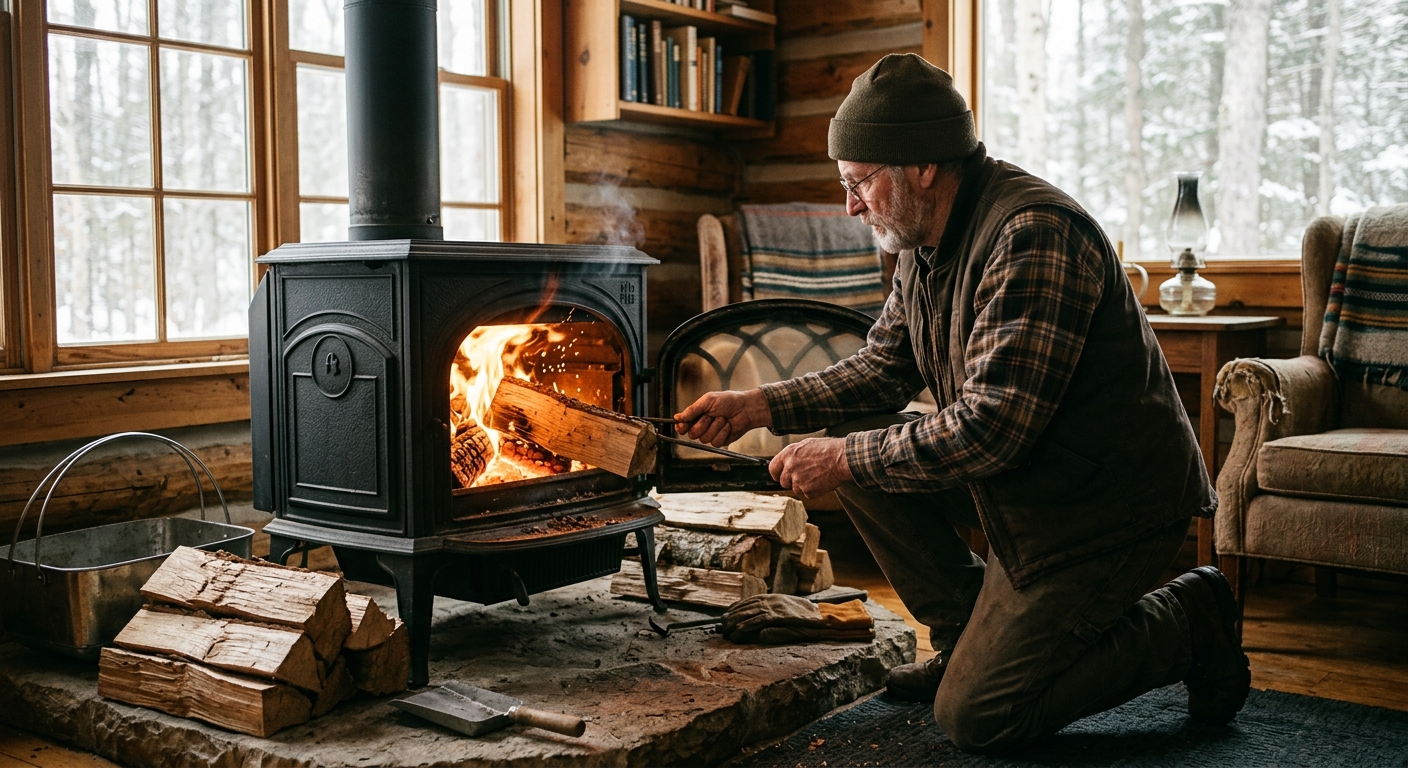
This guide covers every proven method for heating a home without electricity: wood stoves, masonry heaters, rocket mass heaters, propane heaters, kerosene heaters, and passive solar design. You’ll find a BTU sizing table, a season-cost comparison, installation basics, safety rules for each method, and the single most important thing you should do before installing any heating system at all.
Quick Answer: Best Off-Grid Heating Options at a Glance
There is no single « best » way to heat a house without electricity — the right answer depends on your climate, house size, fuel access, and budget. That said, wood stoves are the most popular off-grid primary heat source for good reason: wood is renewable, storable, and available almost everywhere in the US. Here are the main options and their key characteristics:
- Wood stove: Best all-around primary heat source. 15,000–80,000 BTU/hr. Burns cord wood or pellets (pellet stoves need power — avoid). EPA-certified models required in most states.
- Masonry heater / rocket mass heater: Highest efficiency (85–92%). Releases heat slowly over 12–18 hours. Requires significant build or installation cost.
- Propane heater (Mr. Heater Big Buddy): Great backup or zone heater. 4,000–18,000 BTU/hr. Must ventilate — opens a window 1 inch minimum.
- Kerosene heater: Reliable emergency heat. 10,000–23,000 BTU/hr. Use only K-1 kerosene. Never sleep with it running indoors.
- Passive solar design: Free heat from the sun with zero fuel. Best integrated at build time but retrofittable. Requires south-facing windows and thermal mass.
- Insulation: Not a heat source — but hands-down the most cost-effective investment before anything else.
Start Here: Insulation Is the Real First Step
Every experienced homesteader will tell you the same thing: you cannot out-heat a leaky, under-insulated house. Before you spend a dollar on any off-grid heating system, audit your building envelope. A poorly insulated 1,500 sq ft home might need 60,000 BTU/hr to stay warm at 0°F. The same home with proper insulation and air sealing might need only 20,000–25,000 BTU/hr. That difference means the gap between a small, affordable wood stove and a large, expensive one — or between a 100-lb propane tank lasting two weeks and lasting six.
Priority order for insulation improvements: (1) air sealing all penetrations, outlets, and gaps before adding insulation — air movement is a bigger heat loss than conduction; (2) attic insulation to R-49 to R-60 in cold climates; (3) walls to at least R-13 (existing walls can be dense-packed with cellulose through small holes); (4) crawlspace or basement floor insulation; (5) window upgrades — at minimum, add interior window insulation film ($30 per window) as a stopgap. Every R-value point you add reduces your required heating output and fuel cost proportionally.
Wood Stoves: The Off-Grid Heating Workhorse
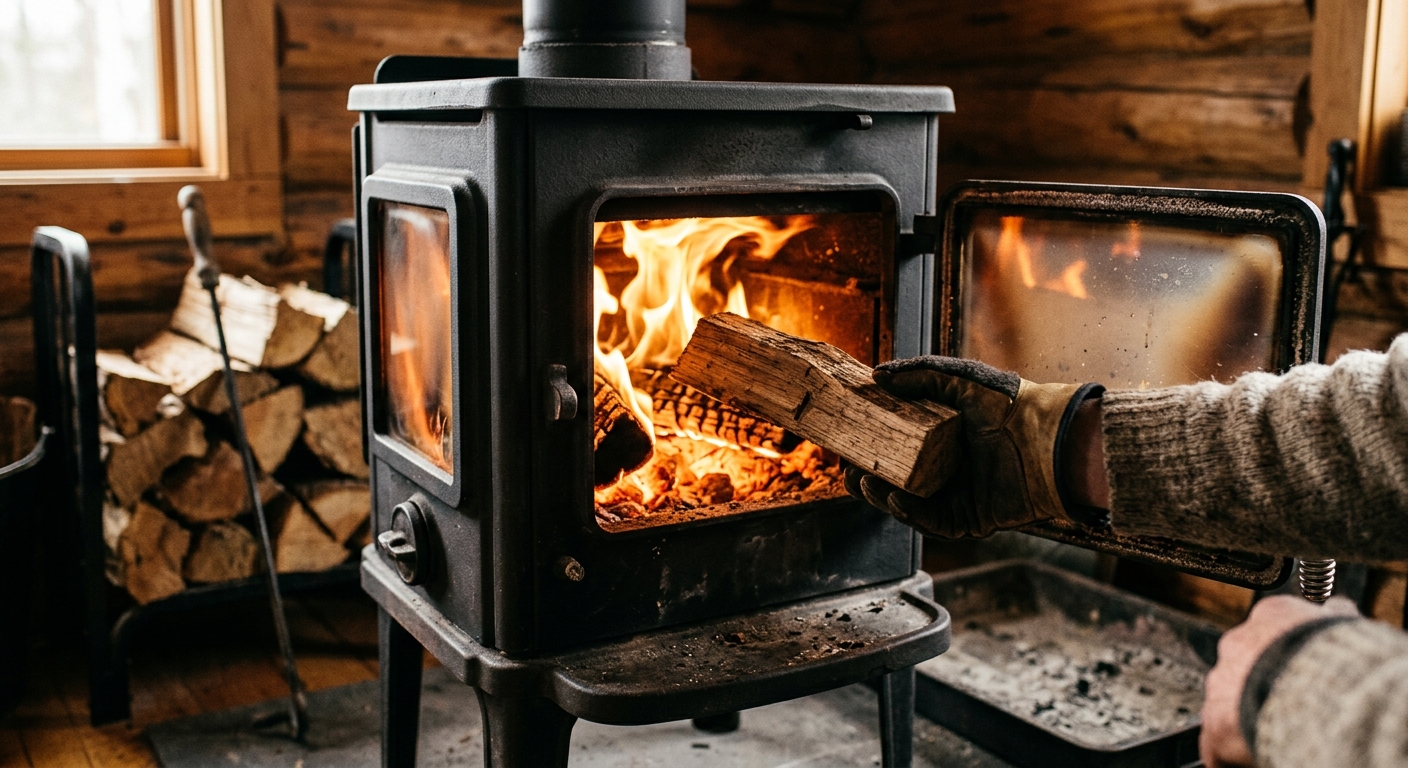
A quality wood stove is the backbone of off-grid heating in most of North America. It needs no electricity, no gas line, and no moving parts that can fail. A cord of seasoned hardwood (oak, hickory, ash) in most rural areas costs $200–$350 and can heat a well-insulated 1,200–1,800 sq ft home for a full winter in USDA Zone 5–6.
Choosing the Right BTU and Size
The most common mistake is buying a stove that’s too large. An oversized stove forces you to burn it smoldered-down and cool, which creates creosote buildup in the flue — the leading cause of chimney fires. Use this rule of thumb: 45–55 BTU per square foot of living space in a well-insulated home in a cold climate. So a 1,200 sq ft house needs roughly 54,000–66,000 BTU/hr maximum output. Most quality mid-size stoves like the Drolet Escape 1800 (65,000 BTU) or the US Stove 5660 (89,000 BTU — better for larger homes or cold climates) hit that range.
EPA-Certified: Why It Matters
As of May 2020, all new wood heaters sold in the US must meet EPA Step 2 standards: no more than 2.0 g/hr of particulate emissions. These newer certified stoves are also significantly more efficient — 70–80% efficiency compared to 50–60% for older models. In many states (particularly Oregon, Washington, and parts of the Northeast), burning in an uncertified stove is illegal during air quality alerts. Look for the EPA white hang tag on any new stove purchase.
Installation Basics
Wood stove installation is not a DIY-if-you’re-not-sure job. Improper clearances or flue installation causes house fires. Key rules: maintain manufacturer-specified clearances to combustibles (typically 12–36 inches on sides and rear); use a proper hearth pad extending at least 18 inches in front of the door and 8 inches on each side; install a Class A (UL 103HT) insulated chimney or properly lined masonry flue; cap the flue with a spark arrestor. Have the installation inspected and get it on your homeowner’s insurance — most insurers require it.
Masonry Heaters and Rocket Mass Heaters
Masonry Heaters
Traditional masonry heaters — common in Scandinavia, Eastern Europe, and Russia — are the most thermally efficient solid-fuel heaters ever built. They work by burning a small, very hot fire (1,800–2,200°F) for 1–3 hours, storing the heat in thousands of pounds of masonry (soapstone, brick, or tile), and then radiating that heat slowly and evenly into the room for the next 12–18 hours. A well-built masonry heater achieves 85–92% combustion efficiency and requires only one or two fires per day even in very cold weather. Cost is the barrier: a professionally built masonry heater runs $5,000–$15,000 or more depending on size and finish. The Tulikivi brand (Finnish soapstone heaters) is the most widely known in the US market.
Rocket Mass Heaters
A rocket mass heater (RMH) is a DIY-friendly, high-efficiency biomass heater that uses the same principle — burn hot and fast, store heat in thermal mass — but can be built for $300–$800 in materials. The J-tube combustion chamber creates a strong natural draft that pulls air through the burn and produces very little smoke. Heat is stored in a large cob or adobe bench that radiates warmth for hours. The Ianto Evans and Leslie Jackson book « Rocket Mass Heaters » is the standard reference. RMHs are not legal as permanent heating appliances in most US jurisdictions — check local codes before building one as your primary heat source. They are widely used in off-grid cabins, tiny homes, and workshops where code enforcement is limited.
Propane Heaters: Reliable Backup and Zone Heat
The Mr. Heater Big Buddy (MH18B) is the most popular portable indoor-safe propane heater in the US, and for good reason. It puts out 4,000, 9,000, or 18,000 BTU/hr on three settings, runs on standard 1-lb disposable cylinders or with an adapter hose on a 20-lb tank, and has an oxygen depletion sensor (ODS) that shuts it off automatically if CO or oxygen levels become unsafe. It’s rated for indoor use but that rating assumes adequate ventilation — in a tightly sealed room, even a « safe » propane heater will deplete oxygen.
Propane Safety Rules
- Always crack a window at least 1 inch when running any propane heater indoors.
- Install a battery-operated CO detector — not optional. Carbon monoxide is colorless and odorless and kills without warning.
- Never run a propane heater while sleeping.
- Keep heaters 3 feet clear of all combustibles — curtains, bedding, furniture.
- Store propane cylinders outdoors or in a detached garage — never inside the living space.
For a whole-house propane system (wall-mounted vented heaters like the Empire or Empire DVA series), you’ll need a permanent propane tank (250–500 gallons is typical for a primary heat source) and a direct-vent or power-vent installation. These systems are far safer than portable heaters because combustion air comes from outside and exhaust vents directly out. Cost to install a vented wall propane heater runs $800–$2,500 depending on unit size and installation complexity.
Kerosene Heaters: Emergency and Supplemental Heat
Kerosene heaters like the Sengoku KeroHeat (23,000 BTU) or the Dyna-Glo (10,000–23,000 BTU range) are widely available, store fuel easily, and work as reliable emergency backups. Kerosene has a high energy density — one gallon contains about 135,000 BTU — and K-1 grade kerosene stores well for 2–5 years in sealed metal containers.
Kerosene Safety Rules
- Use only K-1 clear kerosene — never dyed diesel or off-road fuel, which produce dangerous fumes indoors.
- Ventilate: open a window or door 1–2 inches whenever the heater is running.
- Never refuel indoors or while the heater is hot — carry it outside, let it cool, then refuel.
- Never sleep with a kerosene heater running. Extinguish it before bed every night.
- Keep a working smoke and CO detector in the room.
- Store kerosene in approved blue containers (blue = kerosene; red = gasoline — never mix them up).
A kerosene heater is not a primary heat source for a whole house — think of it as a room heater that buys you time during a power outage or supplements your primary system during a cold snap. Budget roughly $90–$150 for a quality unit and $4–$5 per gallon for K-1 kerosene (prices vary significantly by region).
Passive Solar Design: Free Heat From the Sun
Passive solar isn’t a heater you add — it’s a design strategy that uses the sun itself to heat your home at zero operating cost. The core principle: south-facing glass collects solar energy during the day, and thermal mass (concrete slab floor, stone or tile surfaces, water walls) absorbs and stores that heat, releasing it slowly through the night.
Key passive solar design principles for cold climates: (1) maximize south-facing window area to 7–12% of your home’s floor area; (2) use low-e glazing with a high Solar Heat Gain Coefficient (SHGC 0.4–0.6) on south windows; (3) include a thermal mass floor — a 4-inch concrete slab painted dark or tiled can store enough heat to moderate temperature swings by 10–15°F; (4) use roof overhangs sized to block the high summer sun (typically 1.5–2 feet) while admitting the low winter sun; (5) insulate north, east, and west walls heavily and minimize windows on those exposures.
Retrofitting passive solar into an existing home is harder but possible: add south-facing windows (requires structural work), add a sunspace or attached greenhouse, paint existing concrete or tile floors dark, and remove large trees or shrubs blocking south exposure. A well-designed passive solar home in Zone 5 can reduce heating load by 50–70% compared to a conventional house.
BTU Sizing and Seasonal Cost Comparison
BTU Requirements by Room/Home Size
| Space Size (sq ft) | BTU/hr Needed (Well-Insulated) | BTU/hr Needed (Average Insulation) | Recommended Heat Source |
|---|---|---|---|
| 200–400 | 8,000–15,000 | 15,000–25,000 | Mr. Heater Big Buddy, small kerosene heater |
| 400–800 | 15,000–30,000 | 25,000–45,000 | Small wood stove (Drolet HT2000), large kerosene |
| 800–1,200 | 30,000–50,000 | 45,000–70,000 | Mid-size wood stove, vented propane wall heater |
| 1,200–1,800 | 50,000–70,000 | 70,000–100,000 | Large wood stove, masonry heater, multi-zone propane |
| 1,800–2,500 | 70,000–100,000 | 100,000–140,000 | Large wood stove + backup zone heat, outdoor wood boiler |
Seasonal Heating Cost Comparison (1,400 sq ft home, Zone 5 — e.g., Ohio, Indiana)
| Fuel Type | Unit | Avg. Price (2025) | Season Usage Est. | Season Cost Est. | Notes |
|---|---|---|---|---|---|
| Firewood (hardwood) | Cord | $250–$350 | 3–5 cords | $750–$1,750 | Lower if you cut your own; most cost-effective long-term |
| Propane (vented heater) | Gallon | $2.50–$3.50 | 400–600 gal | $1,000–$2,100 | Prices volatile; lock in fall fill when possible |
| Kerosene | Gallon | $4.00–$5.50 | 150–250 gal (supplemental) | $600–$1,375 | Not practical as sole heat source for full season |
| Passive solar (retrofitted) | — | $0 operating | — | $0 (after install cost) | Reduces load on primary system by 30–70% |
Safety Rules and Common Mistakes to Avoid
Universal Rules for Every Method
- CO detector is non-negotiable. Battery-operated, mounted 5 feet above floor level, tested monthly. Combustion heating of any kind — wood, propane, kerosene — produces carbon monoxide. A $25 detector can save your life.
- Smoke detector on every level. Especially near wood stove and kerosene heater locations.
- Keep a fire extinguisher accessible — a 5-lb ABC dry chemical extinguisher within reach of any solid-fuel or liquid-fuel heater.
- Never leave a portable heater unattended — particularly with children or pets in the house.
Wood Stove Mistakes
- Burning green (unseasoned) wood — it produces excessive smoke and creosote. Season wood for a minimum of 12 months, ideally 18–24. Moisture content below 20% (use a $15 moisture meter to check).
- Burning trash, treated lumber, or painted wood — releases toxic compounds and damages the flue.
- Skipping annual chimney cleaning — creosote is the leading cause of chimney fires. Inspect and clean every fall before the heating season.
- Oversizing the stove and then damping it way down — runs cool, produces creosote, wastes wood. Size correctly from the start.
Propane and Kerosene Mistakes
- Running portable heaters in a sealed bedroom overnight — oxygen depletion and CO buildup are lethal.
- Using automotive gasoline in a kerosene heater — will produce toxic fumes and can ignite violently.
- Storing large propane tanks or gallons of kerosene inside the living space — store all fuel outdoors or in detached structures.
- Ignoring the smell of kerosene fumes when the heater is running — fumes mean the wick needs trimming or the fuel is contaminated. Address immediately.
What to Do Before Winter Hits
- Air-seal and insulate before buying any heating equipment.
- Calculate your BTU requirement using the table above.
- Choose a primary heat source appropriate to your fuel access and budget.
- Install CO and smoke detectors. Test them.
- Stock at least two weeks of fuel before temperatures drop.
- Have a backup heat source ready — even if it’s only a Mr. Heater Big Buddy in the closet for emergencies.
- Schedule chimney inspection and cleaning every fall.
The Bottom Line
Knowing how to heat a house without electricity is not optional if you live off-grid or want genuine resilience in your home. The best approach for most homeowners is layered: start with serious insulation and air sealing to reduce your heating load, install a properly sized EPA-certified wood stove as your primary heat source, and keep a portable propane or kerosene heater as a backup for the coldest nights or equipment failures. If you’re building new, design passive solar in from the start — it’s the closest thing to free heat that exists.
Heating costs for a full winter in a 1,400 sq ft home range from under $800 (wood, cut yourself) to over $2,000 (propane at peak prices). That spread is the difference between a comfortable off-grid winter and a financial strain — which is why getting your insulation and system sizing right before you buy any equipment is always the highest-return first step.
Have questions about your specific situation? Drop them in the comments below — we read every one. If this guide helped you, share it with someone planning their off-grid setup.