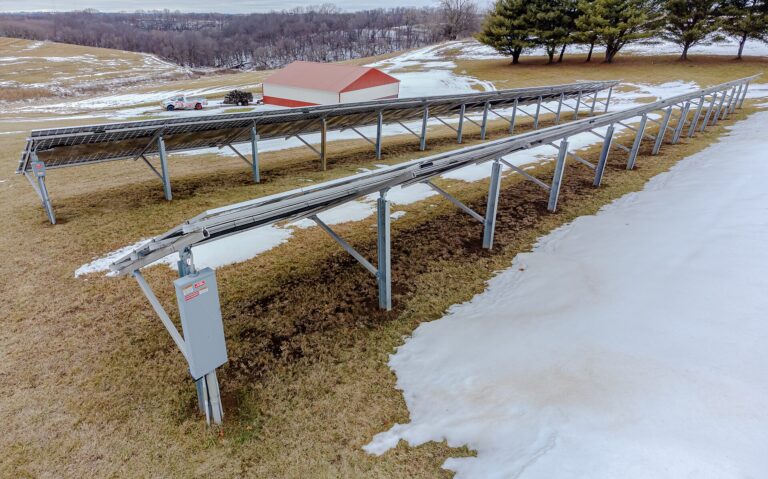
How to Generate Electricity at Home Without Solar Panels
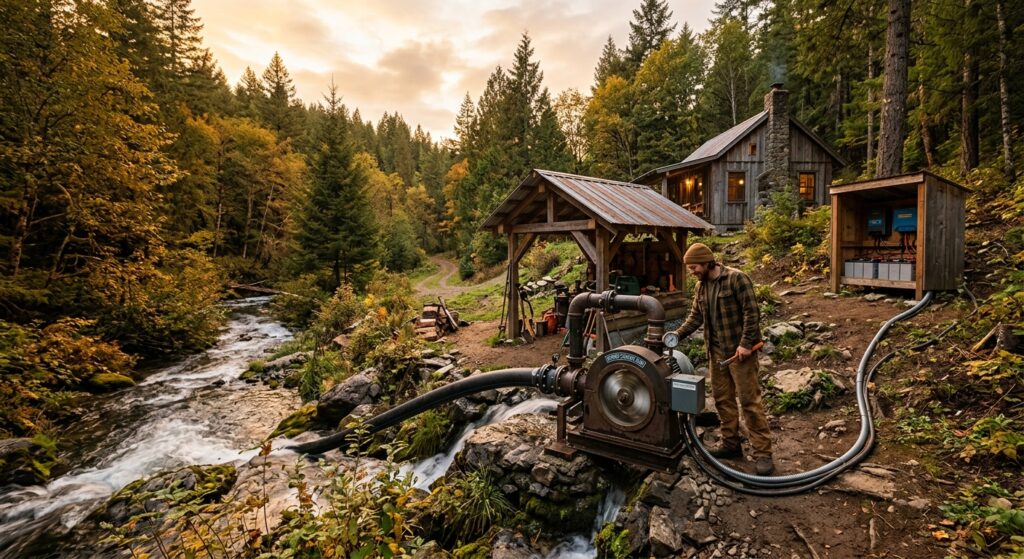
How to Generate Electricity at Home Without Solar Panels
Your neighbor swears by his solar array, but your property sits in a shaded hollow between two ridges and gets maybe four hours of direct sun on a good winter day. Or maybe you have a stream tumbling down a hillside behind your barn and you have been wondering for years whether that moving water could actually power something useful. Whatever brought you here, the question is the same: can you generate reliable electricity at home without solar panels? The answer is yes — and in some cases the alternatives beat solar hands down.
Most homesteaders default to solar because it is what they see advertised. That instinct leaves a lot of free energy on the table. A 200-watt micro-hydro turbine fed by a creek with decent flow will produce power around the clock — 24 hours a day, 365 days a year — while a comparably priced solar array goes dark every night and dips badly in winter. Wind turbines, thermoelectric generators, biogas digesters, and even manual pedal power all have legitimate roles depending on what your land offers. Choosing the wrong system is expensive and frustrating; choosing the right one is genuinely life-changing.
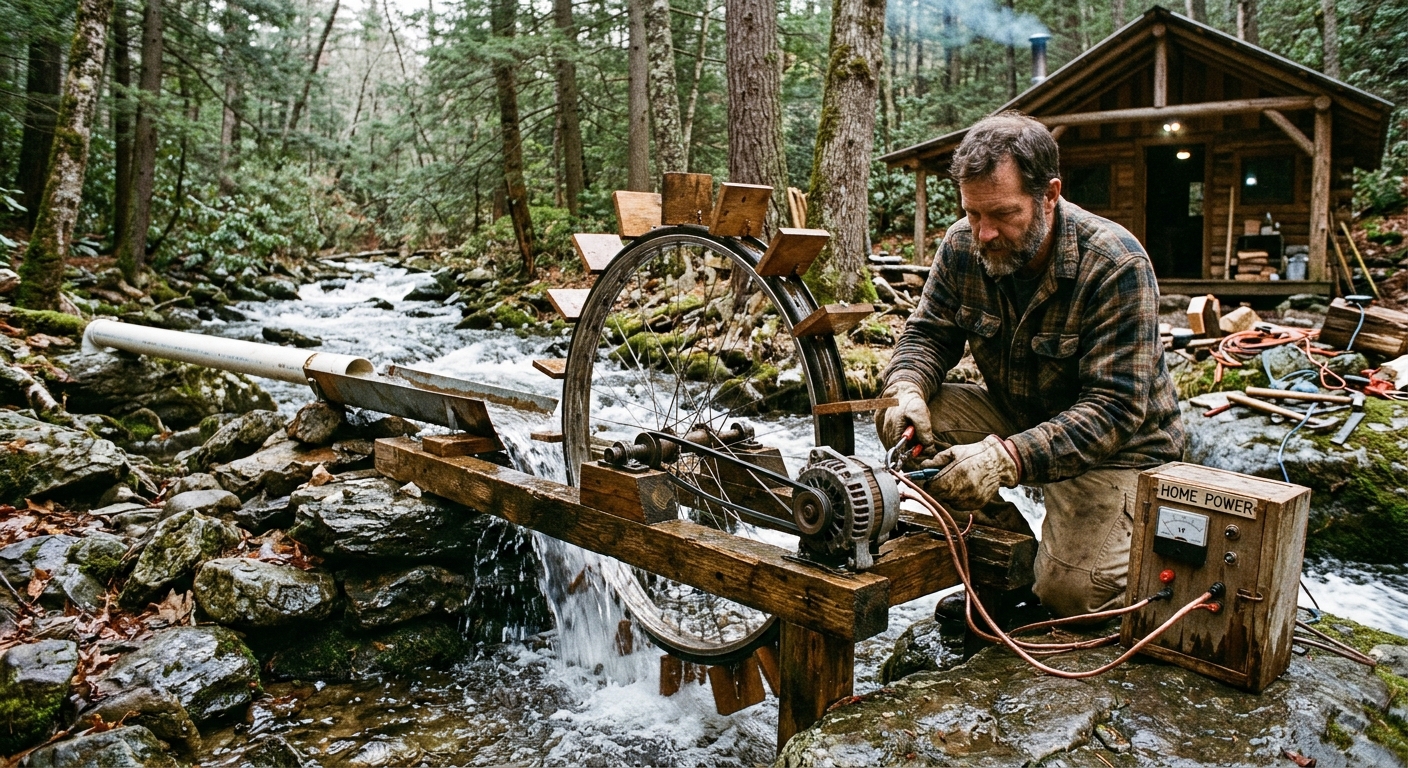
This guide covers every practical method for generating electricity at home without solar: how each works, what it actually costs, the real power output you can expect, and the situations where each shines or fails. By the end you will know which option — or which combination — fits your property, your budget, and your load requirements.
Quick Answer: Best Off-Grid Power Alternatives to Solar
If you need electricity at home without solar panels, your best options by power output and reliability are:
- Micro-hydro: 200–500W continuous, 24/7 — best if you have a stream with 50+ GPM flow and 20+ ft of head
- Small wind turbine: 400W–2kW average — best in open rural areas with 10+ MPH mean wind speed
- Thermoelectric generator (TEG): 40–100W — best for off-grid cabins already heating with wood
- Propane or gas generator: 1,000–7,500W — best as backup, not primary; fuel costs add up fast
- Biogas digester: 500W–3kW equivalent — best for farms with livestock manure supply
- Pedal/human power: 50–200W — realistic only for phone charging and LED lighting
Micro-Hydro Power: The Best Off-Grid Alternative If You Have a Stream
Micro-hydro is arguably the most underrated off-grid power source in the United States. If your land has a stream or creek with enough flow and elevation drop, a micro-hydro system will produce steady, reliable power at a lower cost per watt-hour than almost any other renewable option. Unlike solar or wind, it does not depend on weather. Rain or shine, day or night, the water keeps flowing and the turbine keeps spinning.
What You Need: Flow and Head
Two numbers determine whether micro-hydro is viable on your property: flow rate and head. Flow rate is how much water moves past a point per minute — you need at least 50 gallons per minute (GPM) for a meaningful system, though 100+ GPM opens up more options. Head is the vertical drop between your intake and your turbine — a minimum of 20 feet is generally required, with 50–100 feet being ideal for small home systems.
Multiply your head (in feet) by your flow (in GPM) and divide by roughly 10 to get a ballpark wattage estimate. A stream with 100 GPM and 50 feet of head can yield around 500 watts continuously. That is 12 kWh per day — comparable to the output of a 2kW solar array in a sunny climate, but delivered evenly around the clock.
Pelton Wheels and Other Turbine Types
For high-head, lower-flow streams (common in hilly terrain), a Pelton wheel is the standard choice. It uses a series of cup-shaped buckets mounted on a spinning wheel; high-pressure jets of water strike the cups and transfer kinetic energy efficiently. Pelton wheels work well at heads of 30 feet and above. For low-head, high-flow situations — a wide, fast creek with less elevation drop — a crossflow turbine (also called a Banki-Michell turbine) is more appropriate. Brands like Energy Systems and Design (ESD), Canyon Industries, and Turgo turbines from Gilkes are reputable for residential-scale systems.
System Cost and Components
A complete 200–500W micro-hydro system — including intake screen, penstock pipe, turbine, charge controller, and wiring — typically runs $500 to $5,000 depending on pipe length and turbine quality. A basic DIY Pelton setup using a Harris or ESD turbine kit can come in under $1,500 for 200–300W. Professional installation on more complex sites with longer penstocks can push toward $8,000–$15,000. Even at the high end, the cost per lifetime kWh is extremely low because there are no fuel costs and the systems last 20+ years with minimal maintenance.
Wind Turbines for Home Use: Real Numbers and Real Expectations
Wind power is the second most accessible off-grid electricity source after hydro, and it pairs naturally with solar in hybrid systems. But the wind turbine industry has a long history of overselling output figures that assume ideal conditions. Here is what you actually need to know before spending money.
Minimum Wind Requirements
A small wind turbine needs a mean annual wind speed of at least 10 MPH (4.5 m/s) to produce useful energy. Anything below that and you are looking at a system that rarely spins hard enough to matter. Check your site’s average wind speed using the NREL Wind Resource Map or the WindExchange tool at windexchange.energy.gov — these give county-level data. Open hilltops, plains, and coastal areas typically qualify. Valleys, forested land, and areas surrounded by buildings rarely do.
Turbine Size and Output
Small residential wind turbines in the 400W–2kW range are the practical sweet spot for home use. The Pikasola 400W and Missouri Wind and Solar 500W are popular budget options for supplemental power. The Primus Wind Power Air 40 (400W rated) is a well-tested unit for off-grid battery charging. For more serious whole-home wind power, the Bergey Excel 10kW is a durable American-made option but costs $30,000–$50,000 installed. Most off-grid homesteaders use turbines in the 400W–1kW range as part of a hybrid system rather than as a sole power source.
Installation: Pole, Not Roof
Mount wind turbines on a freestanding tower pole — never on your roof. Roof-mounted turbines transfer vibration into the structure, create noise, and actually underperform because rooftops create turbulent airflow. A minimum tower height of 30 feet is recommended, with 60–80 feet being better in most terrain. Tilt-up towers (where you raise and lower the tower from the ground) are the DIY-friendly option and make maintenance far easier than fixed lattice towers.
Thermoelectric Generators: Free Power From Your Wood Stove
If you heat your cabin or home with a wood stove, a thermoelectric generator (TEG) lets you harvest electricity from that heat with zero additional fuel cost. TEGs work on the Seebeck effect: when one side of a semiconductor module is hot and the other is cool, a voltage is generated proportional to the temperature difference.
How Much Power to Expect
A single TEG module produces roughly 5–15 watts. Commercial wood stove TEG units stack multiple modules and include a heat sink and fan on the cool side, delivering 40 to 100 watts of usable output when your stove is burning hot. The TEG Power TEG-12VDC-200W and the Tegpro wood stove TEG kits are common starting points. At 80W for 8 hours of stove operation, you get 640 Wh per day — enough for LED cabin lighting, phone charging, a radio, and a small fan.
Best Use Case
TEGs are not whole-home power solutions. They shine in off-grid cabins that already rely on wood heat for warmth — the electricity is essentially a free byproduct of heating. They require no wind, no sun, no water flow, and no fuel beyond what you are already burning. The main limitation is that output drops to zero when the stove is not running, making them seasonal or weather-dependent in mild climates.
Gasoline and Propane Generators: Backup Power, Not Primary
Gasoline and propane generators are the fallback that almost every off-grid household keeps on hand, but they make poor primary power sources. A mid-size 3,500W gasoline generator consumes roughly 0.75 gallons per hour at half load. At $3.50 per gallon, that is $2.63 per hour or about $63 per day of continuous runtime — far more expensive than any renewable option over time.
Propane is cleaner-burning and stores better than gasoline (no ethanol degradation, indefinite shelf life in a sealed tank), making it preferable for standby use. A Generac 7500W propane/natural gas generator or a Champion 3500W dual-fuel unit are popular choices that allow switching between propane and gasoline. Use generators to bridge gaps during extended cloudy, calm, or dry periods — not as your daily driver. For a truly off-grid setup, plan your renewable system to cover at least 90% of your load and let the generator handle the remaining 10%.
Human and Pedal Power: Honest Limits
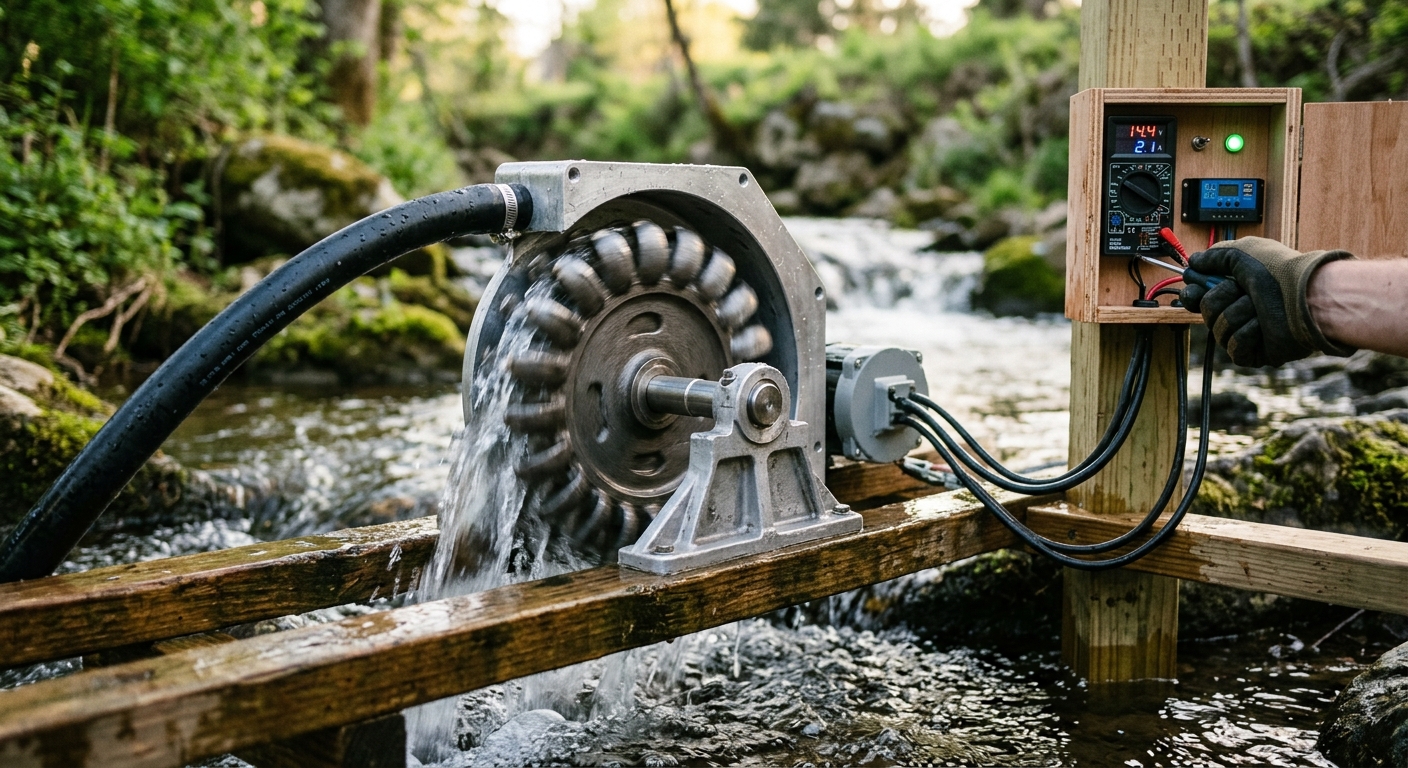
Pedal-powered generators get a lot of attention in preparedness circles, and they do have a real (if limited) role. A fit adult cycling at a sustained effort produces 100–200 watts — enough to charge a phone, power LED lights, or run a small radio. The Pedal Power Generator by Windstream Power and the K-TOR Power Box are purpose-built units. DIY builds using bicycle trainers and salvaged alternators are common in off-grid forums.
Realistically, pedal power is an emergency backup or a supplement for very small loads. Thirty minutes of cycling produces roughly 50–75 Wh — enough to charge two smartphones. Do not count on it for refrigeration, power tools, water pumping, or any sustained load above 200W.
Biogas From Manure: Advanced Power for Farms
If you have livestock — cattle, pigs, or poultry — you have a continuous supply of organic material that can be converted to methane through anaerobic digestion. A biogas digester captures manure in an airtight tank, allows bacteria to break it down over 20–30 days, and collects the resulting methane gas for cooking, heating, or running a generator.
A small farm digester handling waste from 5–10 cattle can produce enough biogas to generate 500W–3kW equivalent of energy daily. The digestate (the spent slurry) is also an excellent fertilizer. Upfront cost for a DIY fixed-dome or floating-drum digester runs $500–$3,000; commercial systems cost $5,000–$30,000. This is not a beginner project — it requires plumbing, gas handling knowledge, and ongoing management — but for farms with a reliable manure supply, biogas is one of the most sustainable and cost-effective long-term power strategies available.
Off-Grid Power Alternatives Comparison Table
| Method | Power Output | Typical Cost | Best For | Main Drawback |
|---|---|---|---|---|
| Micro-Hydro | 200–500W continuous | $500–$5,000+ | Properties with streams, 24/7 power needs | Requires water source with adequate flow and head |
| Small Wind Turbine | 400W–2kW average | $600–$5,000 installed | Open rural land, 10+ MPH average wind | Intermittent; requires tower; noisy |
| Thermoelectric Generator (TEG) | 40–100W | $200–$800 | Cabins with wood stoves already in use | Only works while stove is burning |
| Gas/Propane Generator | 1,000–7,500W | $400–$3,000 | Backup power, short-term gap filling | High fuel cost; noise; maintenance; fuel storage |
| Pedal Power | 100–200W | $150–$600 | Emergency backup, phone/light charging | Requires constant human effort; very low output |
| Biogas Digester | 500W–3kW equivalent | $500–$30,000 | Farms with livestock manure supply | Complex setup; 20–30 day startup lag; requires management |
How to Choose the Right System for Your Situation
You Have a Stream on Your Property
Micro-hydro should be your first investigation. Spend $20 on a basic flow meter (or use the bucket-and-stopwatch method) and measure your GPM. Walk the stream and calculate your head with a hand level or smartphone level app. If you hit 50+ GPM and 20+ feet of drop, you have the ingredients for a solid 200–400W continuous system. That beats almost everything else for reliability and long-term cost.
You Are on Open, Windy Land
Check your local wind data first — do not guess. If NREL confirms 10+ MPH average, a 400W–1kW turbine paired with a modest battery bank and a small generator for backup covers most off-grid homes. Combine wind with a TEG if you heat with wood and you have a remarkably robust hybrid setup with no solar required.
You Have a Small Off-Grid Cabin
A wood stove TEG is often the fastest and cheapest path to cabin electricity if your loads are small — lighting, phone charging, a small radio. At $200–$500 for a quality TEG kit, it pays for itself quickly. For larger loads, add a wind turbine or a small generator for backup.
You Are on a Farm With Livestock
Biogas is worth serious consideration if you manage cattle, pigs, or poultry at scale. The upfront investment is real, but the fuel is free and the digestate reduces your fertilizer costs. Combine biogas with wind or a generator for a resilient multi-source system.
Biggest Mistakes to Avoid
- Buying a wind turbine without measuring your wind speed. More than half of small wind turbines purchased by homesteaders underperform because the site does not have adequate average wind. Measure first with an anemometer for at least two weeks.
- Sizing your system to peak load instead of average load. Design for your daily average consumption, not the brief peak when you run a well pump and a power tool simultaneously. Overbuilding for peaks wastes money.
- Neglecting battery bank sizing. Even the best generation source is useless if your battery bank cannot store enough energy to bridge low-production periods. Plan for at least 2–3 days of autonomy in your battery bank.
- Skipping the charge controller. Every renewable generation source feeding batteries needs a properly matched charge controller — MPPT for hydro and wind at higher voltages, PWM for simpler low-voltage setups. Running a turbine directly into batteries will damage them quickly.
- Running a gas generator as your primary source. It feels like the easy answer but the fuel costs will exceed the cost of a proper renewable system within 2–3 years.
The Bottom Line
Learning how to generate electricity at home without solar panels is not just a backup plan — for many properties it is the better plan. Micro-hydro delivers unbeatable continuous output if your land has the water resources for it. Small wind turbines earn their keep on genuinely windy sites, especially in hybrid setups. TEGs turn your wood stove into a quiet power plant for cabin-scale loads. Biogas closes the loop on farm waste while cutting your energy costs. Each method has real numbers behind it: GPM and head for hydro, mean wind speed for turbines, temperature differential for TEGs. The key is measuring what your land actually offers before spending money.
Have questions about your specific situation? Drop them in the comments below — we read every one. If this guide helped you, share it with someone planning their off-grid setup.
Marcus Reid
Founder & Editor, OffGridSage
Marcus founded OffGridSage to bring practical off-grid knowledge together in one place. Guides are built from official and expert sources (NREL, the EPA, the USDA and university extension services), manufacturer documentation and reader feedback, and are updated when information changes.