72-Hour Emergency Kit: Everything You Actually Need (and What to Skip)
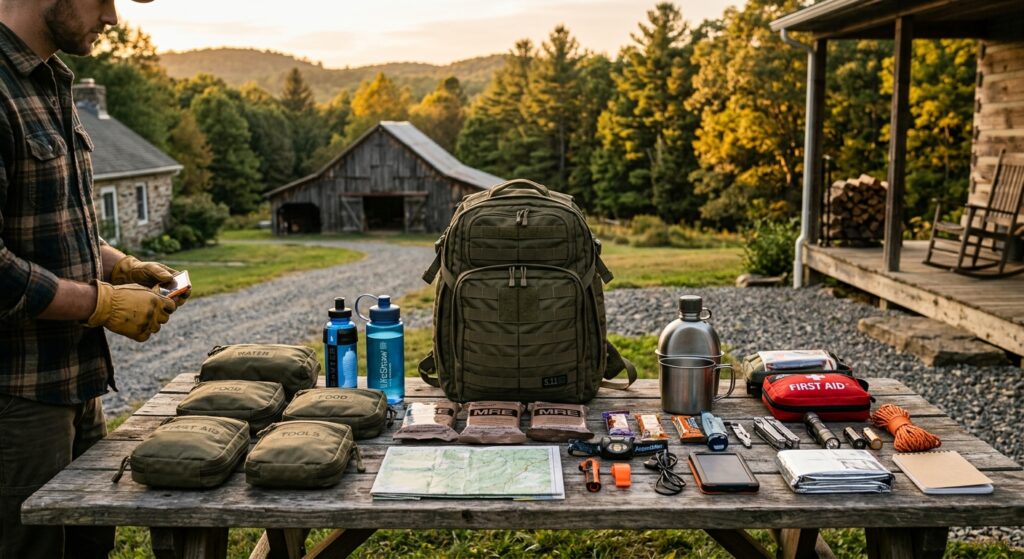
Storms, floods, wildfires and long power outages all have one thing in common: for the first few days, help may be slow to arrive. A well-assembled 72 hour emergency kit checklist covers that gap. This guide walks through what to pack, category by category, with specific product options and approximate prices, so you can build a kit that keeps your household safe, fed and informed for three days without outside support.
Why a 72-Hour Kit Matters
Modern infrastructure is reliable most of the time, but it is also fragile. A single ice storm can bring down power lines for days, an earthquake can disrupt water supplies, and a flood can cut off whole communities. The “golden 72 hours” refers to the critical period right after a disaster, when emergency services may be overwhelmed or unable to reach you. During that window, you need to be able to look after yourself and your family.
Consider a common scenario: a winter storm makes roads impassable and the power stays out for several days. If your well pump is electric, your water supply stops with it. Stored water, a hand-crank radio and a solid food supply turn that situation from dangerous into merely inconvenient. This kind of event is not limited to remote wilderness; it happens in populated rural areas and suburbs too. A kit is not about paranoia. It lets you be a resource for others rather than a burden when help is stretched thin.
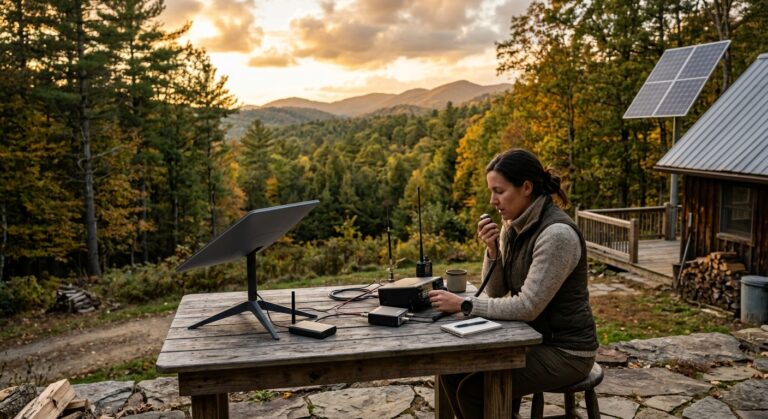
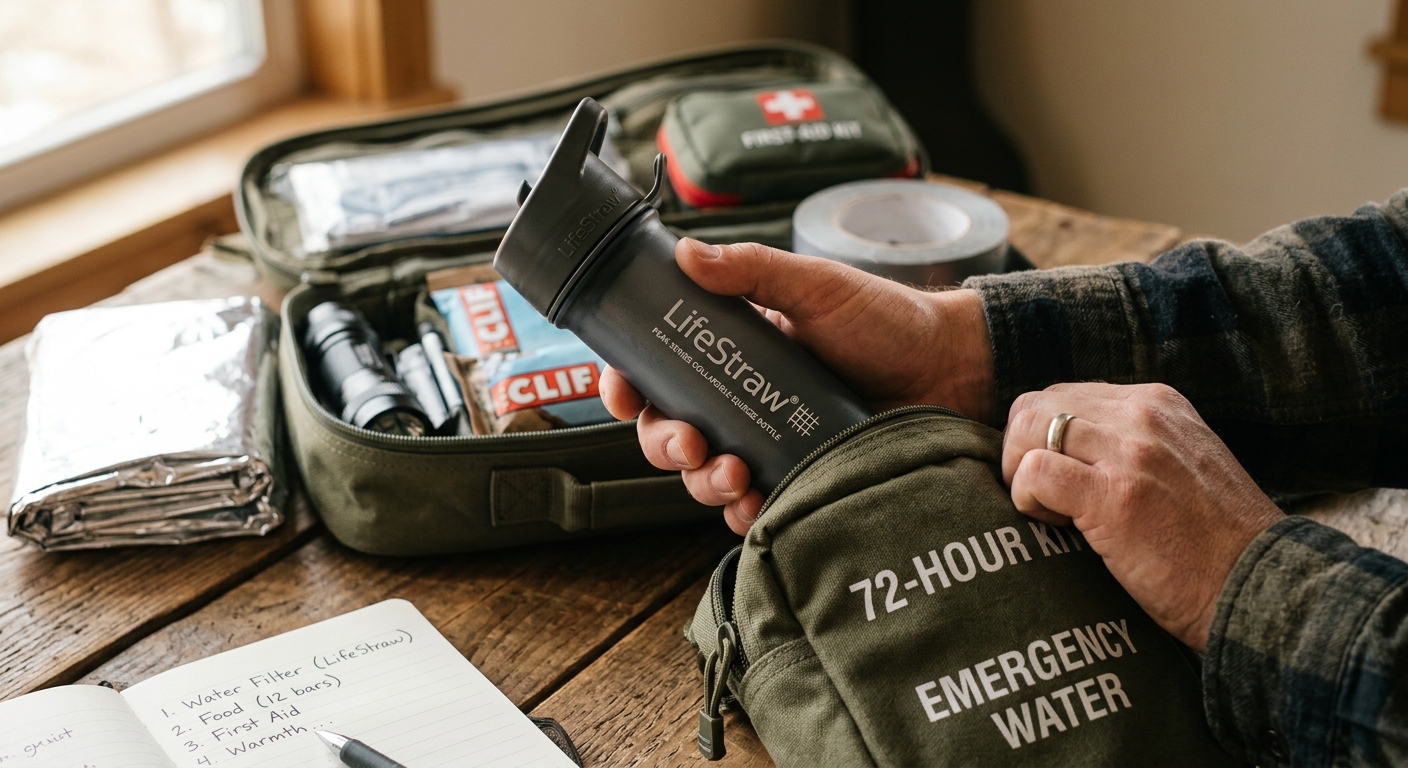
Tools are only half the picture. Knowing how to use your water filter, radio and power sources before you need them matters just as much as owning them.
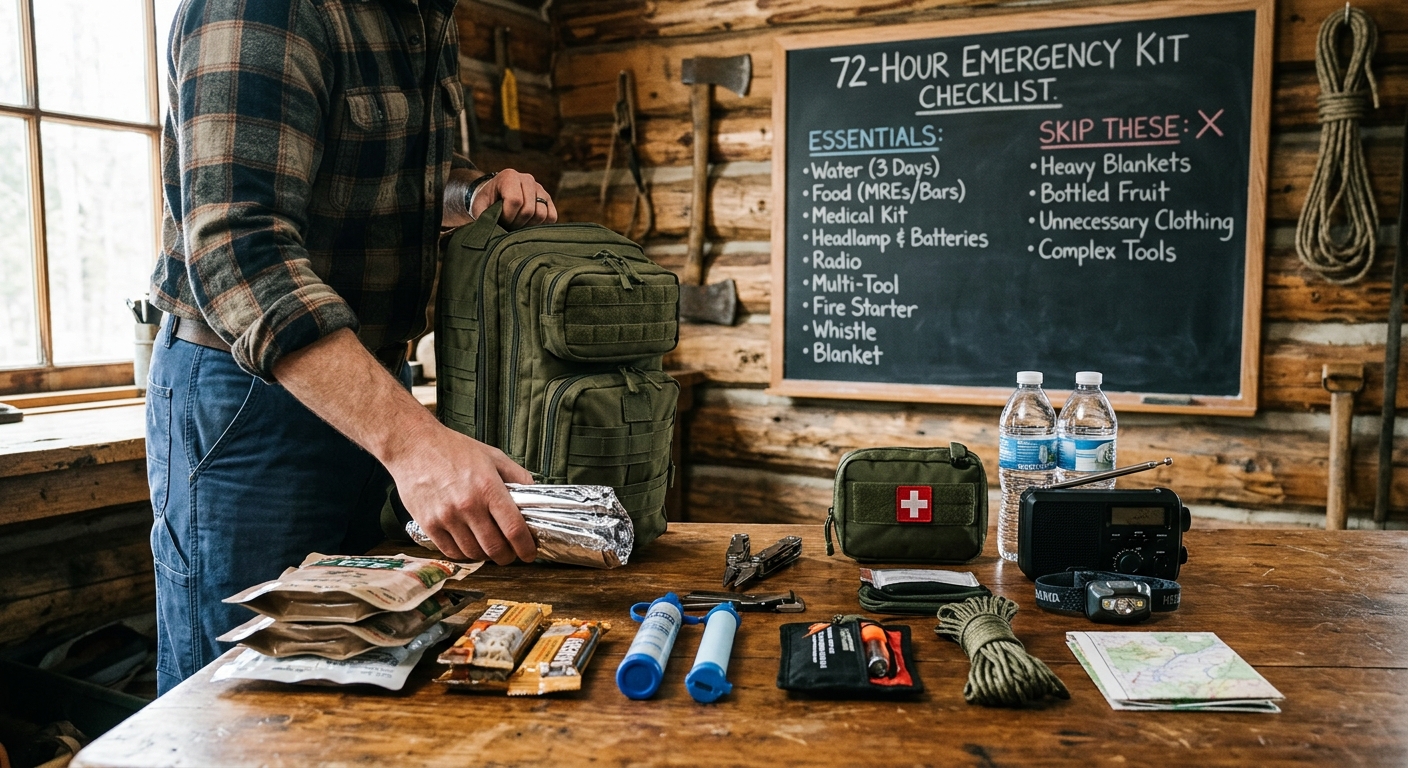
The Complete 72 Hour Emergency Kit Checklist
Breaking the kit into categories makes it manageable. The goal is not just to survive, but to stay safe and reasonably comfortable so you can focus on recovery.
1. Water: The Absolute Priority
- Stored water: Plan on at least 1 gallon (3.78 liters) per person, per day, for drinking and basic sanitation. For a family of four over three days, that is 12 gallons. Several 2.5-gallon Reliance Aqua-Tainers (approx. $18 each) are a practical option. Choose BPA-free containers and store them in a cool, dark place.
- Water filtration and purification: A filter is essential if stored water runs low or you need to use natural sources.
- Personal filter: The Sawyer Squeeze Water Filter System (approx. $35) weighs about 3 ounces and filters to 0.1 micron; it is rated to remove 99.99999% of bacteria and protozoa.
- Purification tablets: Katadyn Micropur MP1 Purification Tablets (approx. $15 for 30 tablets) provide chemical purification and kill viruses that filters may not catch. Keep at least two packs.
- Collapsible containers: Cnoc Vecto 2L Water Containers (approx. $20 each) are light and durable for collecting and storing filtered water. Two per person is a sensible target.
2. Food: High-Energy and Non-Perishable
- Ready-to-eat meals: Focus on food that needs no cooking or very little preparation.
- Freeze-dried meals: Mountain House Freeze-Dried Meals (approx. $8–12 per pouch) are listed at 800–1,500 calories per pouch with a 30-year shelf life. Plan for 2–3 per person, per day.
- MREs (Meals Ready-to-Eat): Genuine US Military MREs (approx. $10–15 each) are calorie-dense and include heating elements. One per person, per day, is usually enough alongside other food.
- High-energy bars: Clif Bars (approx. $1.50 each) or other protein/granola bars. Keep 3–4 per person, per day.
- Comfort foods: Hard candy or individually wrapped chocolate gives a real morale boost.
- Manual can opener: Essential if you pack any canned goods.
3. Shelter and Warmth
- Emergency blanket or bivy: An SOL Emergency Bivvy (approx. $20) or a four-pack of Mylar blankets (approx. $10). Both are compact and reflect body heat.
- Tarp: A lightweight tarp such as the DD Hammocks 3x3m Tarp (approx. $60) works as shelter, ground cover or a rain catcher.
- Rain gear: The Frogg Toggs Ultra-Lite2 Rain Suit (approx. $25) keeps you dry and adds a layer of warmth.
- Sleeping bag or quilt: A compact bag like the Snugpak Jungle Bag (approx. $80) for cooler climates, or a lightweight blanket in warm regions.
- Emergency tent: A compact 2-person tent like the Ozark Trail 2-Person Backpacking Tent (approx. $50) gives more robust shelter than a tarp.
- Heat source: A few pairs of HotHands Hand Warmers (approx. $15 for 10 pairs) are cheap and very useful in cold weather.
4. First Aid and Hygiene
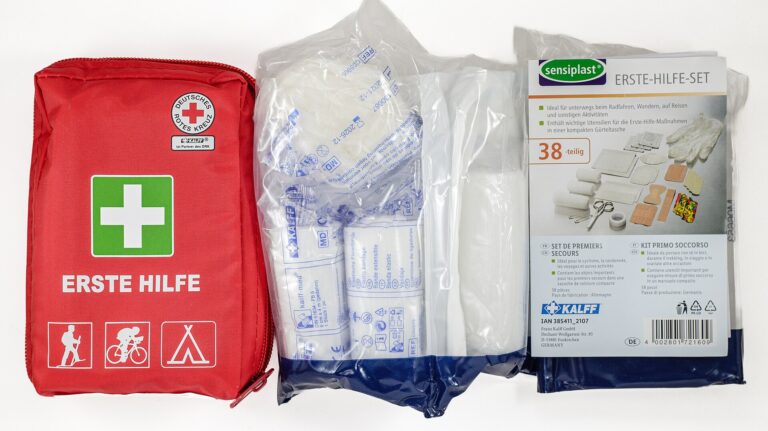
- First aid kit: This is not the place to cut corners. The Adventure Medical Kits Mountain Series Hiker (approx. $30) covers basic needs; add your personal medications. For more serious injuries, consider the Pro Series 1 (approx. $120).
- Specific medical supplies:
- Prescription medications: At least a 7-day supply of all essential prescriptions.
- Over-the-counter medications: Pain relievers (ibuprofen, acetaminophen/Tylenol), anti-diarrhea medication (loperamide), allergy medication (Benadryl) and antacids.
- Trauma items: A CAT Gen 7 Tourniquet (approx. $30) and an Israeli Bandage (approx. $15) for serious bleeding. Learn how to use them before you need them.
- Hygiene essentials:
- Wet wipes: A large pack of Wet Ones (approx. $5).
- Hand sanitizer: Purell Advanced Hand Sanitizer, 12 oz (approx. $8).
- Toilet paper: Compressed rolls or one dedicated roll.
- Small trowel: TheTentLab The Deuce #2 Ultralight Trowel (approx. $20) for burying waste.
- Feminine hygiene products: Tampons, pads or other preferred products.
- Garbage bags: Heavy-duty contractor bags for waste disposal and improvised shelter.
5. Tools and Utilities
- Multi-tool: Leatherman Wave+ (approx. $120) or Gerber Multi-Plier 600 (approx. $70).
- Fixed-blade knife: The Mora Companion HD (approx. $25) is robust and affordable.
- Headlamp: Black Diamond Spot 400 (approx. $50) with spare lithium batteries, such as an Energizer Ultimate Lithium AA 8-pack (approx. $15).
- Fire starter: Light My Fire Swedish FireSteel 2.0 Army (approx. $20) plus waterproof matches.
- Duct tape: A small roll of Gorilla Tape, 1-inch x 10-yard (approx. $7), for repairs.
- Rope/paracord: 50 feet of 550 paracord (approx. $10).
- Whistle: Fox 40 Classic Whistle (approx. $8) for signaling.
- Work gloves: Mechanix Wear Original Gloves (approx. $25) to protect your hands during cleanup.
6. Communication and Navigation
- NOAA weather radio: Midland ER310 Emergency Crank Weather Radio (approx. $70) with hand-crank and solar charging.
- Power bank: Anker PowerCore III Elite 25600mAh (approx. $120) for phones and small electronics.
- Maps: Paper maps of your area and surrounding regions, such as USGS topographic maps (approx. $14 each).
- Compass: Suunto M-3 Global Compass (approx. $50).
- Notepad and pencil/pen: For leaving messages and keeping notes.
7. Personal Items and Documents
- Important documents: Copies of birth certificates, passports, insurance policies, property deeds and emergency contacts, kept in a waterproof bag such as the Sea to Summit eVac Dry Sack 8L (approx. $25).
- Cash: At least $100–$200 in small bills, in case card systems are down.
- Extra clothing: One full change of durable, weather-appropriate clothing per person, including sturdy shoes, socks and a hat.
- Eyeglasses/contacts: A spare pair.
- Entertainment: A book, a deck of cards or small games to ease boredom and stress, especially for children.
- Comfort items: A small blanket, pillow or favorite toy for children.
Pack these items in a sturdy, easy-to-grab backpack or container for each person, so the kit doubles as a true go-bag if you have to leave home.
Upgrade Options Worth Considering
Once the basics are covered, these items add capability. Prices are approximate and change often.
1. Portable Power: Goal Zero Yeti 700 Power Station
- Price: approx. $699 USD
- Why consider it: With 700Wh of capacity and AC, USB-C PD and USB-A outputs, it can recharge phones many times, run a small fridge for hours or power critical medical devices. It can be recharged with a solar panel such as the Goal Zero Nomad 100 (approx. $300), which makes it a big step up from a basic power bank. It is heavier and more expensive, so it suits a home shelter-in-place kit better than a go-bag.
2. Water Filtration: Katadyn BeFree Water Filter (1.0L)
- Price: approx. $45 USD
- Why consider it: Compared with the Sawyer Squeeze, the BeFree offers a faster flow rate and a filter that is easier to clean. Its 0.1 micron EZ-Clean Membrane removes bacteria and protozoa, and the collapsible 1-liter flask packs down small. Fill it from any water source and drink directly or squeeze into another container.
3. Emergency Radio: Eton FRX5-BT
- Price: approx. $100 USD
- Why consider it: It receives AM/FM and all 7 NOAA weather bands, and can be powered by hand crank, solar panel or its internal rechargeable battery. It also has a 2000mAh USB output for charging a phone and a built-in LED flashlight.
4. First Aid: MY MEDIC MyFAK Mini
- Price: approx. $120 USD
- Why consider it: MY MEDIC kits are designed by medical professionals and go beyond basic bandages, including items such as chest seals, a tourniquet and specialized wound care. The Mini is compact and organized for quick access.
5. Multi-Tool: Leatherman Charge+ TTI
- Price: approx. $180 USD
- Why consider it: A premium version of the Wave+, with an S30V steel main blade for better edge retention and titanium handles for lighter weight. It includes 19 tools, from pliers and wire cutters to screwdrivers and a saw. The Wave+ covers the same jobs for less money; the Charge+ TTI is an upgrade, not a necessity.
Comparison Table: Emergency Water Filters
Water is the one category where you cannot compromise. Here is how several common emergency water filters compare on their published specifications.
| Feature | Sawyer Squeeze (SP131) | Katadyn BeFree (1.0L) | LifeStraw Personal | Platypus GravityWorks (4L) | MSR Guardian Purifier |
|---|---|---|---|---|---|
| Filter type | Hollow fiber membrane | Hollow fiber membrane | Hollow fiber membrane | Hollow fiber membrane | Hollow fiber (pump) |
| Pore size | 0.1 micron absolute | 0.1 micron absolute | 0.2 micron absolute | 0.2 micron absolute | 0.02 micron absolute |
| Removes | Bacteria, protozoa, cysts | Bacteria, protozoa, cysts | Bacteria, protozoa, microplastics | Bacteria, protozoa | Viruses, bacteria, protozoa, particulates |
| Flow rate | 1.7 L/min (initial) | 2 L/min | 0.5 L/min | 1.75 L/min | Check manufacturer specs |
Note that only the MSR Guardian in this table is a purifier that removes viruses. If you choose one of the hollow-fiber filters, pair it with chemical treatment such as the Katadyn Micropur tablets listed above when water quality is uncertain.
Tips for Keeping Your Kit Ready
- Build one kit per person: Spread water, food and essentials across individual bags so everyone carries what they need, and nothing critical is lost if one bag is left behind.
- Store it where you can grab it: A closet near an exit or the trunk of a vehicle beats a crowded basement or attic.
- Check dates regularly: Set a calendar reminder to review the kit, replace expired food and medication, refresh stored water according to the container maker’s guidance, and swap batteries.
- Practice with your gear: Use the water filter, crank the radio and light the fire starter at least once so you are not reading instructions in the dark.
- Adapt to your climate and household: Add extra warmth for cold regions, extra water for hot ones, and specific supplies for infants, elderly family members or medical conditions.
- Do not overpack: A kit you cannot carry is a kit you will leave behind. Prioritize water, first aid, warmth and communication, then add comfort items if space allows.
Conclusion
A 72-hour kit is one of the simplest, highest-value steps you can take toward self-reliance. Start with the essentials — water, food, shelter, first aid, tools, communication and documents — then add upgrades like a power station or a better filter as your budget allows. Keep it maintained, practice with what is inside, and you will be ready to handle the first three days of an emergency calmly and safely.
Marcus Reid
Founder & Editor, OffGridSage
Marcus founded OffGridSage to bring practical off-grid knowledge together in one place. Guides are built from official and expert sources (NREL, the EPA, the USDA and university extension services), manufacturer documentation and reader feedback, and are updated when information changes.