Best Vegetables to Grow for Off-Grid Survival and Self-Sufficiency
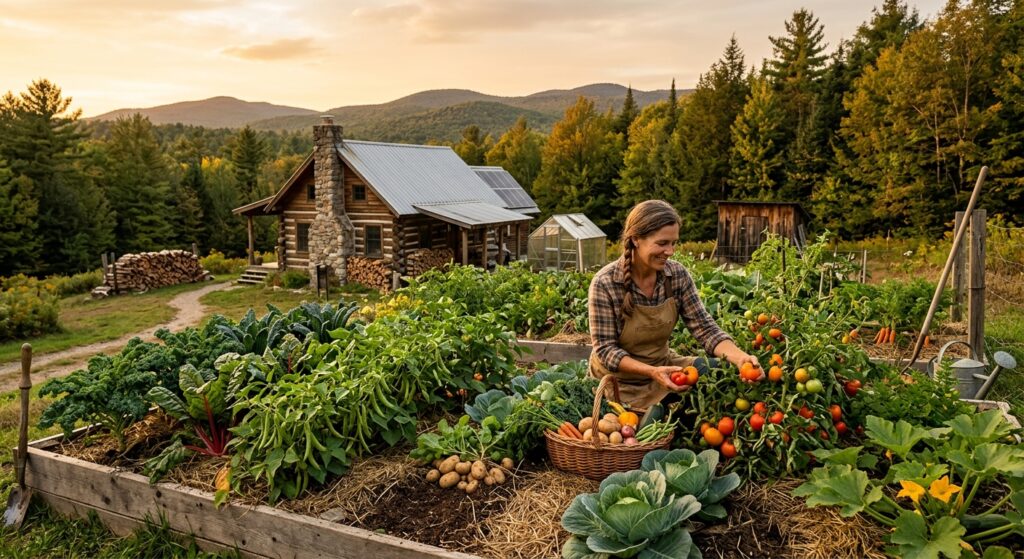
Growing your own food is one of the most important skills for a resilient off-grid life. A pantry of rice and beans will eventually run down, and when supply chains falter, your ability to produce food becomes your most valuable asset. This guide covers the best vegetables to grow for off-grid survival — the highest-yielding, most nutrient-dense and most storable crops — along with specific varieties, storage conditions, useful tools and the growing strategies that make a survival garden productive year after year.
Why a Survival Garden Matters
Off-grid living often brings to mind solar panels and wells, but self-sufficiency really starts in the soil. If you are cut off for weeks by a winter storm, fresh produce is the first thing to run out. Stored staples keep you fed, but without fruits and vegetables you can quickly run short on the nutrients that support your health, energy and clear thinking.
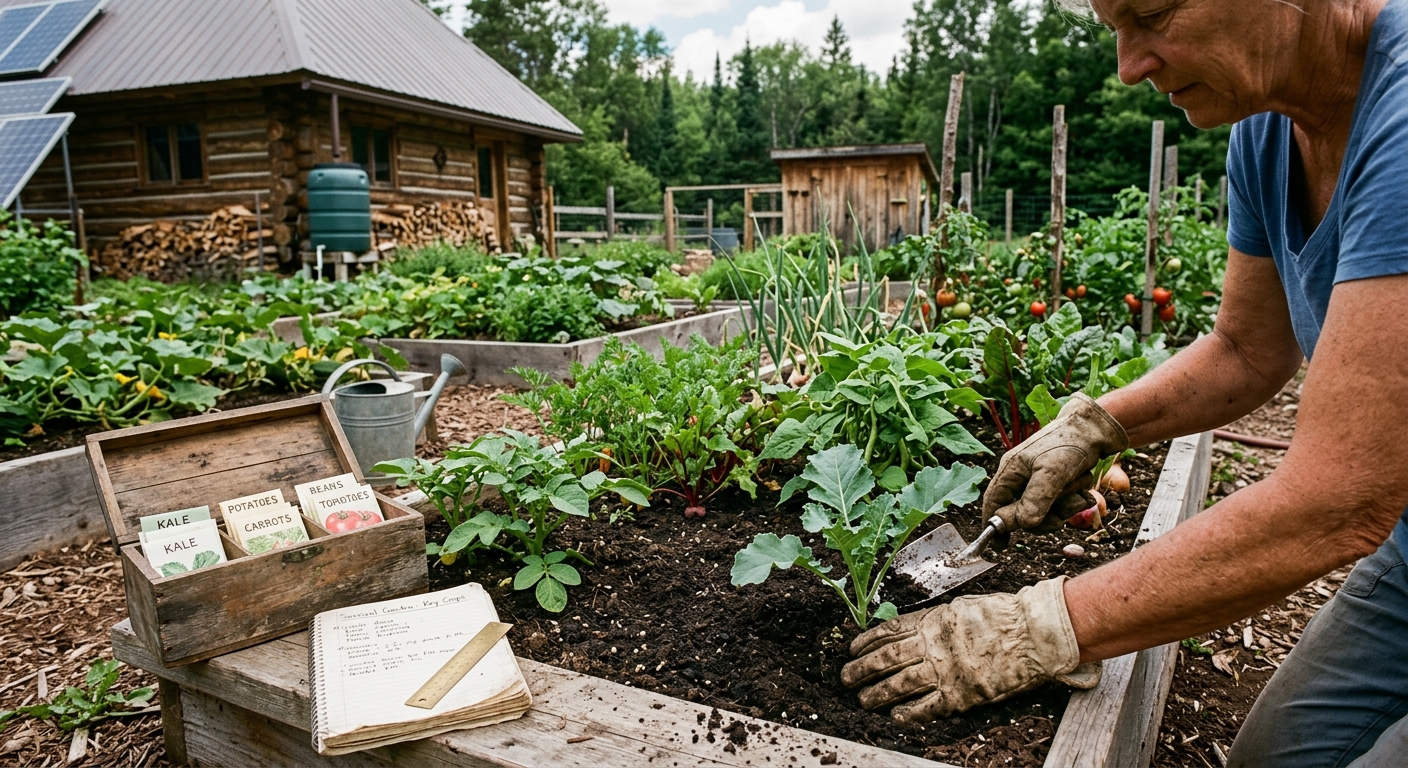
A productive garden reduces several risks at once:
- Independence from supply chains, which are vulnerable to economic shocks, natural disasters and instability.
- Better nutrition, because vegetables harvested at their peak and eaten soon after keep more of their vitamins and minerals than produce shipped long distances.
- Long-term savings: after the initial investment in seeds, tools and soil building, a garden returns far more in food than it costs to run.
Off-grid, every resource is precious — water, energy and fertile soil. The goal is to design a garden that makes the most of all three and keeps producing season after season.
The Best Vegetables to Grow for Off-Grid Survival
The selection criteria are simple: high calorie yield, dense nutrition, good storability and reasonably easy cultivation with minimal inputs. The crops below meet those criteria and form the core of a strategic survival garden.
1. Root Crops: Calorie and Nutrient Powerhouses
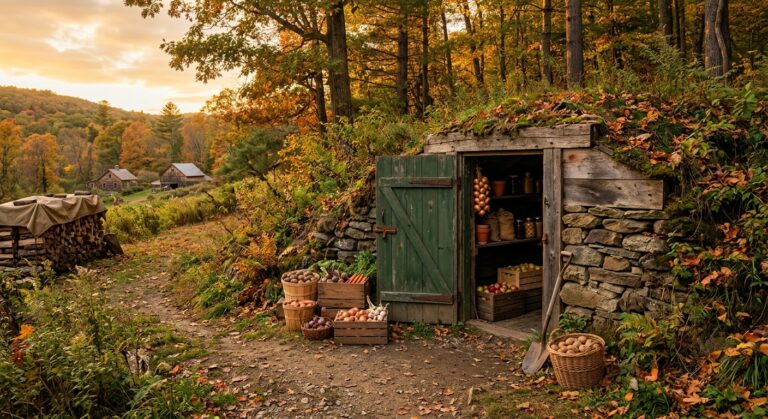
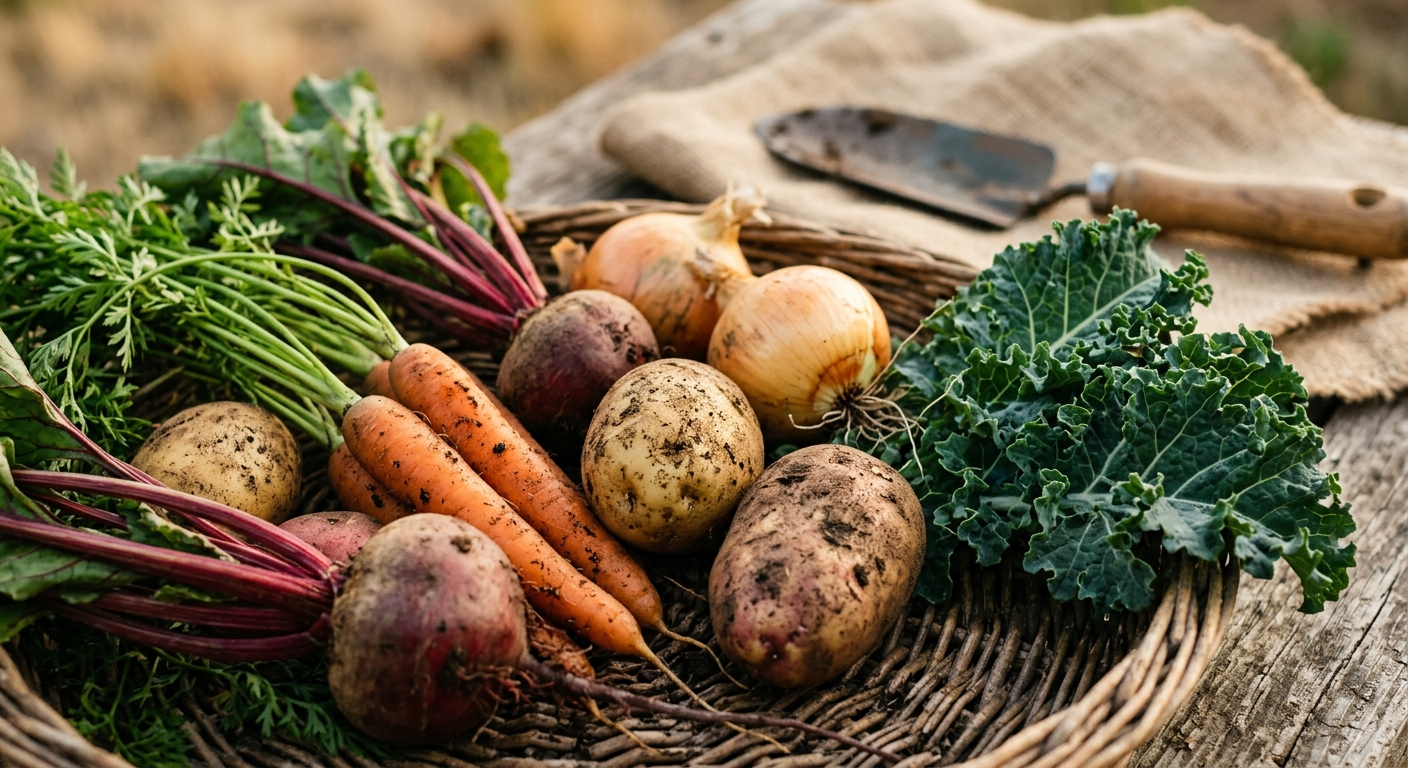
- Potatoes (Solanum tuberosum): Calorie-dense, versatile and relatively easy to grow. Well-amended beds planted with ‘Yukon Gold’ or ‘Kennebec’ seed potatoes can yield roughly 80–120 lbs per 100 sq ft in a good season. They need full sun (6–8 hours) and consistently moist, well-draining soil. Amend beds with 2–3 inches of well-rotted compost and a balanced organic fertilizer such as Down To Earth Bio-Live 5-4-2. To store, cure for 1–2 weeks in a dark, humid place at 50–60°F (10–15°C), then move to a cool, dark cellar at 38–45°F (3–7°C) with 85–95% humidity. Storage varieties like ‘Katahdin’ can last 6–8 months under these conditions.
- Sweet potatoes (Ipomoea batatas): Another calorie champion, high in vitamin A. They tolerate warmer climates and poorer soils than regular potatoes. ‘Beauregard’ is a productive variety that can yield 15–20 lbs per plant in ideal conditions. Slips are easy to start from store-bought sweet potatoes or buy online. They need 120–150 frost-free days. Cure for 5–10 days at 80–85°F (27–29°C) and 90% humidity, then store at 55–60°F (13–16°C) and 75–80% humidity for 6–12 months.
- Carrots (Daucus carota subsp. sativus): A good source of vitamin A and natural sugars. ‘Danvers 126’ and ‘Autumn King’ are strong storage varieties. Grow them in loose, rock-free sandy loam worked to at least 12 inches for straight roots. Expect 1–2 lbs per square foot. They can stay in the ground through mild winters, or be stored in damp sand or sawdust at 35–40°F (1–4°C) and high humidity for 4–6 months.
- Beets (Beta vulgaris): Edible roots plus nutritious greens. Beets are fairly cold-hardy and quick-growing; ‘Detroit Dark Red’ is a classic dual-purpose choice. They prefer full sun to partial shade and well-drained soil, and yield about 1–1.5 lbs of roots per square foot. Roots keep 3–5 months in moist sand in a root cellar; greens can be blanched and frozen.
2. Legumes: Protein and Soil Fertility
- Dry beans (Phaseolus vulgaris): A cornerstone of off-grid protein. ‘Black Turtle’ (black beans), ‘Great Northern’ (white beans) and ‘Vermont Cranberry’ (shell beans) are grown for their dry seeds, which store for years when properly dried. Bush beans are quicker and suit small spaces, yielding about 1–2 lbs of dry beans per 10-foot row. Pole beans need trellising (salvaged wood or rebar works) but produce more in the same footprint, about 2–3 lbs per 10-foot row. Plant in full sun and keep moisture consistent during flowering and pod set. Dry the harvest on screens in a warm, airy spot (a solar dehydrator works well) until the beans rattle, then store in airtight containers such as Mylar bags with oxygen absorbers.
- Lentils (Lens culinaris): Less common in home gardens but valuable for their fast growth and high protein. They fix nitrogen, improving the soil. ‘Pardina’ and ‘Richlea’ are good choices. They prefer cool weather and are fairly drought-tolerant once established. Expect about 0.5–1 lb per 10 square feet. Their small size makes them easy to dry and store.
- Peas (Pisum sativum): For survival purposes, focus on shelling peas that can be dried, such as ‘Lincoln’ or ‘Green Arrow’. Peas are cool-season crops for spring and fall, fix nitrogen and yield similarly to bush beans. Store dried peas like beans.
3. Winter Squash and Pumpkins: Long-Term Calorie Banks
- Winter squash (Cucurbita maxima/moschata): Essential for an off-grid garden. ‘Waltham Butternut’ is prized for flavor and yield, and ‘Blue Hubbard’ and ‘Table Queen Acorn’ are also excellent. A single plant often yields 10–20 lbs of squash, and large Hubbard types can produce considerably more. Vining types can spread 10–20 feet, so give them space, full sun and rich, well-drained soil. Cure for 10–14 days at 75–85°F (24–29°C) with moderate humidity, then store in a cool, dry place (50–55°F / 10–13°C, 50–70% humidity) for 6–12 months — Hubbard types often keep even longer.
- Pumpkins (Cucurbita pepo/maxima): Similar calorie yield and storage life to winter squash. ‘Dickinson Pumpkin’ (for canning and pies) and ‘Rouge Vif d’Etampes’ (Cinderella pumpkin) are good choices. Growing and storage needs match winter squash.
4. Nutrient-Dense Greens and Alliums
- Swiss chard (Beta vulgaris subsp. cicla): One of the most dependable leafy greens for survival. Unlike lettuce or spinach, chard is heat-tolerant, disease-resistant and produces continuously from spring until a hard frost. A 4×4 ft bed can supply regular harvests for months. Try ‘Bright Lights’ or ‘Fordhook Giant’. Blanch and freeze any surplus.
- Kale (Brassica oleracea var. sabellica): Cold-hardy enough to survive light snow and keep producing. ‘Lacinato’ (Dinosaur kale) and ‘Red Russian’ are excellent. Like chard, it gives continuous harvests and freezes well.
- Onions (Allium cepa): Important for flavor and nutrition, and excellent keepers. ‘Walla Walla’ is sweet but stores briefly; ‘Stuttgarter’ is a yellow long-storage type. Grow from sets or direct seed for overwintering, in full sun and well-drained soil. Cure for 2–4 weeks in a warm, airy, dry place (70–80°F / 21–27°C), then store in mesh bags somewhere cool, dry and dark (40–50°F / 4–10°C, 60–70% humidity) for 6–10 months.
- Garlic (Allium sativum): Planted in fall and harvested in summer, garlic is easy to grow and adds flavor and health benefits. ‘Music’ (hardneck) and ‘Inchelium Red’ (softneck) are reliable. Cure like onions and store cool, dry and dark for 6–12 months.
5. Other High-Value Crops
- Tomatoes (Solanum lycopersicum): Not a calorie crop, but invaluable for canning, sauces and drying. Paste varieties such as ‘Roma’ and ‘Amish Paste’ are best for processing. They need full sun, consistent water and strong stakes or cages.
- Cabbage (Brassica oleracea var. capitata): Cold-hardy, and it can be fermented into sauerkraut, a traditional preservation method that produces a nutritious, probiotic-rich food. ‘Danish Ballhead’ is known for good storage.
Comparison Table: Top Survival Crops
Yields are approximate and depend heavily on soil, climate and care.
| Vegetable | Approx. yield (per 100 sq ft) | Nutritional value | Storage potential | Water needs | Special considerations |
|---|---|---|---|---|---|
| Potatoes | 80–120 lbs | High calories, vitamin C, B6, potassium | 6–8 months (cool, dark, humid) | Moderate to high (consistent) | Needs hilling, good drainage, full sun. Cure properly. |
| Sweet potatoes | 100–150 lbs | Very high calories, vitamins A and C, manganese | 6–12 months (55–60°F after curing) | Moderate (drought-tolerant once established) | Long season (120–150 days), prefers warm climates. Cure properly. |
| Dry beans | 10–20 lbs (dried) | High protein, fiber, iron, folate | Years (dry, airtight) | Moderate (critical during flowering) | Nitrogen fixer; bush or pole types. Thorough drying is crucial. |
| Winter squash | 150–250 lbs | High calories, vitamins A and C, potassium | 6–12 months (cool, dry after curing) | Moderate to high | Vining habit needs space or trellising. Cure properly. |
| Carrots | 100–150 lbs | Very high vitamin A, vitamin K, fiber | 4–6 months (damp sand in root cellar) | Moderate (consistent for straight roots) | Needs loose, stone-free soil. Can overwinter in ground. |
| Swiss chard | 20–30 lbs (continuous harvest) | High vitamins K, A, C, magnesium | 1–2 weeks fresh; months frozen | Moderate | Heat-tolerant, pest-resistant. Not a calorie crop. |
| Onions | 40–60 lbs | Vitamin C, B6, manganese, flavor | 6–10 months (cool, dry, dark after curing) | Moderate | Full sun, good drainage. Cure for long storage. |
Recommended Tools and Supplies
Reliable tools and infrastructure make a survival garden far easier to run. Prices below are approximate 2026 estimates and vary by retailer.
- Survival seed banks: Choose heirloom, open-pollinated seed so you can save your own.
- Baker Creek Heirloom Seeds “Survival Seed Bank” (approx. $110–$150): Typically 40–50 non-GMO, open-pollinated varieties chosen for resilience, yield and storability.
- True Leaf Market “Emergency Survival Seed Vault” (approx. $75–$120): A similar range of high-yield staples.
- Soil amendments and fertilizers:
- Down To Earth Bio-Live 5-4-2 (5 lb bag, approx. $25–$30): All-purpose organic fertilizer that also supports soil structure.
- Uncle Jim’s Worm Farm worm castings (30 lb bag, approx. $60–$75): A gentle fertilizer and soil conditioner; a handful per planting hole goes a long way.
- Local composted manure (approx. $40–$70 per cubic yard): Well-rotted manure is invaluable for building soil if you can source it locally.
- Watering systems and storage:
- Rain Bird DRIPKIT drip irrigation starter kit (100–200 sq ft, approx. $60–$100): Drip irrigation saves water and reduces fungal disease.
- Good Ideas Rain Wizard RW65 65-gallon rain barrel (approx. $170–$220): Collects rainwater for the garden.
- Well pump (if applicable): A solar-powered submersible pump such as the Grundfos SQE 3-65 (approx. $1,200–$1,800) can supply irrigation water from a well.
- Hand tools: Quality tools last a lifetime.
- A.M. Leonard 9210 Forged Digging Fork (approx. $70–$90): For breaking up soil and harvesting root crops.
- Fiskars Ergo Cultivator (approx. $30–$40): For weeding and aerating.
- Hoss Garden Seeder (approx. $350–$400): Speeds up planting rows of beans, corn and other seeds in larger gardens.
- Felco F-2 Pruning Shears (approx. $75–$90): A long-standing standard for pruning and harvesting.
- Organic pest and disease control:
- Garden Safe Neem Oil Extract Concentrate (16 oz, approx. $15–$20): A natural insecticide and fungicide.
- Safer Brand Diatomaceous Earth (4 lb bag, approx. $20–$25): Effective against crawling insects.
- Power for garden systems: Small loads such as an irrigation pump, greenhouse fan or seed-starting heat mats can run on a modest solar setup.
- Battle Born LiFePO4 200Ah 12V battery (approx. $850–$950): Rated for roughly 3,000–5,000 cycles, which suits daily off-grid cycling.
- Charging: A 200W Renogy solar panel (approx. $200–$250) with a Victron SmartSolar MPPT 100/20 charge controller (approx. $250–$300) is a reasonable starting point to keep that battery charged.
Pro Tips for a Productive Survival Garden
- Use succession planting and season extension: Sow carrots, beets and greens in small batches every 2–3 weeks for a continuous harvest. Simple hoop houses made from PVC pipe and 6-mil UV-treated greenhouse plastic (approx. $0.40/sq ft) can extend the season by 1–2 months on either side of your frost dates; in a climate like Zone 6b, that can mean kale and carrots into December.
- Save your own seed: Grow open-pollinated, heirloom varieties and learn to harvest, clean and store seed from your strongest plants. Store seed in airtight jars with silica gel packets (for example Dry & Dry 5-gram packets, approx. $12 for 50) somewhere cool and dark, such as a root cellar at 40–45°F (4–7°C). Many seeds stay viable for 5–10 years or more when stored this way.
- Put soil health first: Run a compost system (a three-bin setup made from salvaged pallets works well). Sow cover crops such as crimson clover or hairy vetch (seed approx. $5–$8/lb) in off-season beds to add organic matter, suppress weeds and fix nitrogen. Rotate crops on a three-year cycle: heavy feeders (potatoes, corn), then legumes, then light feeders (carrots, onions).
- Manage water efficiently: Beyond drip irrigation, mulch 4–6 inches deep with straw, wood chips or shredded leaves to hold moisture, suppress weeds and moderate soil temperature. Wicking beds, which draw water up from a reservoir below, use much less water for thirsty crops. A simple greywater system can divert sink or shower water to non-edible plants or fruit trees.
- Practice integrated pest management: Focus on prevention rather than chemicals. Plant companions such as marigolds near tomatoes, attract beneficial insects with dill and calendula, hand-pick large pests like tomato hornworms, and use row covers (for example Agribon AG-19, 10’x50′, approx. $30) to protect young plants.
- Add perennials: Asparagus, rhubarb, sunchokes (Jerusalem artichokes) and perennial herbs need less work each year, help build soil and provide early-season harvests alongside your annual crops.
Conclusion
A survival garden built around potatoes, sweet potatoes, dry beans, winter squash, carrots, onions and hardy greens can supply calories, protein and essential nutrients through the year. Choose open-pollinated varieties you can save seed from, invest in soil health and efficient watering, and learn to cure and store each crop properly. Start with a few of the highest-value crops, expand as your skills grow, and your garden will become the foundation of real off-grid food security.
Marcus Reid
Founder & Editor, OffGridSage
Marcus founded OffGridSage to bring practical off-grid knowledge together in one place. Guides are built from official and expert sources (NREL, the EPA, the USDA and university extension services), manufacturer documentation and reader feedback, and are updated when information changes.